
SupremeCourt – US Top Court Limits Scope of Key Voting Rights Law
SupremeCourt – The United States Supreme Court has issued a significant ruling that narrows the reach of a major civil rights-era law, potentially reshaping how electoral maps are challenged across the country. In a 6-3 decision, the court invalidated a congressional district in Louisiana designed with a majority Black population, concluding that race had been used too prominently in its design.
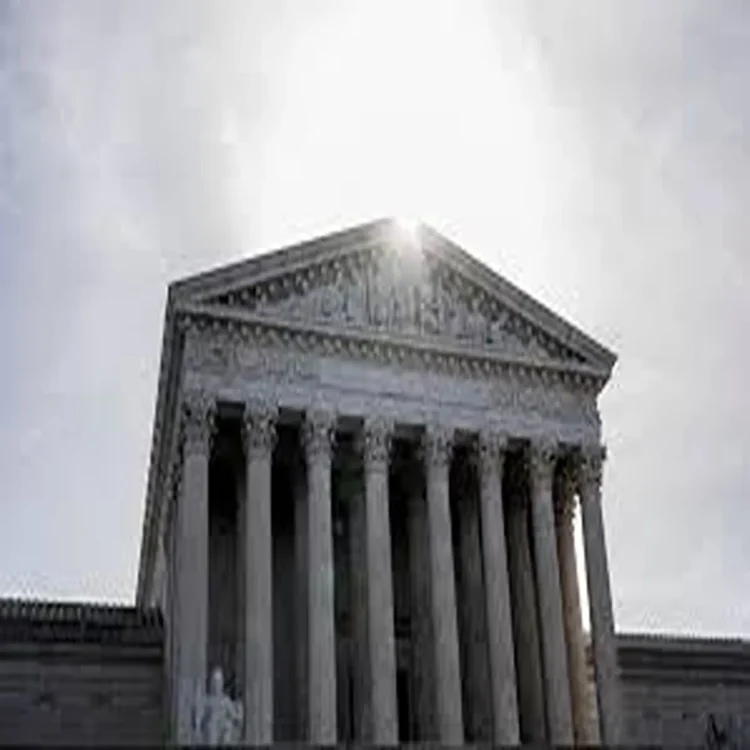
Court Questions Use of Race in District Boundaries
The contested district, represented by Democrat Cleo Fields, stretches across several parts of Louisiana, linking cities such as Shreveport, Alexandria, Lafayette, and Baton Rouge. Chief Justice John Roberts previously described its unusual shape as resembling a “snake,” highlighting concerns about how the boundaries were drawn.
Writing for the majority, Justice Samuel Alito stated that the district amounted to an unconstitutional gerrymander. The ruling emphasizes that race should not play a dominant role in government decisions, including the drawing of electoral districts. According to the majority opinion, the use of race must be limited to cases involving clear and intentional discrimination.
Impact on Voting Rights Law
The decision directly affects Section 2 of the Voting Rights Act of 1965, a provision long used to challenge voting practices that weaken minority representation. Legal experts note that the ruling raises questions about how much of this section remains enforceable.
When the law was enacted more than six decades ago, then-President Lyndon Johnson described it as a landmark achievement for equality. Over time, it has played a central role in improving political access for Black Americans and other minority groups.
However, dissenting Justice Elena Kagan warned that weakening this provision could undermine decades of progress. She argued that the ruling makes it significantly harder for minority communities to contest district maps that dilute their voting strength.
Political and Legal Reactions
Reactions to the decision have been sharply divided. Supporters argue that the ruling reinforces the principle that electoral boundaries should not be determined by race. Critics, however, believe it weakens protections designed to ensure fair political representation.
Former President Barack Obama expressed concern that the decision signals a retreat from the court’s responsibility to safeguard equal participation in democracy. Meanwhile, Democratic leaders described the ruling as a setback for voting rights, while some Republican voices welcomed it as a step toward race-neutral policymaking.
Possible Effects on Future Elections
Although the immediate impact may be limited due to deadlines for upcoming elections, the broader consequences could emerge in future election cycles. Louisiana may need to revise its district map to comply with the court’s ruling, and other states could follow suit.
Experts estimate that dozens of congressional districts have previously been shaped under protections offered by the Voting Rights Act. The new interpretation could open the door for redrawing those districts, potentially influencing the balance of power in the House of Representatives in the coming years.
Ongoing Redistricting Battles
The ruling arrives amid ongoing debates over electoral maps in several states. In Florida, lawmakers recently approved a revised congressional map proposed by Governor Ron DeSantis, despite calls from Democrats to delay the decision and assess the legal implications of the court’s ruling.
The decision also marks a shift from a similar case in Alabama decided less than three years ago, where the court had supported the creation of additional majority-Black districts. That earlier ruling had led to changes in both Alabama and Louisiana, increasing minority representation.
A Broader Shift in Judicial Approach
Chief Justice Roberts has long advocated limiting the role of race in public policy. Over the years, the court has gradually reduced certain protections within the Voting Rights Act, including a 2013 decision that removed federal oversight requirements for states with histories of discrimination.
Legal analysts suggest that this latest ruling could further reshape how voting rights cases are argued in the future. Some experts believe it signals a broader shift in how the court interprets equality under the Constitution, particularly in cases involving race and representation.