
Legal – Supreme Court reserves order on Pawan Khera bail plea case
Legal – The Supreme Court of India on Thursday reserved its decision on the anticipatory bail request filed by Congress leader Pawan Khera, following a case registered by the Assam Police. The matter arises from statements made by Khera regarding Riniki Bhuyan Sarma, spouse of Assam Chief Minister Himanta Biswa Sarma.
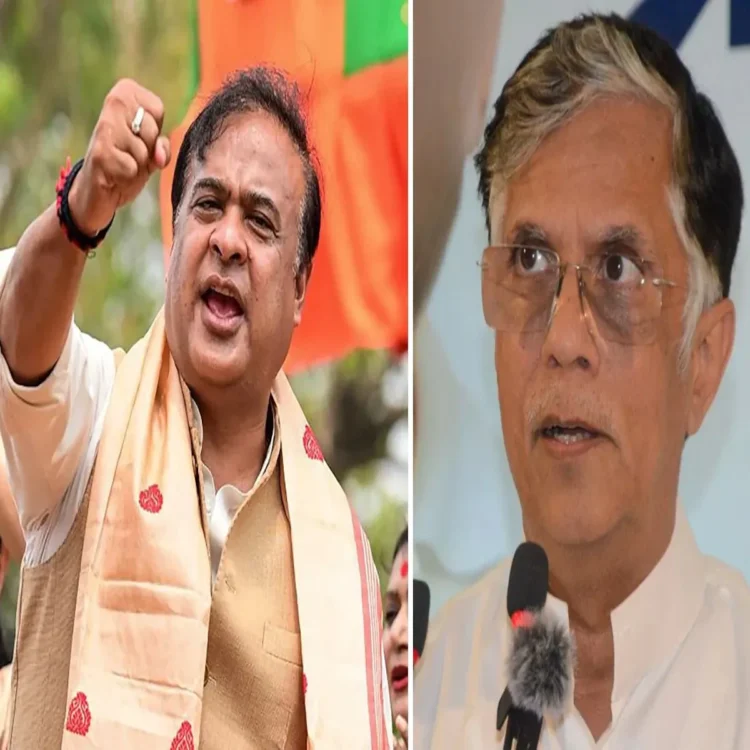
Bench concludes detailed hearing after arguments
A division bench comprising Justices JK Maheshwari and AS Chandurkar wrapped up proceedings after hearing extensive submissions from both sides. Legal representatives for Khera and the Assam Police presented sharply differing interpretations of the case, focusing on the nature of the allegations and the necessity of custodial interrogation.
Allegations at center of political and legal dispute
The controversy began during a press briefing where Khera alleged that Riniki Bhuyan Sarma possessed multiple foreign passports and undisclosed financial holdings abroad, including in the United States and the UAE. These claims triggered a criminal investigation, with authorities accusing Khera of using fabricated documents to support his statements.
Khera’s legal team, led by senior advocate Abhishek Manu Singhvi, argued that the accusations, even if proven incorrect, would amount to defamation at most—a charge that is generally bailable. Singhvi maintained that invoking more serious provisions such as forgery and public mischief was excessive and politically motivated.
Defense questions need for arrest
During the hearing, Singhvi criticized the manner in which the investigation was conducted. He argued that sending a large police team to Khera’s residence in Delhi was disproportionate and unnecessary, especially given that his client had cooperated with the process and posed no risk of evading the law.
He further accused the state leadership of escalating the matter for political reasons, citing public remarks attributed to the Chief Minister suggesting severe consequences for Khera. According to the defense, such statements reflected an attempt to intimidate rather than pursue a fair investigation.
High Court observations and earlier rejection
The case reached the apex court after the Gauhati High Court declined Khera’s anticipatory bail plea on April 24. In its order, the High Court emphasized the importance of custodial questioning to trace the origin of the documents presented by Khera. It also noted that while political criticism is common, involving a private individual in such allegations raised legal concerns.
Prosecution stresses seriousness of charges
Appearing for the Assam Police, Solicitor General Tushar Mehta argued that the case involves serious offenses that justify custody. He stated that the passports shown by Khera were allegedly forged and manipulated, adding that such documents fall under the category of valuable security under the Bharatiya Nyaya Sanhita.
Mehta further contended that investigators need to determine whether official seals were illegally replicated and whether there was any external interference linked to the allegations. He also disputed claims that the charges were minor, asserting that at least one of the applicable provisions is non-bailable.
Debate over legal provisions continues
The prosecution maintained that Khera had not fully cooperated and alleged that he had been avoiding direct engagement with investigators while sharing video statements publicly. According to them, identifying potential collaborators involved in creating the documents is a key aspect of the probe.
In response, Singhvi argued that the prosecution failed to establish a clear need for arrest beyond what he described as an attempt to publicly embarrass his client. He also pointed out inconsistencies in the legal provisions cited, noting that some sections referenced by the High Court were not originally included in the police complaint.
Verdict awaited amid heightened attention
With arguments from both sides concluded, the Supreme Court has reserved its verdict. The decision will determine whether Pawan Khera receives protection from arrest or if the Assam Police will be allowed to proceed with custodial interrogation as part of their investigation.
The outcome is expected to have broader implications, not only for the individuals involved but also for the handling of politically sensitive cases where allegations intersect with criminal law.