
Politics – AAP Faces Crisis as Seven Rajya Sabha MPs Join BJP
Politics – The Aam Aadmi Party (AAP) has signalled that it may seek legal intervention after seven of its Rajya Sabha members were recognised as part of the Bharatiya Janata Party (BJP). The development follows a decision by the Chairman of the Upper House to accept the MPs’ request for merger, a move that has triggered sharp objections from AAP leadership.
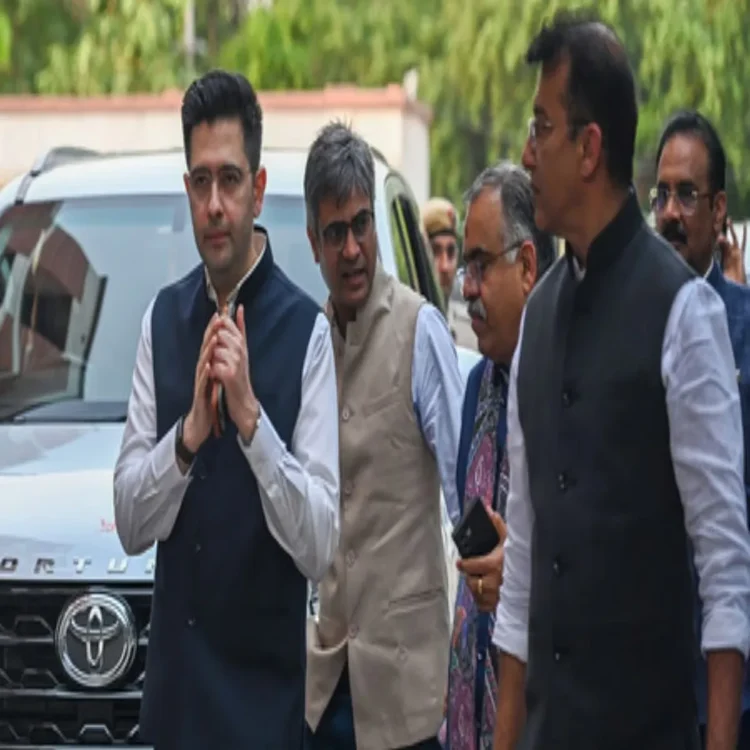
Dispute Over Merger Recognition
Senior AAP leader and Rajya Sabha MP Sanjay Singh expressed concern over the manner in which the merger was approved. According to him, the MPs had submitted a formal request to be acknowledged as members of the BJP, and the Chairman acted on that communication. However, Singh argued that the party’s objections were overlooked during the process.
He stated that AAP had raised concerns under the anti-defection provisions outlined in the Tenth Schedule of the Constitution. These provisions are designed to prevent elected representatives from switching parties without facing disqualification. Singh maintained that these concerns were neither addressed nor formally examined before the decision was made.
Concerns Over Procedural Changes
In a written communication to the Rajya Sabha Secretariat, Singh highlighted what he described as unilateral changes to official records. He claimed that the party’s status in parliamentary documents had been altered without prior notice or approval from AAP or its floor leadership in the House.
According to him, such procedural steps should involve consultation with the concerned political party. He emphasized that any changes affecting party representation must follow established parliamentary norms to ensure transparency and fairness.
Possibility of Legal Action
AAP has indicated that it is prepared to approach the judiciary if its concerns are not resolved. Singh said the party remains hopeful that the matter will be reconsidered and that constitutional provisions will be upheld. However, he made it clear that legal recourse would be pursued if no corrective action is taken.
He also remarked that the situation raises broader questions about the integrity of party structures and democratic processes. In his view, allowing such mergers without proper scrutiny could set a precedent that weakens established safeguards against defection.
Background of the Defection
The controversy stems from a significant political shift that took place last week, when seven out of AAP’s ten Rajya Sabha MPs decided to leave the party. The group included prominent members such as Raghav Chadha, Ashok Mittal, Sandeep Pathak, Harbhajan Singh, Rajendra Gupta, Vikramjit Sahney, and Swati Maliwal.
In their statement, the MPs cited a departure from the party’s founding principles as the reason behind their decision. They subsequently sought recognition as BJP members, submitting a formal request to the Chairman of the Rajya Sabha.
Impact on Parliamentary Strength
The change has had a notable impact on the composition of the Upper House. AAP’s strength in the Rajya Sabha has dropped sharply from ten members to just three. Meanwhile, the BJP’s tally has increased, strengthening its position in the 245-member House.
Following the Chairman’s decision, the Rajya Sabha Secretariat updated its official records to reflect the inclusion of the seven MPs as part of the BJP’s parliamentary group. Parliamentary Affairs Minister Kiren Rijiju confirmed the development, stating that the merger had been formally accepted and that the MPs are now recognised as BJP representatives.
Broader Political Implications
This development is likely to influence ongoing political dynamics, particularly in states where AAP has been expanding its presence. The defection of multiple MPs at once is uncommon and may have long-term consequences for party strategies and alliances.
At the same time, the dispute over the anti-defection law highlights the complexities involved in interpreting constitutional provisions in evolving political scenarios. The outcome of any legal challenge, if pursued, could further clarify how such cases are handled in the future.