
ChinaTensions – Taiwan Reports Renewed Chinese Military Activity Near Island
ChinaTensions – CrossStrait security developments continue to shape regional stability – Taiwan’s defence authorities have once again reported Chinese military movements near the island, highlighting ongoing tensions in the region.
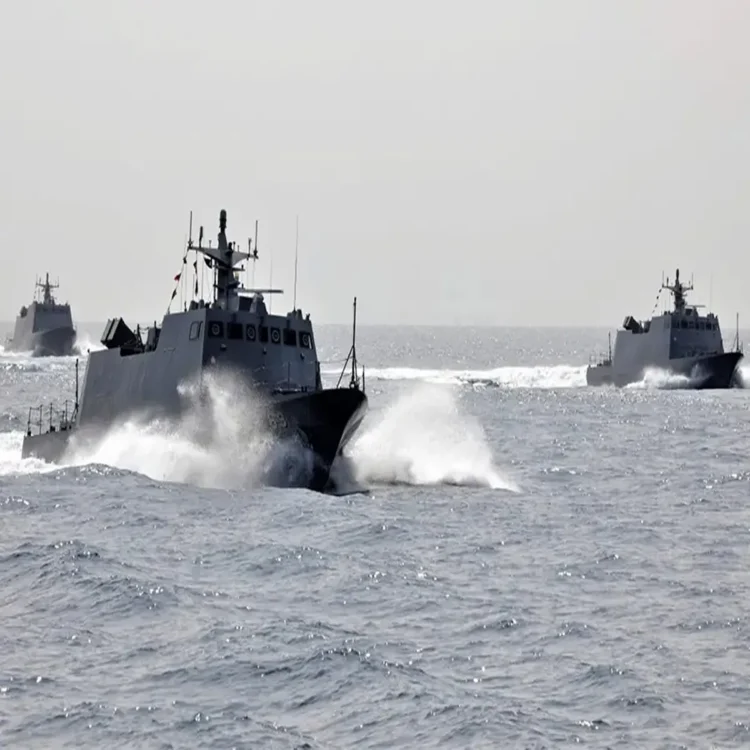
Taiwan’s Ministry of National Defense confirmed on Friday that it detected two Chinese military aircraft sorties along with seven naval vessels operating close to its territorial waters by early morning. The activity was recorded until 6 a.m. local time, and officials stated that Taiwan’s armed forces closely tracked the movements and took appropriate measures in response.
Increased Monitoring Around Taiwan
According to an official update shared by the ministry, Taiwan’s military maintained surveillance over the situation and ensured readiness as the Chinese aircraft and ships operated nearby. While no direct confrontation was reported, such movements are routinely monitored due to their potential implications for regional security.
This latest development follows a similar pattern observed just a day earlier. On Thursday, Taiwan reported a significantly higher level of activity, including 15 aircraft sorties, five naval vessels, and one official Chinese ship detected around the island.
Aircraft Enter Air Defense Zone
Authorities noted that most of the aircraft detected on Thursday had entered Taiwan’s southwestern Air Defense Identification Zone (ADIZ). Specifically, 14 out of the 15 sorties crossed into this sensitive area, prompting heightened vigilance from Taiwan’s defence forces.
The ADIZ is not sovereign airspace but is closely monitored as it serves as an early warning zone for potential threats. Taiwan’s military routinely tracks and responds to such incursions to ensure national security.
Taiwan’s Strategic Position and Governance
Despite increasing military pressure, Taiwan continues to function independently with its own political system, armed forces, and economic framework. The island operates as a self-governed entity, though its political status remains a subject of international debate.
Experts often point out that Taiwan’s situation raises broader questions related to sovereignty, self-governance, and international diplomatic norms. Its unique position has made it a focal point in discussions about regional stability and global geopolitical balance.
Historical Context of the Dispute
The roots of the dispute between China and Taiwan trace back several centuries. China’s claim over Taiwan dates to 1683, when the Qing Dynasty gained control of the island after defeating Ming loyalists. However, governance over Taiwan during that period remained relatively limited.
A major turning point came in 1895, when China ceded Taiwan to Japan following its defeat in the First Sino-Japanese War. Taiwan remained under Japanese rule for five decades until the end of World War II, when control of the island shifted again.
Division Following Civil War
The modern political divide emerged in 1949 after the Chinese Civil War. The establishment of the People’s Republic of China on the mainland coincided with the retreat of the Republic of China government to Taiwan. Since then, both sides have maintained competing claims.
While Taiwan has developed into a self-governing system with democratic institutions, it has avoided formally declaring independence. Analysts suggest this approach is aimed at maintaining stability and avoiding escalation with China.
Ongoing Regional Implications
The continued presence of Chinese military assets near Taiwan reflects persistent tensions in the region. While such activities have become more frequent in recent years, they are closely observed by both regional stakeholders and the international community.
Taiwan’s defence ministry has reiterated its commitment to maintaining vigilance and ensuring the safety of its territory. Observers note that developments in the Taiwan Strait remain critical to broader Indo-Pacific security dynamics.