
NavalTechnology – US Lawmakers Push Faster Deployment of Unmanned Warships
NavalTechnology – The United States is facing growing pressure to accelerate the deployment of unmanned surface vessels, as lawmakers warn that delays could weaken its strategic position against rapidly advancing global rivals.
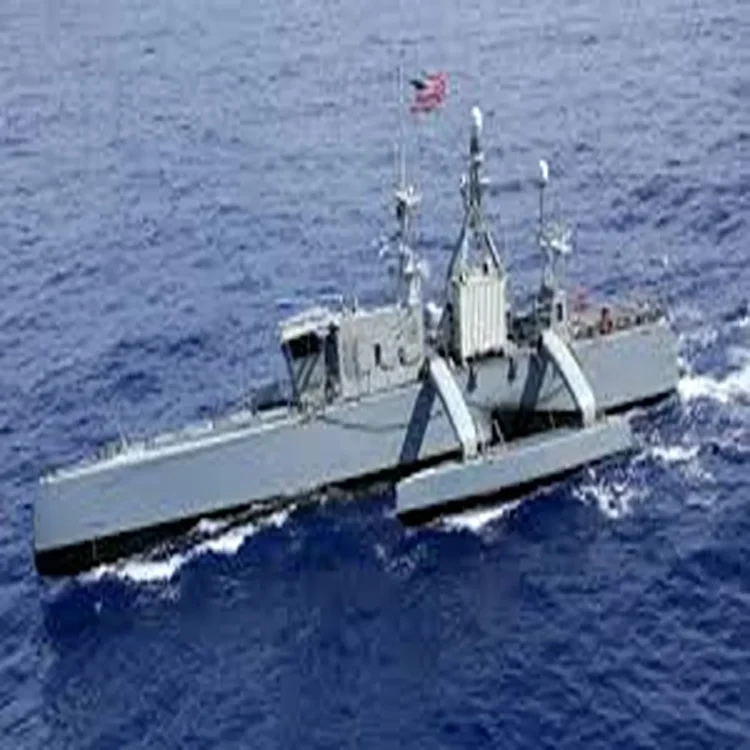
Lawmakers stress urgency in naval modernization
During a Senate Seapower subcommittee hearing held on Tuesday, concerns were raised about the Navy’s pace in adopting autonomous technologies. Senator Rick Scott emphasized that integrating unmanned systems is no longer optional, stating that the Navy must act swiftly to remain competitive. He pointed to ongoing global conflicts, particularly the war in Ukraine, as clear evidence of how rapidly warfare is evolving with the use of autonomous platforms.
Scott underlined that these vessels could significantly extend operational reach while reducing risks faced by American service members. He also noted that competing nations are already making notable progress in this area, putting additional pressure on the United States to respond.
Growing maritime threats demand new strategies
Senator Tim Kaine highlighted the increasing complexity of threats at sea. He referenced repeated attacks on U.S. and allied vessels in recent years, particularly in sensitive regions such as the Persian Gulf and the Strait of Hormuz. According to Kaine, the evolving nature of these threats requires a more adaptive and technologically advanced naval approach.
He stressed that traditional methods alone may no longer be sufficient, urging the Navy to prepare for a security environment that is becoming more unpredictable and technologically driven.
Navy outlines hybrid operational approach
Rear Admiral Derek Trinque, Director of Surface Warfare, clarified that while unmanned vessels are becoming increasingly important, they are not intended to replace traditional ships entirely. Instead, the Navy is focusing on a combined strategy where manned and unmanned systems operate together.
Trinque described unmanned vessels as a vital addition that would enhance the effectiveness of existing fleets. He explained that these systems would support core operations and provide commanders with greater flexibility in mission planning and execution.
Shift from experimentation to rapid deployment
Rebecca Gassler, who oversees acquisition for robotic and autonomous systems in the Navy, indicated that the service is moving beyond testing phases. She stated that unmanned systems are already addressing current operational challenges rather than being viewed as distant future solutions.
Gassler also noted that rival nations are investing heavily in cost-effective and widely distributed autonomous technologies. In response, the U.S. Navy is adopting a strategy aimed at increasing both operational reach and sustained presence at sea.
To support this transition, the Navy has introduced a competitive procurement model. This approach allows private companies to present ready-to-deploy systems, encouraging faster acquisition and scaling of proven technologies.
Fleet expansion plans and industry concerns
Officials revealed that the Navy is planning to procure around 30 medium-sized unmanned surface vessels initially. Over a five-year period, this number could grow to approximately 70, including maintenance and operational support.
However, lawmakers raised concerns about consistency in demand. Senator Scott pointed out that defense companies require clear and stable signals from the government to continue investing in advanced technologies. Without long-term commitment, industry participation could weaken.
Rethinking how naval strength is measured
The discussion also touched on how naval power is evaluated. Senator Kaine suggested that traditional metrics, such as the number of ships, may no longer accurately represent a nation’s true capabilities. He advocated for updated evaluation methods that account for the growing role of unmanned systems and their impact on combat effectiveness.
Global trends influence US strategy
Unmanned maritime systems have gained significant attention worldwide, especially after their effective use in the Black Sea during recent conflicts. These developments have demonstrated how smaller, autonomous platforms can challenge larger, conventional naval forces.
As a result, the U.S. Navy is now adapting to a changing operational landscape. While historically built around large warships and aircraft carriers, it is increasingly focusing on integrating autonomous capabilities across multiple domains, including surface, air, and underwater operations.