
Energy – Oil Prices Surge as Strait Tensions Shake Global Markets
Energy – Oil prices recorded a sharp rise of over 5% on Monday as escalating tensions between Iran and the United States disrupted shipping routes through the Strait of Hormuz, a critical passage for global energy supplies. The renewed uncertainty weighed on investor sentiment, resulting in mixed movements across international stock markets.
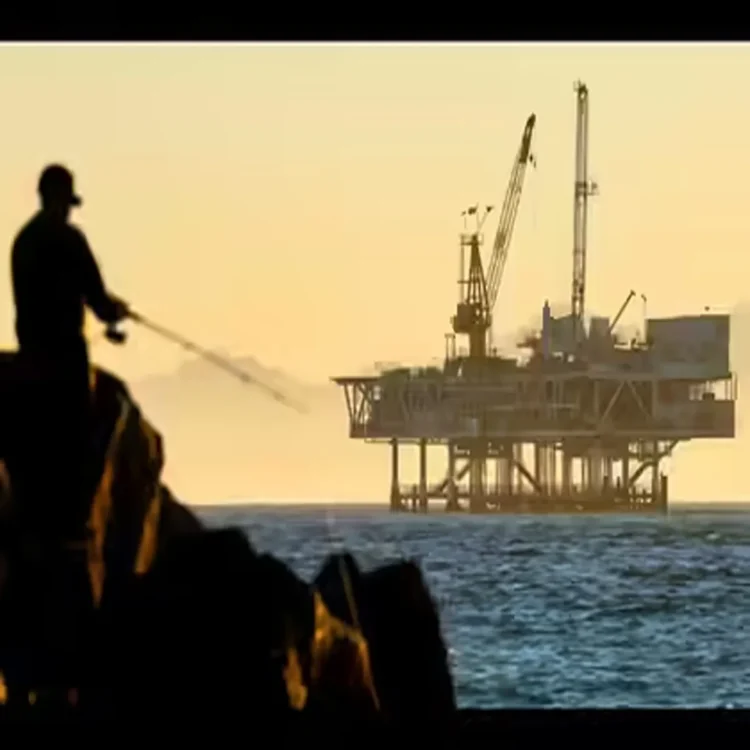
Strait Closure Triggers Fresh Energy Concerns
The situation intensified after Iran reversed its earlier decision to reopen the Strait of Hormuz, effectively restricting tanker movement once again. At the same time, US President Donald Trump confirmed that a naval blockade targeting Iranian ports remains in place. This combination of actions has raised concerns over the smooth flow of oil from the Middle East to global markets.
Benchmark US crude prices climbed by 5.3% to reach $87.88 per barrel, while Brent crude, widely regarded as the global standard, also rose by 5.3% to $95.62 per barrel. The spike reflects fears of supply disruptions in one of the world’s most vital oil transit routes.
Stock Markets Show Mixed Global Response
Equity markets reacted unevenly to the developments. US futures signaled weakness, with both the S&P 500 and Dow Jones Industrial Average contracts slipping by 0.7%. In Europe, key indices also declined, as Germany’s DAX dropped 1.6%, France’s CAC 40 fell 1.2%, and Britain’s FTSE 100 lost 0.6%.
In contrast, Asian markets displayed relative resilience despite the uncertainty. Japan’s Nikkei 225 rose 0.6%, while South Korea’s Kospi gained 0.4%. Hong Kong’s Hang Seng and China’s Shanghai Composite each advanced by 0.8%, and Australia’s S&P/ASX 200 edged slightly higher. India’s Sensex saw a marginal increase, while Thailand’s SET index posted a minor decline.
Market Sentiment Remains Fragile
Analysts caution that recent gains in equities may not be entirely driven by strong fundamentals. According to market commentary, rising stock prices appear to be fueled more by momentum than by firm investor confidence. This suggests that markets could remain vulnerable to sudden shifts in geopolitical developments.
Recent Volatility Highlights Market Sensitivity
Just days earlier, oil prices had fallen significantly after signals emerged that the Strait of Hormuz might reopen. That optimism helped push US stock markets to record highs, with the S&P 500, Dow Jones, and Nasdaq all posting strong gains.
The prospect of uninterrupted oil flow had raised hopes of easing fuel costs globally, potentially reducing inflationary pressures and lowering expenses tied to transportation and borrowing. However, the latest reversal has once again introduced uncertainty into the outlook.
Escalation Raises Risks for Global Economy
Tensions escalated further after reports that the US seized an Iranian-flagged cargo vessel accused of bypassing the blockade. Iran responded strongly, labeling the move as piracy and indicating that a response would follow. Meanwhile, a fragile ceasefire between the two nations is expected to expire soon, adding to concerns about a renewed escalation in conflict.
The ongoing standoff continues to influence global financial markets, with investor sentiment swinging between cautious optimism and deep concern. While strong corporate earnings in the United States have supported stock performance in recent weeks, geopolitical risks remain a dominant factor shaping market direction.
Currency Movements Reflect Market Shifts
In currency trading, the US dollar strengthened slightly against the Japanese yen, rising to 159.02 from 158.79. The euro also showed modest gains, reaching $1.1759 compared to $1.1742 earlier.
As the situation unfolds, investors and policymakers alike are closely monitoring developments in the Strait of Hormuz, given its crucial role in maintaining global energy stability and economic balance.