
Parliament – Debate over Women’s Reservation Bill Sparks Political Clash
Parliament – The ongoing debate around the Women’s Reservation Bill has once again exposed sharp divisions between the government and opposition parties, with leaders trading accusations over delays in its passage.
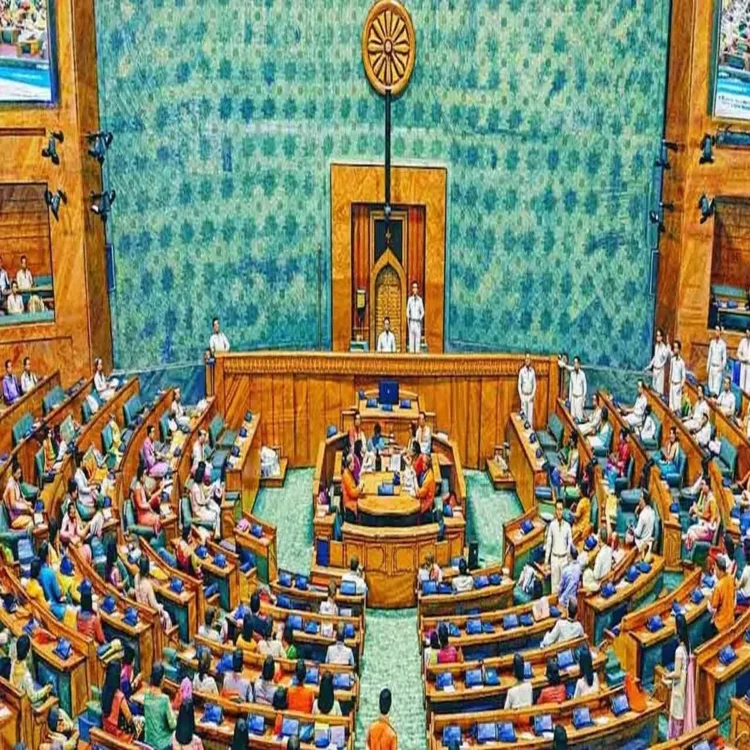
Chief Minister Rekha Gupta on Sunday voiced strong criticism of opposition parties, alleging that their actions have repeatedly stalled progress on the proposed legislation. Speaking at a press briefing, she said the continued delay raises serious concerns about the commitment to improving women’s representation in legislative bodies.
Concerns Over Long-Delayed Legislation
Gupta pointed out that even after more than seven decades since Independence, women remain significantly underrepresented in both Parliament and state assemblies. She described this gap as a persistent challenge that successive governments have attempted to address but have not yet fully resolved.
According to her, the bill has been introduced multiple times over the past 30 years but has consistently faced roadblocks. She argued that each attempt has been met with new objections, preventing the measure from moving forward despite broad public support for greater gender inclusion in politics.
Disagreement on Implementation Timeline
A key point of contention, Gupta said, is the provision in the 2023 version of the bill that links implementation of reservations to the completion of delimitation. She questioned the opposition’s current stance, noting that this condition was clearly outlined in the proposal.
The demand from opposition parties for immediate implementation within the existing 543 Lok Sabha seats was also addressed. Gupta raised practical concerns, asking which current lawmakers would be prepared to give up their constituencies to make space for reserved seats.
She described the Centre’s approach as a balanced solution, suggesting that increasing the total number of seats could accommodate reservations without displacing sitting members. This, she said, would preserve the representation of states while also ensuring fair inclusion of women.
Debate on Seat Expansion and Representation
Highlighting demographic changes, Gupta noted that the number of Lok Sabha seats has remained unchanged since 1971, despite significant population growth. She argued that expanding the House would not only address representation issues but also create room for implementing women’s reservation more effectively.
She maintained that such an approach could help avoid conflicts among political representatives while ensuring that the intent of the bill is fulfilled. In her view, this strategy would benefit all stakeholders and strengthen democratic participation.
Opposition’s Additional Demands Rejected
Gupta also dismissed the opposition’s demand for a “quota within quota,” calling it unnecessary and counterproductive. She suggested that such proposals complicate the process and serve as a reason to delay the bill further rather than facilitate its passage.
Referring to Prime Minister Narendra Modi’s outreach, she claimed that the government had even offered opposition parties the opportunity to share credit for the legislation. However, she alleged that this gesture did not lead to cooperation.
Heated Exchanges During Parliamentary Debate
The debate surrounding the bill has also drawn strong reactions from other political leaders. Uttar Pradesh Chief Minister Yogi Adityanath criticised the language used by opposition members during discussions in the House.
He compared their conduct to a dramatic historical reference, suggesting that the tone of the debate crossed acceptable limits. His remarks added another layer of intensity to an already charged political atmosphere.
Broader Implications for Women’s Representation
The Women’s Reservation Bill remains a significant proposal aimed at ensuring one-third representation for women in legislative bodies. While there is general agreement on the need for greater inclusion, disagreements over the method and timing continue to hinder progress.
As discussions continue, the issue highlights the broader challenge of balancing political consensus with structural reforms. The outcome of this debate is likely to shape the future of gender representation in Indian politics for years to come