
Military – Kim Jong Un Oversees Artillery Drill on National Holiday
Military – North Korean leader Kim Jong-un presided over a large-scale artillery exercise held to mark the birth anniversary of the country’s founding leader, Kim Il-sung, according to official state media reports released on Thursday.
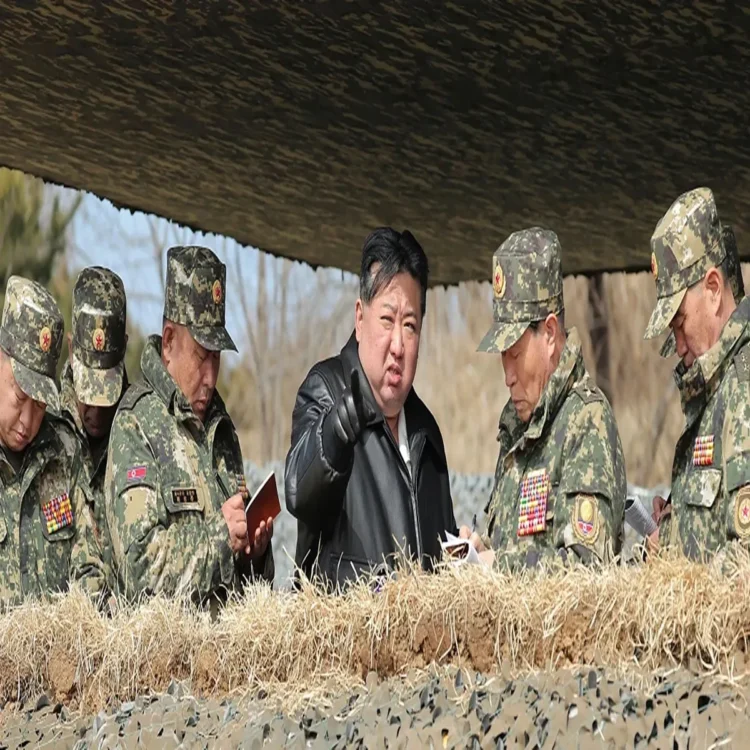
Artillery Exercise Held on Key National Occasion
The drill took place on April 15, a date celebrated nationwide as the “Day of the Sun,” one of the most significant public holidays in North Korea. The Korean Central News Agency (KCNA) reported that multiple artillery units from combined formations of the Korean People’s Army participated in the event, which was conducted in the western region of the country.
This marks the first reported instance of Kim Jong-un attending a military-focused activity on this particular anniversary, a day traditionally associated with commemorative ceremonies rather than defense demonstrations.
Units Demonstrate Combat Preparedness
According to the report, participating artillery units displayed high levels of precision and coordination during the exercise. The performances were described as reflecting strong combat readiness and discipline. Among the units, the artillery division of the Capital City Defence Corps secured the top position, followed by a unit from the army’s 4th Corps.
Officials indicated that the competition was designed not only to assess operational capability but also to strengthen morale and encourage intensive training among troops.
Leadership Emphasizes Role of Artillery
During the event, Kim Jong-un reportedly expressed satisfaction with the exercise, describing it as a meaningful way to mark a major national holiday. He emphasized the strategic importance of artillery forces, calling them a decisive element in determining the outcome of military operations and conflicts.
He also urged the armed forces to continue improving their combat readiness and to focus on modernizing artillery systems in line with the country’s current five-year defense development strategy. The leader stressed the importance of consistent training as a means to ensure preparedness.
Broader Message to Military Establishment
Kim highlighted that the army should remain fully committed to strengthening its operational capabilities. He framed this approach as essential to fulfilling long-standing national defense goals, originally envisioned by earlier leadership.
Observers believe that such messaging is intended to reinforce discipline within the military ranks while aligning current defense priorities with broader strategic objectives.
Symbolism and Political Significance
Analysts suggest that holding a military exercise on a major national holiday may serve multiple purposes. It not only showcases military strength but also reinforces internal unity and loyalty. A South Korean government official noted that the move could be interpreted as an effort to project power domestically and internationally.
At the same time, the event reflects subtle shifts in how leadership symbolism is presented. While the anniversary honors Kim Il-sung, recent patterns indicate a gradual repositioning of focus toward the current leadership.
Absence from Mausoleum Visit Raises Attention
State media reported that senior officials, including Premier Pak Thae-song and other high-ranking party members, visited the Kumsusan Palace of the Sun, where the preserved bodies of former leaders are kept, to pay tribute on the occasion.
However, Kim Jong-un himself did not attend the visit. Instead, he reportedly sent a floral tribute. This continues a pattern observed in recent years, as he has not personally visited the mausoleum on this date since 2023.
Some analysts interpret this as a symbolic shift aimed at consolidating his own leadership identity, rather than emphasizing the legacy of his predecessors.
Ongoing Focus on Military Development
The artillery drill highlights North Korea’s continued emphasis on strengthening its defense capabilities. With ongoing modernization efforts and regular military exercises, the leadership appears focused on maintaining a strong and prepared armed force.
While such events are often presented as routine training activities, their timing and messaging suggest a broader strategic intent, combining military readiness with internal political signaling.