
Defense – China Accelerates Submarine Expansion to Challenge US Naval Edge
Defense – China is steadily advancing its submarine capabilities, investing heavily in new technologies and infrastructure as it seeks to narrow the long-standing gap with the United States in undersea warfare. Much of this progress remains opaque, but recent assessments from US naval intelligence officials offer insight into Beijing’s evolving strategy.
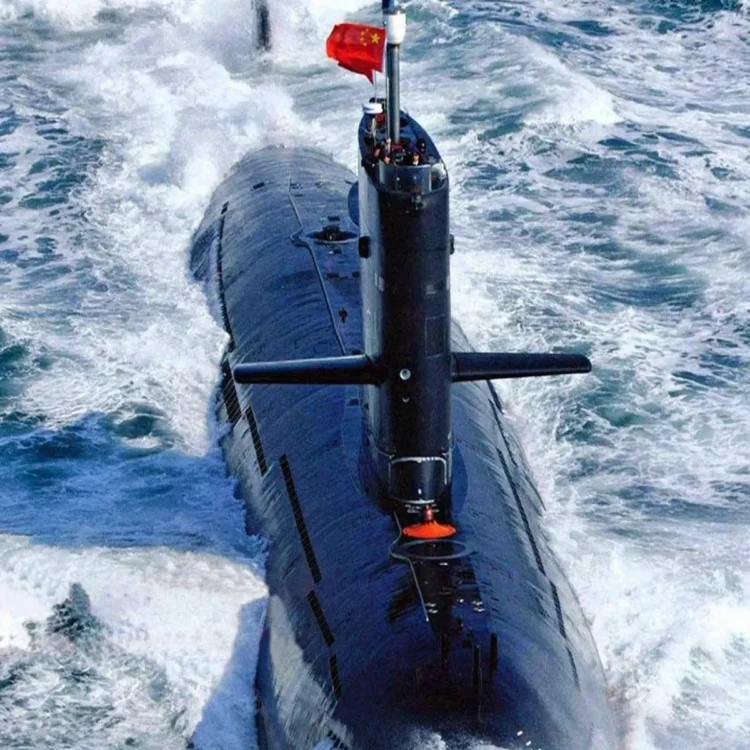
Projected Growth in Submarine Fleet
According to testimony presented in March 2026, China’s submarine fleet is expected to grow significantly in the coming years. Estimates suggest the fleet could reach around 70 vessels by 2027, up from just over 60 today. This expansion includes the addition of several nuclear-powered submarines, while older platforms are gradually retired.
Looking further ahead, projections indicate that by 2035, China may operate approximately 80 submarines, with nearly half powered by nuclear reactors. This shift marks a notable transition in fleet composition, emphasizing endurance and long-range operational capability.
Emergence of Next-Generation Submarines
Recent satellite imagery has revealed what analysts believe to be a new class of nuclear-powered attack submarine under development. Commonly referred to as the Type 095, this platform is expected to feature improved stealth, propulsion systems, and weapon integration.
Early assessments suggest the submarine may incorporate design changes such as advanced rudder configurations and pumpjet propulsion, aimed at enhancing maneuverability and reducing acoustic signatures. While precise performance comparisons with Western submarines remain uncertain, experts believe the new class could represent a substantial leap over earlier Chinese designs.
Expanding Industrial Capacity
China’s progress is supported by major investments in shipbuilding infrastructure. Facilities have been upgraded to handle larger and more complex submarine construction, significantly increasing production capacity. Some estimates indicate that China can now build multiple nuclear submarines simultaneously across its shipyards.
This industrial expansion has enabled faster production rates, with reports suggesting China may be launching several nuclear submarines annually—outpacing current US construction rates.
Shift Toward Nuclear-Powered Fleet
A key aspect of China’s naval strategy is the gradual move away from diesel-electric submarines toward a predominantly nuclear-powered fleet. Nuclear submarines offer greater endurance and operational flexibility, allowing deployments far from home waters.
At the same time, China continues to maintain a sizable force of advanced conventional submarines equipped with air-independent propulsion systems, which enhance their underwater endurance.
Advancements in Weapons and Technology
China is also improving the weapons carried by its submarines. New missile systems, including long-range cruise and ballistic missiles, are being integrated into next-generation platforms. Some reports indicate the development of hypersonic anti-ship missiles that could be launched from submarines, significantly enhancing strike capabilities.
In addition to offensive systems, China is investing in unmanned underwater vehicles and advanced torpedoes, broadening its operational toolkit for surveillance, reconnaissance, and combat missions.
Undersea Surveillance and Detection Networks
Beyond submarines themselves, China is building a layered undersea surveillance network designed to monitor maritime activity. This system integrates seabed sensors, floating platforms, and unmanned vehicles, creating a more comprehensive picture of underwater environments.
Such networks aim to improve detection and tracking capabilities in strategically important areas, rather than attempting to cover entire ocean regions.
Challenges and Strategic Limitations
Despite these advancements, analysts note that China still faces challenges in achieving consistent stealth and survivability for its submarine fleet. Reports from Chinese military sources have acknowledged vulnerabilities, particularly in areas where foreign surveillance systems are well established.
Concerns have been raised about the likelihood of submarines being detected during deployment or while operating નજીક key maritime zones. These limitations highlight the ongoing competition in undersea warfare, where detection capabilities remain a निर्णायक factor.
Expanding Operational Reach
Looking ahead, China is expected to extend its submarine operations beyond the Indo-Pacific region. Future deployments could include regular patrols in the Indian Ocean and potentially farther afield, reflecting broader strategic ambitions.
As China continues to modernize its naval forces, its submarine program is likely to play a central role in shaping regional and global maritime dynamics in the decades to come.