
HumanRights – Allegations of Enforced Disappearances Raise Concerns in Pakistan
HumanRights – Human rights activist Arif Aajakia has raised serious concerns about alleged violations taking place in Pakistan, pointing to claims of enforced disappearances, extrajudicial killings, and suppression of dissent in several regions. Speaking in an interview, he highlighted Balochistan, Sindh, and Khyber Pakhtunkhwa as areas where such incidents are reportedly widespread.
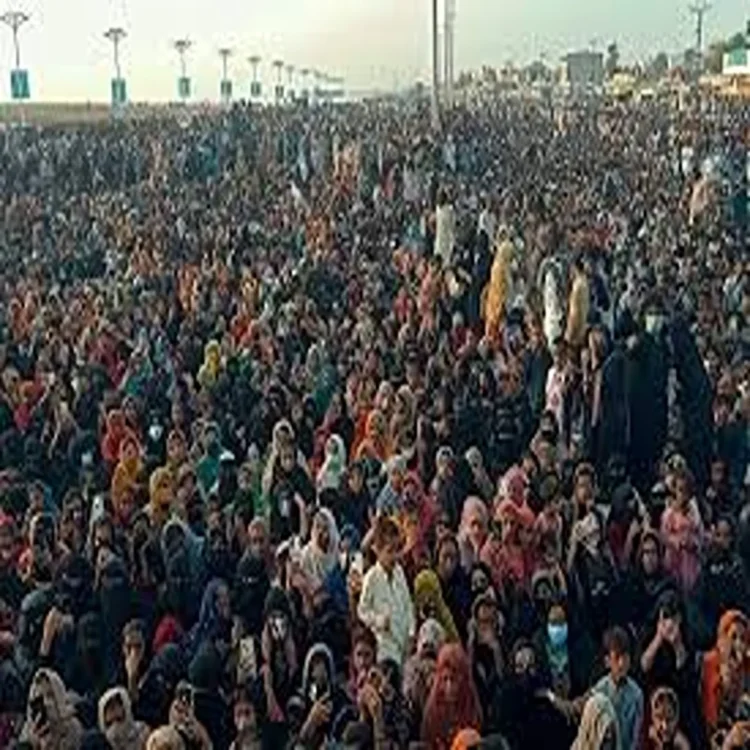
Claims of Missing Individuals and Lack of Accountability
According to Aajakia, thousands of individuals, including political workers and ordinary citizens, have reportedly gone missing over the years. He stated that in some cases, those who disappear are later found dead, with visible signs suggesting torture, while others remain unaccounted for indefinitely.
Families of the missing often turn to the courts soon after such incidents, hoping for justice or at least information about their loved ones. However, Aajakia alleged that these efforts rarely lead to meaningful outcomes. He also referred to reports of mass graves, which have further heightened fears and added to the sense of instability in affected regions.
Allegations Against State Institutions
Aajakia claimed that the Pakistan Army exercises significant influence over key state institutions, including the judiciary and media. He suggested that this level of control limits transparency and restricts accountability mechanisms.
He further alleged that individuals speaking out on basic civic issues, such as access to water or poor living conditions, are also being targeted. In his view, these actions go beyond standard human rights violations and represent more severe breaches that demand international attention.
Historical Context and International Response
Referring to past events, Aajakia mentioned the 1971 Bangladesh Liberation War, arguing that the alleged atrocities committed during that period have not been adequately addressed at the global level. He questioned why Pakistan has not faced the same level of international legal scrutiny seen in other cases involving alleged war crimes.
This comparison, he said, raises broader questions about consistency in the global justice system and whether similar standards are applied across different regions and conflicts.
Concerns Over Blasphemy Laws and Minority Rights
The activist also expressed concern over Pakistan’s blasphemy laws, describing them as vulnerable to misuse. He claimed that these laws are sometimes used to target minorities and individuals critical of prevailing systems.
He pointed to incidents of mob violence, including the killing of a foreign national in a high-profile case, as examples of how religious sentiments can be exploited. Additionally, Aajakia alleged that lawyers and human rights defenders who attempt to challenge such cases have themselves faced arrests or strict legal action.
Allegations of Regional Security Implications
Beyond internal issues, Aajakia also raised allegations regarding Pakistan’s role in regional security matters. He claimed that extremist groups allegedly supported by elements within the country have been involved in attacks in neighboring regions.
He referred to incidents such as the Mumbai attacks in 2008 and the Pulwama attack in 2019, suggesting that these events have been linked to groups operating from Pakistani soil. He also mentioned concerns about militant networks in Afghanistan and their possible connections.
Broader Implications
The allegations presented by Aajakia highlight ongoing concerns surrounding governance, human rights, and regional stability. While these claims remain serious, they also underline the need for transparent investigations and dialogue at both national and international levels.
Observers note that addressing such concerns requires cooperation between institutions, legal reforms, and stronger accountability frameworks to ensure the protection of civil liberties and long-term peace in the region.