
Manuscripts – Questions Raised Over Access to Gyan Bharatam Archives
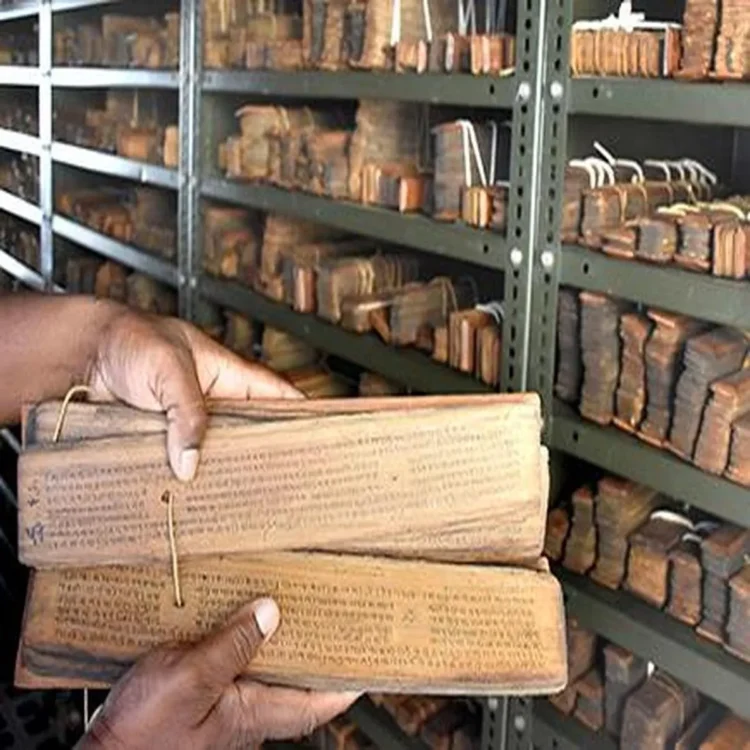
Manuscripts – Congress MP Shashi Tharoor has questioned the Centre’s claims regarding public access to digitised manuscripts under the Gyan Bharatam initiative, pointing out significant gaps in transparency and clarity. While the government has highlighted the availability of thousands of manuscripts online, Tharoor argues that essential details about how people can actually access these materials remain unclear.
Concerns Over Accessibility and Transparency
In a statement shared on social media, Tharoor referred to an official government reply dated February 2, addressing queries he had raised along with Nationalist Congress Party leader Sharadchandra Pawar. He noted that although the Ministry of Culture provided a general overview of the project, it failed to address several critical aspects.
According to him, there is no clear information on how users can access the digitised manuscripts, what language interfaces are available, or how widely the platform can be used. This lack of detail, he suggested, limits the usefulness of a project intended to make India’s manuscript heritage accessible to a broad audience.
Government Data Highlights Progress
The government, in its response to Parliament, stated that over 7.5 lakh manuscripts have been digitised as part of the initiative. Of these, approximately 1.29 lakh manuscripts are currently available for public viewing through the dedicated Gyan Bharatam portal.
Additionally, more than eight lakh digitised manuscripts exist in various formats such as DVDs, hard drives, and microfilms across the country. However, only a fraction of these are accessible online, and even then, only in a limited viewing format.
Lack of Detailed Breakdown
Tharoor also pointed out the absence of detailed data in the government’s response. There was no state-wise or language-wise breakdown of manuscripts that have been identified, catalogued, preserved, or digitised. Instead, only overall figures were provided, which he said do not offer meaningful insights into the project’s reach or progress.
He further noted that annexures listing cluster and independent centres did not specify how many institutions are associated with each centre. Region-specific data, including details about manuscript coverage and digitisation progress in states like Kerala, was also missing.
Financial Accountability Under Question
Another major concern raised relates to funding transparency. The government has approved an allocation of Rs 491.66 crore for the period between 2025 and 2031 to support the initiative. However, Tharoor highlighted that the official response does not include a year-wise breakdown of funds, details of expenditure so far, or information on how effectively the allocated budget is being used.
He argued that without such financial clarity, it becomes difficult to assess accountability and monitor the project’s implementation.
Technical Standards Without Oversight Clarity
While the Ministry of Culture has outlined technical standards for digitisation, Tharoor pointed out that there is no explanation of how these standards are monitored or enforced. This raises concerns about consistency and quality across different centres involved in the project.
Broader Implications for Cultural Access
Tharoor warned that the lack of transparency could weaken parliamentary oversight and reduce the effectiveness of a mission aimed at preserving and sharing India’s cultural heritage. He stressed that scholars, institutions, and the general public may remain disconnected from valuable historical resources if access systems are not clearly defined.
Government Vision and Ongoing Efforts
The Gyan Bharatam initiative, announced in the Union Budget 2025–26, is a flagship programme of the Ministry of Culture. It aims to identify, preserve, and digitise India’s vast collection of manuscripts, aligning with the broader vision of Viksit Bharat 2047.
Union Culture Minister Gajendra Singh Shekhawat has described the initiative as a step toward combining cultural preservation with knowledge development, ensuring that traditional wisdom continues to inspire future generations.
Earlier this month, the government also launched a three-month nationwide survey to document, conserve, and digitise manuscripts at the district level. Officials stated that this exercise is intended to expand the scope and accuracy of the national manuscript repository.
Despite these efforts, concerns raised by lawmakers indicate that significant improvements may be needed to ensure the initiative delivers on its promise of accessibility and transparency.