
CorruptionCase – Supreme Court Reviews Lokpal Authority in Mahua Moitra Inquiry
CorruptionCase – The Supreme Court has initiated a review of a legal dispute involving the powers of the Lokpal and the investigation against Trinamool Congress Member of Parliament Mahua Moitra in the alleged cash-for-query controversy.
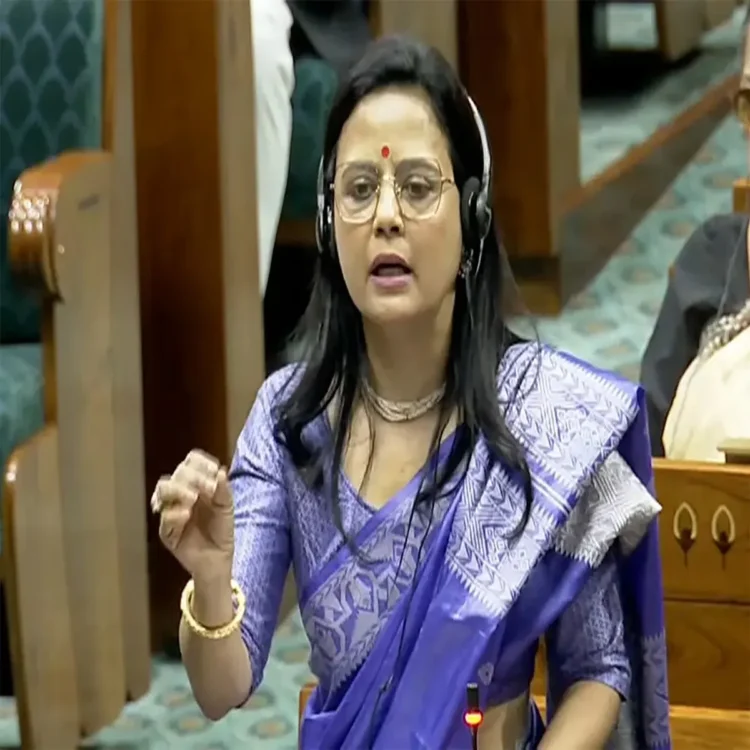
The court issued notices to several parties after the Lokpal of India challenged a decision by the Delhi High Court that had set aside its approval for the Central Bureau of Investigation to file a charge sheet in the matter. The development marks the beginning of a wider judicial examination of how anti corruption investigations involving public officials should proceed under existing law.
Supreme Court Seeks Responses From Key Parties
A bench headed by Chief Justice of India Surya Kant and Justice Joymalya Bagchi directed Mahua Moitra, the Central Bureau of Investigation, and Bharatiya Janata Party Member of Parliament Nishikant Dubey to submit their responses within three weeks. Dubey had earlier alleged that Moitra accepted financial benefits and expensive gifts from Dubai-based businessman Darshan Hiranandani in return for asking certain questions in Parliament.
During the hearing, the bench also temporarily halted the Delhi High Court’s directive that had required the Lokpal to take a fresh decision on granting sanction to the CBI within a fixed period of 60 days. The Supreme Court stated that until the matter is examined in detail, the Lokpal would not be permitted to direct the CBI to file a charge sheet.
Interim Protection From Coercive Action
The court clarified that, for now, no coercive steps should be taken against the Trinamool Congress leader in relation to the case. This temporary relief will remain in place while the court studies the legal questions raised in the petition.
The judges also indicated that the proceedings would focus on interpreting the provisions of the Lokpal and Lokayuktas Act, 2013, particularly the extent of authority granted to the anti corruption watchdog in initiating and supervising investigations.
Lokpal Raises Concern Over High Court Interpretation
Senior advocate Ranjit Kumar, representing the Lokpal, told the court that the petition was not directed against any specific individual but instead sought clarity on the interpretation of the law governing anti corruption investigations.
According to Kumar, the Delhi High Court’s interpretation of Section 20 of the Lokpal Act, which deals with the process of inquiry and investigation, could significantly affect how the institution functions in future cases. He argued that the judgment had created uncertainty about whether the Lokpal could independently grant sanction for filing a charge sheet.
The Lokpal has therefore requested the Supreme Court to provide an authoritative interpretation of the procedures that should be followed when directing investigations and granting approvals in corruption cases involving public servants.
Legal Framework Under Scrutiny
In its petition, the Lokpal emphasized that the Lokpal and Lokayuktas Act is a special law designed specifically to address corruption allegations against public officials. The legislation, it argued, outlines a structured mechanism allowing the Lokpal to order preliminary inquiries, supervise investigations carried out by agencies such as the CBI, and grant sanction for filing cases or charge sheets.
The petition further stated that the purpose of the law is to ensure that allegations of corruption are examined without delay while also protecting honest officials from unfounded complaints.
Officials associated with the anti corruption body also expressed concern that if the High Court’s interpretation remains unchanged, accused individuals may attempt to halt investigations early by approaching courts before charges are formally filed.
Background of the Cash for Query Allegations
The controversy began after BJP MP Nishikant Dubey accused Mahua Moitra of receiving money and expensive gifts from businessman Darshan Hiranandani. According to the allegations, the benefits were provided in exchange for raising specific questions in Parliament that could potentially benefit the businessman.
Following the complaint, the Lokpal directed the Central Bureau of Investigation to conduct a preliminary inquiry. After reviewing the findings, the Lokpal later ordered a full investigation into the matter.
In November 2025, the Lokpal granted approval allowing the CBI to proceed with filing a charge sheet before a competent court. However, the Delhi High Court subsequently set aside that approval in December 2025.
Delhi High Court’s Earlier Decision
A bench of Justices Anil Kshetarpal and Harish Vaidyanathan Shankar ruled that the sanction order issued by the Lokpal did not properly follow the requirements of the Lokpal Act. The High Court observed that the law requires a comprehensive sanction process that considers all materials and responses submitted by the public servant involved.
The court accepted Moitra’s argument that her comments and supporting material had not been adequately examined before the sanction was granted. It therefore directed the Lokpal to reconsider the issue and take a fresh decision within a specified time frame.
In January this year, the High Court allowed the Lokpal an additional two months to complete the process, noting that no further extension would be granted.
Broader Legal Questions Before the Apex Court
With the Lokpal now challenging the High Court ruling, the Supreme Court is expected to address broader legal questions about the functioning of the anti corruption institution. These include the procedure the Lokpal must follow during inquiries and investigations and the extent to which courts can review its decisions.
The outcome of the case could clarify the balance between investigative authority and judicial oversight in corruption cases involving public officials.