
Women Representation – Fourteen Women Win Seats in Nepal Parliament Elections
Women Representation – Nepal’s recently concluded general elections have brought 14 women into the country’s federal parliament, accounting for slightly more than eight percent of the total seats filled through direct voting. The outcome marks an improvement from the previous election cycle, though it still falls far short of the representation envisioned under the country’s constitution.
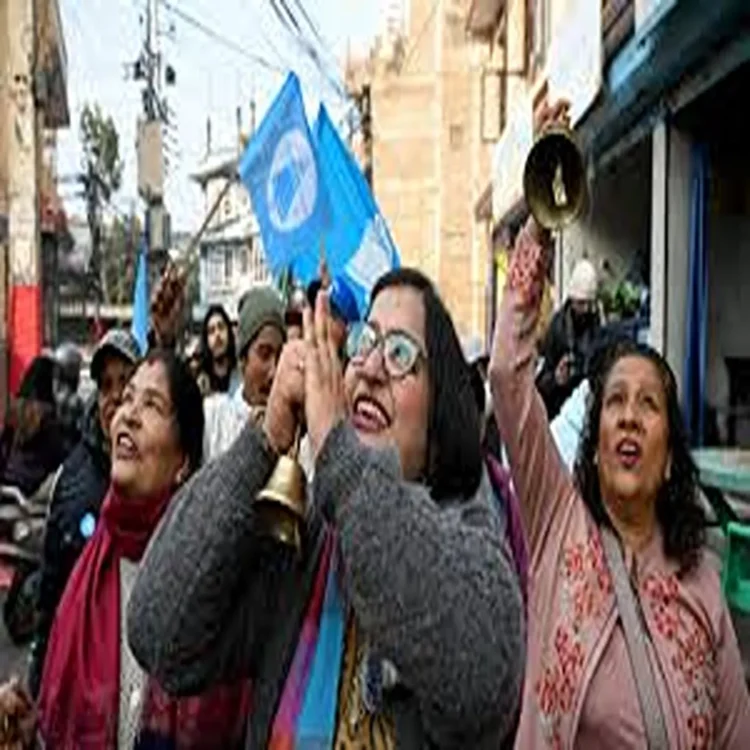
Women Secure Limited Share of Directly Elected Seats
Out of the 14 women who won seats through the first-past-the-post electoral system, 13 candidates belong to the Rastriya Swatantra Party (RSP), while one candidate represents the Nepali Congress. Their victories collectively raise the number of directly elected female lawmakers compared with the 2022 parliamentary elections, when only nine women secured seats in the lower house, representing about 5.45 percent of the chamber.
With this latest result, women now make up roughly 8.48 percent of those elected through the direct voting system. Although the figure indicates progress, it remains well below the constitutional target.
Constitutional Requirement Yet to Be Fully Achieved
Nepal’s constitution requires that women hold at least 33 percent of the seats in Parliament. However, political parties have struggled to meet this requirement through direct elections alone. The proportional representation system is expected to help bridge the gap, as parties must allocate a share of those seats to women and other groups.
The House of Representatives, the lower chamber of Nepal’s federal parliament, consists of 275 members. Of these, 165 are chosen through direct elections, while the remaining 110 seats are filled using proportional representation based on party vote share.
Historical Context of Women’s Participation
The highest number of women elected directly to Nepal’s parliament came during the first Constituent Assembly election in 2008. In that historic vote, 30 women secured seats. That election followed the end of Nepal’s decade-long armed conflict and the integration of former insurgents into mainstream politics.
At the time, the Communist Party of Nepal (Maoist) emerged as the largest political force. A significant portion of the women elected then had previously been associated with the Maoist guerrilla movement, reflecting the political changes that followed the peace process.
Notable Election Victories
Several of the newly elected women secured decisive victories against well-known political figures. Former Deputy Speaker Indira Ranamagar, representing the Rastriya Swatantra Party, won a major contest by defeating Dev Raj Ghimire, who had served as Speaker of the dissolved House of Representatives from the Communist Party of Nepal (Unified Marxist–Leninist). Ranamagar received 60,110 votes, while Ghimire secured 11,368, resulting in a margin of 48,742 votes.
Another high-profile result came from Rubina Acharya of the Rastriya Swatantra Party, who defeated senior Nepali Congress leader Shekhar Koirala. Acharya obtained 55,513 votes compared with Koirala’s 12,850, marking a clear victory.
Similarly, Sobita Gautam achieved a strong win against Renu Dahal of the Nepal Communist Party. Dahal, the daughter of former prime minister Pushpa Kamal Dahal ‘Prachanda’, had stepped down from her position as mayor of Bharatpur Metropolitan City to contest the election. Gautam secured 59,277 votes, while Dahal received 20,615.
Other Women Elected to Parliament
In addition to these prominent victories, several other women from the Rastriya Swatantra Party also secured parliamentary seats. The list includes Nisha Dangi, Asha Jha, Pushpa Kumari Chaudhari, Gauri Kumari, Nitima Bhandari, Ashika Tamang, Ranju Neupane, Toshima Karki, Bina Gurung, and Komal Gyawali.
The Nepali Congress also saw one female candidate elected through direct voting, with 45-year-old Vasana Thapa winning a seat.
Gradual Progress but Challenges Remain
While the increase in the number of women elected directly to parliament indicates gradual progress, analysts note that the overall representation still relies heavily on the proportional representation system to meet constitutional requirements. Political observers say stronger efforts from parties during candidate selection will be necessary if Nepal is to achieve more balanced gender representation through direct elections in future polls.