
Education – Digvijaya Singh Urges JNU to Revoke Student Suspensions
Education – Jawaharlal Nehru University has found itself at the centre of a renewed debate over student rights and administrative action after senior Congress leader Digvijaya Singh appealed for the withdrawal of disciplinary measures taken against members of the university’s students’ union.
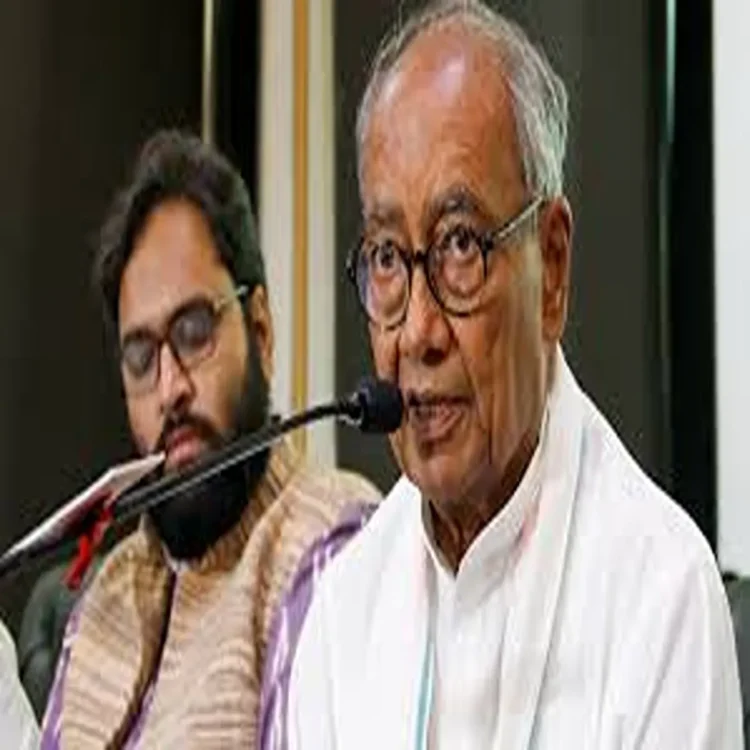
Congress leader Digvijaya Singh has called on the Vice Chancellor of Jawaharlal Nehru University to reconsider the rustication of several elected student representatives, arguing that dialogue, rather than punishment, is essential to preserve the institution’s academic environment.
Appeal to Protect Institutional Character
In a message shared on social media, Singh described Jawaharlal Nehru University as one of India’s leading centres for humanities education, noting its recognition at both national and international levels. He stressed that student unions, elected by a majority mandate, have the legitimate right to raise concerns related to academic quality, campus facilities and student welfare.
Singh urged the university administration to reverse the suspension of all elected office bearers and initiate discussions to resolve disagreements peacefully. He said safeguarding the university’s identity and standing should remain a shared responsibility, adding that constructive engagement would better serve the institution’s long-term interests.
Concerns Over Funding Allocation
The senior Congress leader also referred to recommendations made by the Parliamentary Standing Committee on Higher Education, which had advocated increased financial support for universities to strengthen infrastructure and maintenance. He expressed concern that the allocation for JNU has declined in recent years, asserting that funding should not only be restored but also increased at a rate comparable to other central universities, including Delhi University.
According to Singh, ensuring adequate resources is vital for maintaining academic standards and supporting research and student services.
Disciplinary Action Against Student Leaders
The appeal comes days after the university administration ordered the rustication of four office bearers of the Jawaharlal Nehru University Students’ Union (JNUSU) for two semesters. Among those suspended are union president Aditi Mishra and vice president Gopika K Babu. The action follows allegations of vandalism during a campus protest.
In addition, General Secretary Sunil Yadav, Joint Secretary Danish Ali and former JNUSU president Nitish Kumar have been penalised for allegedly damaging Facial Recognition Technology systems installed at the Dr BR Ambedkar Central Library. The access control system, reportedly set up at a cost of approximately Rs 20 lakh, was allegedly destroyed on November 21, 2025.
University authorities have imposed a fine of Rs 20,000 on Nitish Kumar and declared the affected students out of bounds from the campus with immediate effect.
Student Union’s Response
The JNUSU has strongly criticised the administration’s decision, describing it as an attempt to curb student expression. In a statement, the union argued that the disciplinary measures were announced ahead of planned protests against the suspension of the University Grants Commission’s Promotion of Equity Regulations, 2026.
Student representatives have maintained that their demonstrations were aimed at addressing policy issues and safeguarding access and equity in higher education. On Sunday, union members organised a protest within the campus, reiterating their demand for the revocation of rustication orders and calling for clarity on the implementation of UGC guidelines.
Broader Debate on Campus Governance
The developments at JNU have once again brought attention to the balance between administrative authority and student activism in Indian universities. While university officials have cited damage to property as grounds for action, student leaders and opposition figures argue that disciplinary measures should not override democratic engagement.
As discussions continue, the focus remains on whether the administration and student representatives can find common ground through dialogue. Observers note that the outcome may shape not only the immediate campus climate but also wider conversations about student rights, university funding and governance in India’s higher education system.