
Judiciary – Supreme Court Reviews High Court Remarks on Judge
Judiciary – The Supreme Court has agreed to examine concerns raised by a Delhi judge over adverse remarks made against him by the Delhi High Court in a matrimonial case.
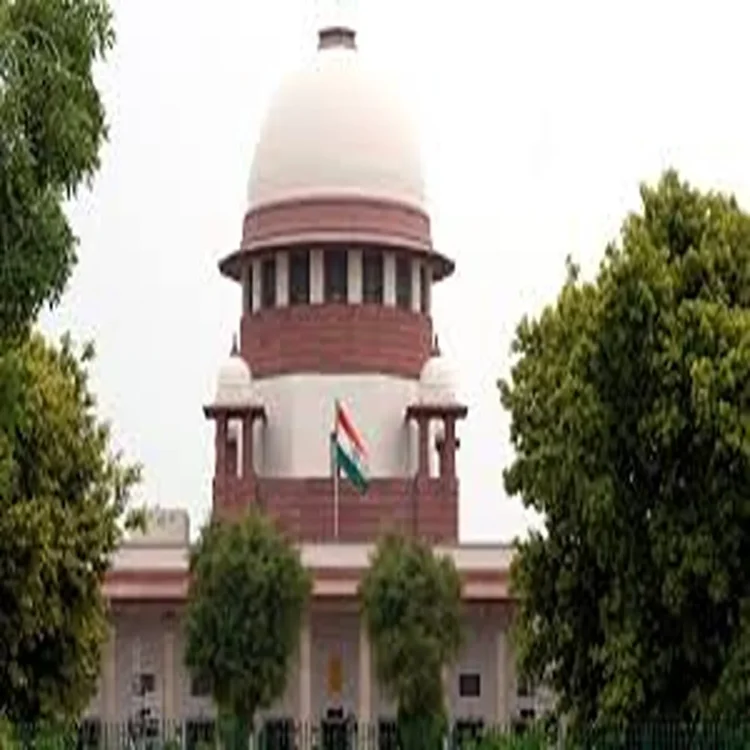
A judge serving in Delhi’s district judiciary has moved the Supreme Court after the Delhi High Court passed critical observations against him while overturning one of his divorce rulings. The top court has now decided to look into whether those remarks were justified, though it has declined to put them on hold for now.
Divorce Ruling Under Scrutiny
The controversy stems from a matrimonial dispute decided by Harish Kumar, a family court judge posted at the Patiala House Courts in Delhi. In that case, both spouses had filed separate petitions seeking divorce. Instead of examining the matter on contested grounds, the judge treated the cross-petitions as indicative of mutual consent and granted a divorce under Section 13(B) of the Hindu Marriage Act.
Section 13(B) provides for divorce by mutual consent, subject to specific statutory requirements and procedures. However, the approach adopted by the family court became the subject of challenge before the Delhi High Court, where one of the parties questioned the legality of the decree.
High Court Sets Aside Decree
The Delhi High Court, while hearing the appeal, disagreed with the method adopted by the family court. It set aside the divorce decree and made strong remarks about the manner in which the judgment had been delivered.
The high court observed that the family court judge appeared to have exercised powers that are ordinarily vested in the Supreme Court under Article 142 of the Constitution. Article 142 empowers the Supreme Court to pass orders necessary to do complete justice in a case, a jurisdiction not available to district courts.
In addition to overturning the divorce decree, the high court directed the judge to undergo a refresher course, signaling its concern over the legal reasoning employed in the case.
Supreme Court Agrees to Examine Issue
Challenging these adverse observations, Judge Kumar approached the Supreme Court, contending that the remarks were unwarranted. On Wednesday, a bench comprising Justice Vikram Nath and Justice Sandeep Mehta agreed to examine the plea.
During the hearing, the bench noted that the high court had suggested that the district judge was exercising powers akin to those under Article 142 while functioning at the trial court level. The Supreme Court indicated that it would consider whether such strictures were justified in the circumstances.
At the same time, the bench declined to stay the critical comments made by the high court. The justices pointed out that the high court had not imposed any punitive action but had merely asked the judge to undergo further training.
Questions on Judicial Boundaries
The case brings into focus the boundaries of judicial discretion at different levels of the judiciary. While family courts routinely handle sensitive matrimonial disputes, their powers remain confined to the statutory framework laid down by law. The use of extraordinary constitutional powers is reserved for the Supreme Court.
The Supreme Court had initially shown reluctance to interfere in the matter. However, after hearing submissions, it agreed to issue notice and examine the grievance raised by the district judge. The outcome of the proceedings is likely to clarify the limits of judicial authority and the circumstances in which higher courts may issue adverse remarks against subordinate judges.
For now, the high court’s observations remain on record, and the direction for a refresher course stands. The Supreme Court’s forthcoming decision will determine whether those comments were proportionate and legally sound.