
Economy – Trump Cites Market Records, Pushes Voting Reform Plan
Economy – President Donald Trump said the United States economy is performing strongly, pointing to record stock market levels and lower energy prices as signs of progress. In an interview on Fox Business with Larry Kudlow, Trump described current economic conditions as robust and emphasized that his administration’s policies are producing measurable results.
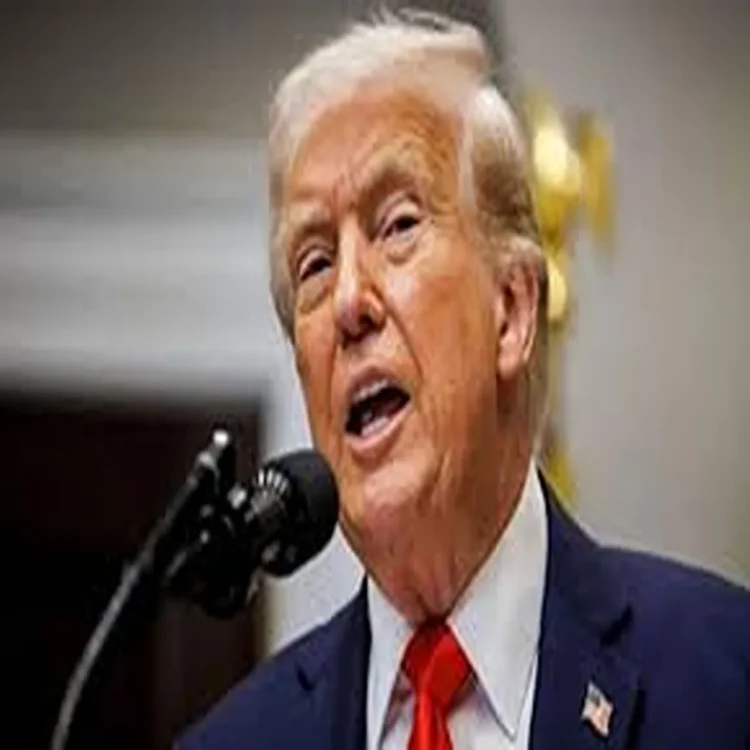
Market Highs and Energy Costs in Focus
During the televised discussion, Trump referenced major gains in financial markets, noting milestones in benchmark indexes. He highlighted the performance of the Dow Jones Industrial Average and the S&P 500, suggesting that recent figures reflect investor confidence as his first year in office concludes.
Trump also addressed consumer costs, arguing that lower fuel prices have improved affordability for American families. Recalling a recent visit to Iowa, he said gasoline prices there had fallen to around $1.85 per gallon, with many areas reporting prices below $2. He described the decline as comparable to a broad tax reduction for households, saying reduced energy costs ease financial pressure across sectors.
Economic analysts often view fuel prices as a significant driver of inflation trends, and Trump maintained that recent declines demonstrate progress in stabilizing the broader economy.
Legislative Agenda and Budget Package
Kudlow questioned Trump about whether he plans to pursue another large reconciliation package following passage of what he previously described as a sweeping legislative measure. Trump defended the earlier bill, saying it consolidated several policy proposals into a single framework designed to cover a four-year period.
He characterized the legislation as one of the most substantial bills ever approved by Congress, arguing that it laid the foundation for economic growth and fiscal reform. While he did not provide details on a potential follow-up package, he suggested the administration remains focused on implementing the current law.
Push for the “Save America Act”
Shifting to election policy, Trump said he wants Congress to approve a separate voting measure he calls the “Save America Act” before the 2026 midterm elections. According to Trump, the proposal would require voter identification and proof of citizenship in federal elections.
He also expressed support for limiting mail-in voting, except in specific circumstances such as military service, illness, or extended absence. Trump cited polling data he said shows broad public backing for stricter voting requirements, including support from a majority of Democratic voters, though he criticized Democratic lawmakers for opposing such measures.
Election administration in the United States is largely governed by individual states, operating within federal constitutional guidelines. Debates over voter ID laws and mail-in ballots have remained central issues in national political discussions in recent years.
Views on Monetary Policy and Tariffs
On monetary policy, Trump spoke positively about Kevin Warsh, his selection for a role at the Federal Reserve. He said Warsh would be an influential figure and reiterated his belief that interest rates should be lower to reduce federal borrowing costs. Trump argued that even a single percentage point change in rates has significant budget implications.
Trade policy also featured prominently in the interview. Trump defended his use of tariffs, describing them as both an economic and diplomatic tool. He said tariffs have generated substantial revenue and claimed they have encouraged other countries to resolve disputes. While economists remain divided on the broader impact of tariffs, Trump maintained they serve as effective leverage in international negotiations.
Government Spending and Reform Efforts
The president further stated that his administration continues to pursue cost-cutting initiatives aimed at reducing government waste. He referred to ongoing efforts under what he described as a restructuring approach within federal agencies, saying significant savings have already been achieved.
The next midterm elections, scheduled for November 2026, will determine control of Congress and numerous statewide offices. As lawmakers prepare for that cycle, economic performance, trade policy, interest rates, and voting laws are expected to remain prominent issues in the national debate.