
Weather – Unusual March Haze Reduces Visibility Across Several North Indian Cities
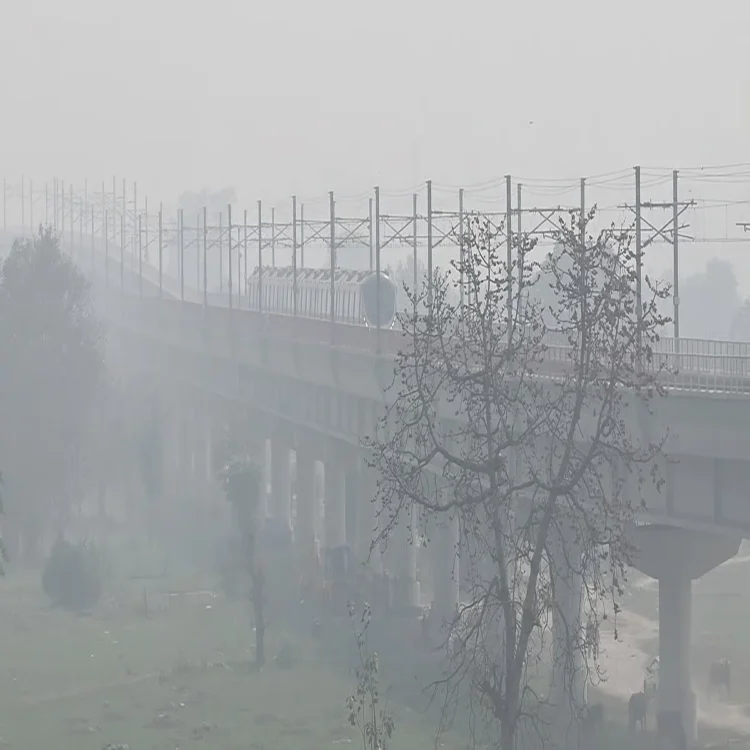
Weather – A thick layer of haze resembling winter fog spread across several parts of North India on Tuesday, lowering visibility and raising concerns among residents in many cities. Areas such as Meerut, Moradabad, Greater Noida, and Saharanpur reported noticeably hazy conditions during the morning hours, while parts of Haryana and lower Uttarakhand experienced similar weather. The reduced visibility also extended to Delhi and nearby regions, where air pollution levels have already been rising in recent days.
Meteorological Department Explains the Fog Formation
According to the India Meteorological Department, the hazy conditions were mainly caused by dense fog that developed over parts of Uttar Pradesh and nearby regions. Officials said such weather patterns are not unusual for early March, although they often surprise residents who associate fog mainly with the winter months.
Meteorologists explained that moisture carried by easterly winds at lower atmospheric levels created favorable conditions for fog formation during the early hours of the day. This moisture buildup led to reduced visibility in several locations across the northern plains.
Influence of Western Disturbance
Weather experts linked the situation to a western disturbance currently affecting the western Himalayan region. Such disturbances often alter wind patterns across northern India and can introduce moisture into the atmosphere.
When easterly winds move in at lower altitudes, they bring humid air from nearby regions. Under cooler morning conditions, this moisture can condense into dense fog. The India Meteorological Department noted that this process played a key role in the haze observed on Tuesday morning.
Officials also pointed out that similar fog events have been recorded in March in previous years when atmospheric conditions matched those seen this week.
Historical Instances of March Fog
The weather office highlighted that dense fog during March is not unprecedented in the Indo-Gangetic plains. Historical records show several comparable incidents in the past.
One notable example occurred between March 6 and March 8 in 2008, when dense fog disrupted power transmission systems across parts of North India. According to meteorological data, such events tend to occur when humidity levels rise suddenly and wind patterns change due to regional weather systems.
Experts say these episodes may appear unusual to the public but are part of natural seasonal variability in the region’s climate.
Private Weather Agency Points to Dust Haze
While government meteorologists described the phenomenon as fog, private forecasting agency Skymet Weather Services offered a slightly different explanation. The agency suggested that the haze may largely consist of suspended dust particles rather than moisture-based fog.
According to Skymet, strong westerly winds between March 5 and March 7 carried dust from regions including Balochistan, central Pakistan, and the Thar Desert toward northern India. When wind speeds slowed afterward, the dust remained suspended in the lower atmosphere, creating a widespread haze.
Meteorologist Mahesh Palawat from Skymet explained that the decline in wind speed prevented the particles from dispersing quickly, allowing them to linger over the region.
Rumours About Foreign Smoke Rejected
In recent days, speculation circulated online suggesting that the haze might be linked to smoke drifting from refinery fires in Iran. Weather specialists have dismissed these claims, stating that current wind patterns do not support the possibility of smoke traveling such long distances toward Delhi or the surrounding areas.
Experts emphasized that local atmospheric conditions and regional dust transport are sufficient to explain the current haze.
Delhi Records Unseasonably High Temperatures
Alongside the hazy skies, Delhi experienced another unusually warm day on Tuesday. The maximum temperature reached 35.5 degrees Celsius, which is more than seven degrees above the seasonal average for early March.
Weather station data showed similar readings across several locations in the capital. Palam recorded a high of 34.4 degrees Celsius, while Lodhi Road and Ridge each reported 35.6 degrees. Ayanagar registered the highest temperature at 35.8 degrees Celsius.
Nighttime temperatures were also above normal, with minimum readings ranging between 18.4 and 19.6 degrees Celsius across different monitoring stations.
Air Quality Remains in Poor Category
The combination of dust, stagnant winds, and rising temperatures has also affected air quality in the capital. Data from the Central Pollution Control Board placed Delhi’s Air Quality Index at 265 on Tuesday, which falls within the poor category.
The India Meteorological Department has forecast partly cloudy skies for Wednesday, with temperatures likely to rise further. Daytime highs could approach 37 degrees Celsius, while the minimum temperature may remain around 18 degrees.
Meteorologists have also warned that the region could experience a warmer-than-usual summer this year if the current temperature trend continues.