
Weather – Delhi Records Warmer Nights as Temperatures Stay Above Seasonal Average
Weather – Residents of the national capital experienced warmer-than-usual conditions on Wednesday as both daytime and nighttime temperatures remained above the seasonal average. The maximum temperature across the city ranged between 36 and 38 degrees Celsius, while the minimum temperature also stayed higher than what is typically recorded for this time of the year.
Minimum Temperatures Remain Above Normal
Data released by the India Meteorological Department (IMD) showed that several monitoring stations across Delhi registered elevated minimum temperatures overnight. The Safdarjung observatory, which serves as the city’s primary weather monitoring centre, recorded a minimum temperature of 17.8 degrees Celsius. This reading was 3.8 degrees higher than the usual seasonal level.
Other stations across the capital also reported similar trends. At Palam, the minimum temperature was measured at 18.1 degrees Celsius. Lodhi Road recorded 17.7 degrees Celsius, which was nearly 4.7 degrees above the normal benchmark for this period.
The pattern of warmer nights extended to other parts of the city as well. Ayanagar reported a minimum temperature of 16.8 degrees Celsius, about 3.6 degrees higher than the typical average. Meanwhile, the Ridge station logged the highest overnight temperature among the major observatories, with a minimum of 18.4 degrees Celsius. This figure stood around 3.2 degrees above the seasonal norm.
Meteorological experts noted that these readings indicate a consistent rise in night temperatures across multiple monitoring locations, suggesting a broader pattern affecting the capital’s weather conditions.
Daytime Heat Remains Noticeable
Along with warmer nights, daytime temperatures also remained relatively high. The city saw maximum temperatures ranging from 36 to 38 degrees Celsius during the day. Although such figures are not uncommon during warmer phases, the combination of higher daytime heat and elevated nighttime temperatures contributes to overall warmer conditions.
Weather analysts often monitor minimum temperatures closely because warmer nights can indicate changing atmospheric patterns. When night temperatures remain elevated, it typically means that the heat accumulated during the day does not dissipate as quickly.
Air Quality Continues in Poor Category
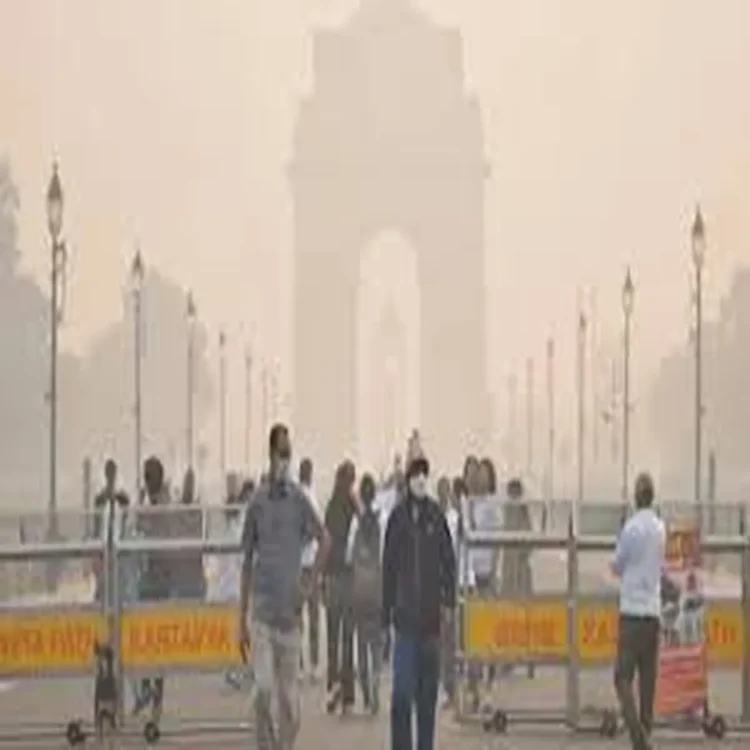
While temperatures remained high, the city’s air quality also stayed in the poor category during most of the day. According to data released by the Central Pollution Control Board (CPCB), the Air Quality Index (AQI) stood at 268 at 9 am on Wednesday morning.
Although the index showed a slight improvement later in the day, pollution levels still remained within the poor range. By 4 pm, the AQI had dropped to 244, indicating some marginal improvement but still reflecting unhealthy air conditions for sensitive groups.
The CPCB classifies air quality using a scale that helps residents understand pollution levels. An AQI between 0 and 50 is considered good, while readings from 51 to 100 fall under the satisfactory category. Levels ranging from 101 to 200 are categorized as moderate. When the index reaches between 201 and 300, the air quality is classified as poor.
Higher readings indicate more serious pollution concerns. Values between 301 and 400 fall under the very poor category, while an AQI between 401 and 500 is considered severe.
Monitoring Weather and Pollution Trends
Authorities continue to monitor both temperature patterns and pollution levels across the capital through multiple observatories and monitoring stations. Such data helps weather agencies and environmental authorities assess short-term conditions and long-term trends affecting the city.
For residents, these readings provide important information about daily weather conditions and air quality, helping them plan outdoor activities and take precautions when pollution levels remain elevated.