
VeterinaryCouncil – Bhagwat Calls for Expert-Led Animal Policy Reform
VeterinaryCouncil – Rashtriya Swayamsevak Sangh chief Mohan Bhagwat on Thursday advocated the creation of an independent and empowered Veterinary Council, asserting that policies concerning animals and public safety should be shaped by qualified veterinarians and domain specialists.
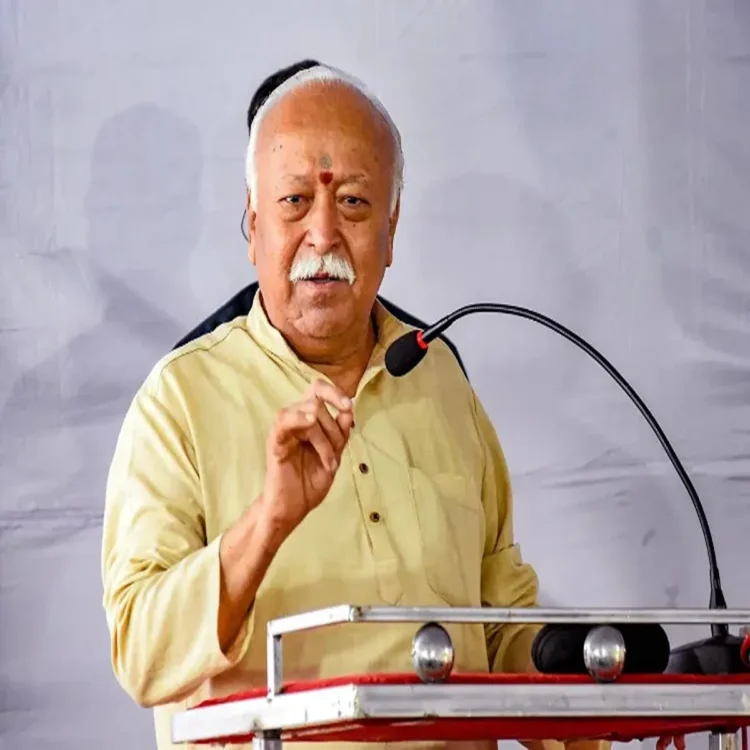
He was addressing delegates as the chief guest at the 22nd Annual Convention of the Indian Society for Advancement of Canine Practice and a national symposium on the theme “Role of Canine in One Health: Building Partnerships and Resolving Challenges” in Nagpur.
Debate Over Stray Dogs Sparks Call for Balance
Referring to the recent debate in Delhi surrounding stray dogs, Bhagwat observed that discussions had become sharply divided. According to him, the conversation appeared to swing between two rigid positions — one demanding the elimination of stray dogs and the other opposing any form of intervention.
He said the issue should instead focus on practical coexistence. If communities and animals are to share spaces, he remarked, the central question must be how that coexistence can be managed responsibly and humanely. Extreme reactions, he suggested, do little to address long-term concerns related to safety or welfare.
Science-Based Solutions Over Emotional Responses
Drawing on his academic background in veterinary science, Bhagwat underlined the importance of evidence-driven strategies. Population control through sterilisation, he noted, has proven effective in managing stray dog numbers. Preventive healthcare measures and systematic vaccination programmes can also significantly reduce risks to people.
Such approaches, he said, are grounded in research and experience rather than emotion. He emphasised that policy decisions must reflect scientific understanding and practical realities, particularly when they affect both public health and animal welfare.
Expanding the Role of Veterinary Professionals
Bhagwat also urged veterinary practitioners to reconsider the scope of their profession. He argued that the perception of veterinary science as a limited field no longer reflects present-day realities.
Veterinarians, he said, contribute not only to animal care but also to food security, disease prevention, environmental sustainability, and public health planning. Recognising this broader mandate is essential for strengthening institutional frameworks and improving policy outcomes.
Demand for a Separate Veterinary Council
Making a clear case for institutional reform, Bhagwat said a distinct Veterinary Council with greater authority would help ensure informed decision-making. Matters concerning animal health, disease management, and welfare standards, he maintained, should be overseen by individuals with specialised training.
He compared the situation to other professional sectors where leadership typically comes from within the field. Progress, he suggested, depends on entrusting responsibility to those who possess technical expertise and firsthand knowledge.
Focus on One Health Framework
The convention brought together veterinarians, researchers, academicians and animal welfare professionals from across the country. The event was jointly organised by the Indian Society for Advancement of Canine Practice, Maharashtra Animal and Fishery Sciences University in Nagpur, and the National Association for Welfare of Animals and Research.
The symposium centred on the One Health framework, which recognises the close connection between human health, animal health, and the environment. Experts discussed collaborative strategies to address zoonotic diseases, strengthen vaccination networks, and enhance coordination between public health and veterinary departments.
Among those present were Parinay Fuke, a Member of the Legislative Council and Executive Council Member of MAFSU; Umesh Chandra Sharma, President of the Veterinary Council of India; and Ramaswami N., Secretary in the Animal Husbandry, Dairy Development and Fisheries Department of the Government of Maharashtra. The session was chaired by Niteen Patil, Vice-Chancellor of MAFSU Nagpur.
The convention concluded with a shared emphasis on strengthening science-based animal management systems and expanding the role of veterinary professionals in shaping national policies. Participants underscored that coordinated action and expert leadership remain essential to addressing emerging challenges in animal health and public safety.