
TradePolicy – India Adopts Cautious Approach as US Launches Section 301 Investigation
TradePolicy – India is closely monitoring developments after the United States initiated an investigation under Section 301 of the Trade Act targeting several economies, including India. Government officials have indicated that New Delhi will adopt a cautious approach and assess the situation only after the United States releases its final findings.
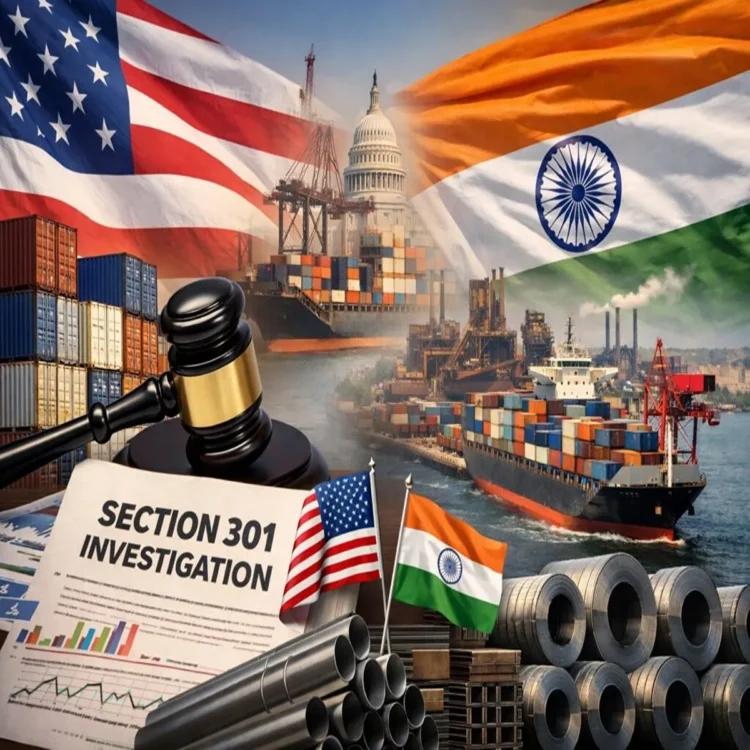
The probe, launched by the Office of the United States Trade Representative, has created concern among exporters across several manufacturing sectors. Industries such as steel, electrical equipment, and textiles are watching the developments carefully, as the investigation could potentially lead to new trade measures.
Government Takes a Wait-and-Watch Position
According to officials familiar with the matter, the Indian government does not plan to take any immediate action. Instead, authorities intend to review the findings of the investigation once the report is made public before determining any response.
Section 301 of the Trade Act of 1974 gives the United States government the authority to examine trade practices of other countries and impose tariffs or other penalties if those practices are found to be unfair or harmful to American commerce.
Officials noted that India will first analyse the conclusions of the report and evaluate whether the findings have any direct implications for Indian industries or export policies.
US Investigation Targets Manufacturing Practices
The US Trade Representative’s office announced that the investigation will focus on manufacturing policies in several economies. The review aims to determine whether certain industrial practices are leading to structural excess capacity that could distort global markets.
The investigation will study whether such production patterns result in oversupply, large trade surpluses, or unused manufacturing capacity across major industrial sectors. According to the USTR, such conditions may affect global pricing and limit fair market opportunities for American businesses.
One area highlighted in the announcement was the solar module manufacturing industry. The USTR stated that available evidence suggests global manufacturing capacity in this sector exceeds actual demand.
Concerns Raised Over Industrial Capacity
In its preliminary observations, the USTR indicated that India’s solar module manufacturing capacity may be significantly larger than its domestic demand. The report suggested that production levels in the country are estimated to be nearly three times higher than annual local consumption.
The USTR also pointed to similar concerns in other industries, including petrochemicals and steel, where it believes additional production capacity may be contributing to global market imbalances.
However, trade analysts note that such capacity expansions in emerging economies often occur as part of long-term industrial development strategies aimed at strengthening manufacturing competitiveness.
Exporters Express Concern Over Potential Impact
The announcement of the investigation has created uncertainty among Indian exporters, particularly in sectors that rely heavily on global trade.
Industry organisations have urged the government to closely monitor the situation and ensure that the interests of domestic manufacturers are protected if any trade measures arise from the investigation.
The Confederation of Indian Textile Industry has called for government engagement on the issue, noting that the probe could add another layer of uncertainty for textile and apparel exporters already navigating a complex international trade environment.
Steel exporters have also expressed concern. Industry representatives pointed out that the sector is already dealing with various trade restrictions in international markets, including anti-dumping duties and safeguard measures imposed by several countries.
Possible Implications for Future Trade Relations
Trade experts say the outcome of the Section 301 investigation could influence broader trade relations between the United States and multiple economies.
If the investigation leads to further tariffs or policy actions, it may affect global supply chains and export competitiveness across several industries. For now, Indian officials maintain that the government will continue observing developments and respond only after carefully reviewing the final report issued by US authorities.