
Telangana- Government Reviews Musi Riverfront Development Progress and Rehabilitation Plans
Telangana- The Telangana government has intensified its efforts to advance the Musi Riverfront Project, with a renewed focus on rehabilitation, infrastructure development, environmental restoration, and public participation. Chief Minister Revanth Reddy chaired a high-level review meeting in Hyderabad to assess the progress of the project and outline the next phase of implementation.
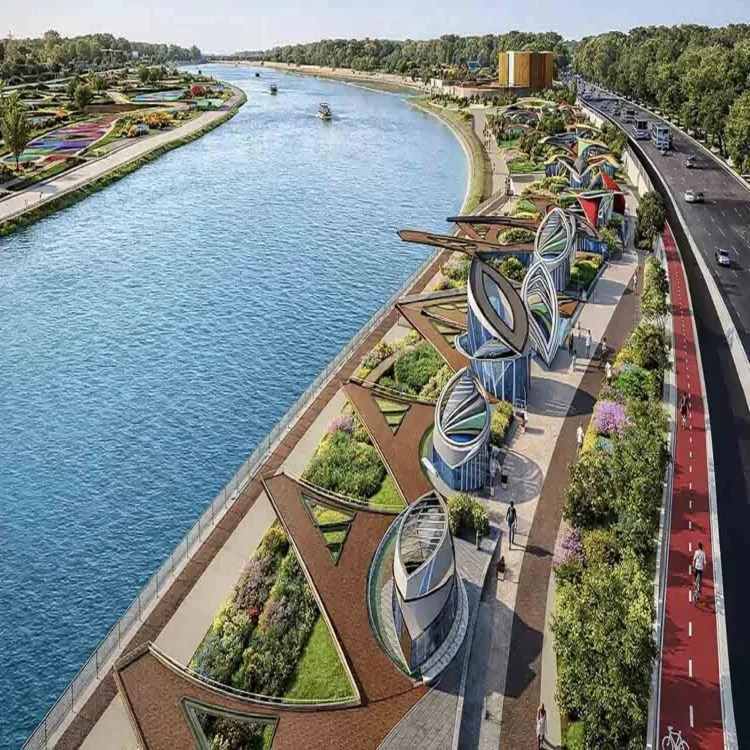
Phase I Development and Housing Rehabilitation
The review meeting, held at the MCR HRD Bodhi Pavilion in Jubilee Hills on Friday, primarily examined the progress of Phase I of the Musi Riverfront Project. Officials discussed measures to relocate families currently living within the Musi riverbed by providing them with double-bedroom housing under the government’s rehabilitation plan. The initiative aims to balance urban development with the welfare of affected residents through planned resettlement.
Land Acquisition and Compensation Strategy
A significant portion of the discussions focused on land acquisition required for the riverfront development. The Chief Minister directed officials to ensure that landowners willing to surrender their properties receive either Transferable Development Rights (TDR) or suitable financial compensation. Authorities also reviewed the relocation of existing structures situated on Defence land identified for the Gandhi Sarovar Project, ensuring that the process moves forward without unnecessary delays.
Experience Centre Planned to Engage Citizens
To improve public awareness and transparency, the government proposed the establishment of a Musi Experience Centre at Necklace Road. The planned facility will provide visitors with detailed information about the project’s objectives, future development plans, and ongoing works. Officials also suggested using the centre as a platform to gather public opinions and feedback, allowing citizens to actively participate in shaping the future of the riverfront initiative.
Senior Officials Participate in Project Review
The meeting was attended by State Minister Ponguleti Srinivasa Reddy, Member of Parliament Vem Narender Reddy, Special Chief Secretary Jayesh Ranjan, Musi Riverfront Development Project Managing Director Narsimha Reddy, MRDCL Joint Managing Director Gauthami, HMDA Commissioner Sarfaraz Ahmed, CMO Secretary Manik Raj, along with senior officials from the Municipal Administration Department. Their discussions focused on coordinating multiple departments to ensure timely execution of the project.
Defence Approval Boosts Gandhi Sarovar Project
Earlier this month, Chief Minister Revanth Reddy thanked Union Defence Minister Rajnath Singh and the Indian Army for granting permission to proceed with work related to the Gandhi Sarovar Project at Bapu Ghat. According to the Telangana government, this approval represents an important step in the broader plan to rejuvenate the Musi River and transform its surrounding areas into environmentally sustainable and publicly accessible spaces.
The Chief Minister stated that cooperation from the Ministry of Defence would help accelerate the government’s long-term vision of restoring the river ecosystem while creating cultural, recreational, and ecological assets for the people of Telangana.
Long-Term Vision for Musi River Restoration
The Musi River rejuvenation programme extends beyond beautification. Officials have consistently maintained that the project seeks to improve flood management, restore the river’s ecological balance, and create well-planned public spaces along both riverbanks. The government also intends to enhance urban infrastructure while protecting environmental resources through sustainable development practices.
The overall blueprint draws inspiration from successful riverfront redevelopment models implemented in other parts of the country, particularly the Sabarmati River project in Ahmedabad. Telangana authorities believe a similar integrated approach can strengthen flood resilience, improve environmental conditions, and create modern public spaces that contribute to the city’s long-term urban development goals.