
Republic Day: in India Reflects Constitutional Values, History, and National Participation
Republic Day: Republic Day stands as one of the most significant milestones in India’s national life, marking the formal beginning of constitutional governance. Observed every year on January 26, the day commemorates the enforcement of the Constitution of India in 1950, which transformed the country into a Sovereign Democratic Republic. While political independence in 1947 ended colonial rule, Republic Day represents the moment when India chose to govern itself through a carefully framed constitutional framework rooted in democratic principles and the will of its people.
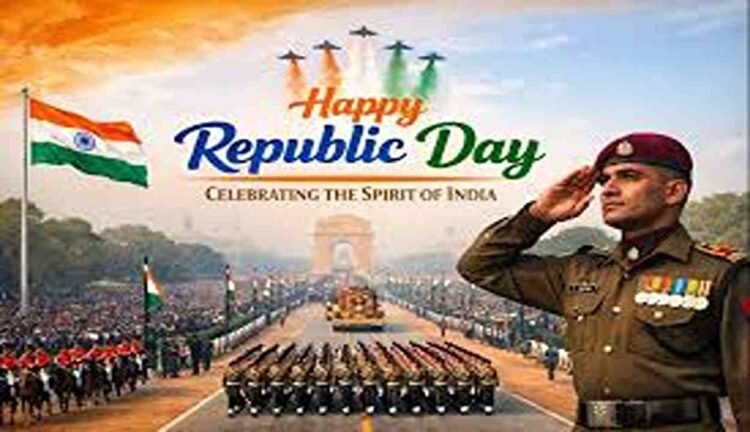
Constitutional Foundation of Republic Day
The adoption of the Constitution completed India’s transition from colonial administration to a self-governing republic based on the rule of law. It established institutional accountability, defined the structure of government, and guaranteed rights and duties for citizens. Republic Day is therefore not only a national celebration but also a reminder of constitutional values such as justice, liberty, equality, and fraternity that guide the functioning of the Indian State.
Nationwide Observance and Public Participation
Republic Day is observed across the country through flag hoisting ceremonies, official functions, and cultural programmes. State capitals, district headquarters, educational institutions, and local communities organize events that bring citizens together in a shared civic celebration. These observances reinforce public awareness of constitutional ideals and encourage collective participation in democratic life.
Theme and Vision of the 77th Republic Day
The 77th Republic Day celebrations are centered on the theme “150 Years of Vande Mataram.” This theme links the national song with the historical journey of the freedom movement and contemporary national aspirations. It runs across the Republic Day Parade, cultural performances, tableaux, and public outreach initiatives, placing cultural expression and national unity at the heart of the celebrations.
Republic Day Parade 2026 Highlights
The Republic Day Parade held at Kartavya Path in New Delhi remains the most visible symbol of the occasion. Planned as a large-scale ceremonial and cultural event, the 2026 parade emphasizes enhanced public participation. It features a coordinated display of military discipline, cultural diversity, and regional representation. A notable addition this year is the Battle Array format by the Indian Army, presented alongside traditional marching contingents and service displays.
Cultural Tableaux and Artistic Representation
A total of 30 tableaux from States, Union Territories, and central ministries form a major attraction of the parade. These presentations are built around the themes Swatantrata ka Mantra – Vande Mataram and Samriddhi ka Mantra – Atmanirbhar Bharat. Nearly 2,500 artists participate in cultural performances that showcase India’s rich heritage while maintaining the ceremonial rhythm of the parade.
Citizen-Centric Engagement Initiatives
To extend participation beyond the ceremonial space, several citizen-focused initiatives are organized in the lead-up to Republic Day. National-level competitions conducted through digital platforms encourage engagement from youth and creative communities. These include essay writing, painting contests, singing competitions based on Vande Mataram, and quizzes on national development, space achievements, sports, and historical milestones. Selected participants are invited to associate with Republic Day events, creating a direct connection between citizens and national celebrations.
Historical Roots of January 26
The choice of January 26 as Republic Day carries deep historical significance. The demand for Purna Swaraj, or complete independence, was formally adopted as a national objective in 1929. On January 26, 1930, Indians across the country observed Purna Swaraj Day, rejecting colonial dominance and asserting the goal of self-rule. By enforcing the Constitution on this date in 1950, independent India symbolically linked the aspirations of the freedom movement with the institutional reality of a constitutional republic.
From Independence to Constitutional Governance
The Constituent Assembly first met in December 1946 and worked for nearly three years to draft the Constitution. After independence on August 15, 1947, nation-building became the central task. The adoption of the Constitution on November 26, 1949, and its enforcement on January 26, 1950, marked the culmination of this process. The Constitution replaced the Government of India Act 1935 and vested sovereignty firmly in the people.
Ceremonial Traditions and Beating the Retreat
Republic Day celebrations extend over several days and formally conclude with the Beating the Retreat ceremony on January 29 at Vijay Chowk. This ceremony follows a historic military tradition symbolizing the end of festivities and a return to routine duties. Together, these events make Republic Day a blend of solemn remembrance, cultural expression, and democratic pride.