
Politics – Veteran Leader Mukul Roy Dies at 71
Politics – Senior political leader and former Union Railway Minister Mukul Roy passed away in the early hours of Monday after suffering a cardiac arrest. He was 71. The news was confirmed by his son, Subhranshu Roy, who said his father breathed his last at around 1:30 am at a private hospital in Salt Lake.
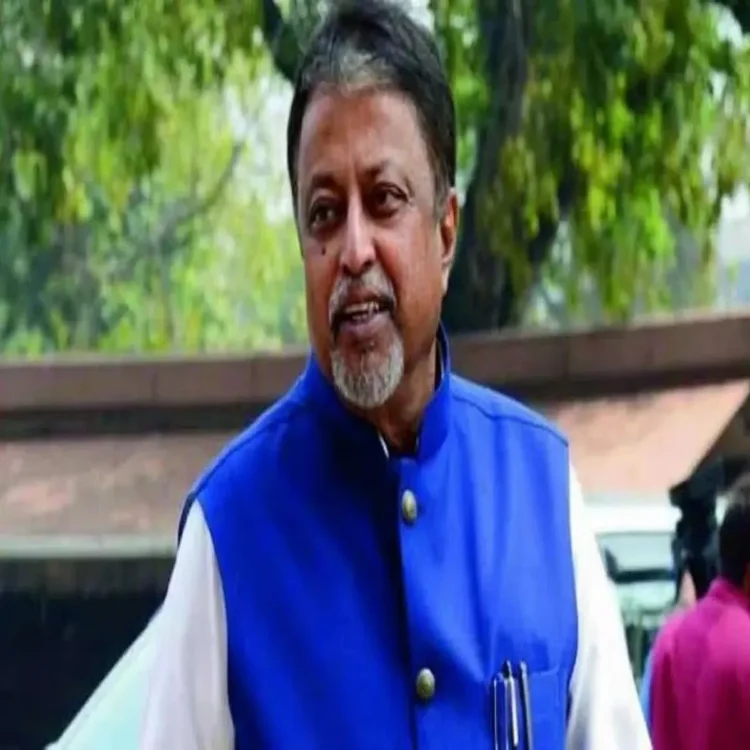
Family members said Roy had been struggling with several health complications over the past two years. He had been diagnosed with dementia and had recently fallen into a coma. His condition had reportedly deteriorated in recent weeks, leading to his hospitalisation.
A Long Political Career Across Parties
Mukul Roy’s political journey stretched over four decades and saw him play significant roles in multiple parties, including the Congress, the All India Trinamool Congress (TMC), and the Bharatiya Janata Party (BJP).
He began his career in the Youth Congress and later aligned with Mamata Banerjee when she parted ways with the Congress to establish the TMC in 1998. As one of the founding members of the party, Roy quickly emerged as a central organisational figure. His strategic abilities and close coordination with the leadership helped shape the party’s structure during its formative years.
In 2006, Roy was elected to the Rajya Sabha. Three years later, he became the TMC’s leader in the Upper House, where he gained recognition as the party’s key negotiator in New Delhi. His role grew more prominent when the TMC became part of the United Progressive Alliance (UPA-II) government at the Centre.
Role in the Union Government
During the UPA-II tenure, Roy first served as Minister of State for Shipping. In 2012, he was appointed Union Railway Minister. His time in the Railway Ministry placed him at the centre of national politics and added to his stature within the party.
Colleagues often described him as a meticulous organiser with a strong grasp of electoral strategy. His influence extended beyond parliamentary affairs to grassroots-level political management in West Bengal.
Architect of TMC’s Organisational Strength
Roy played a significant role after the TMC’s historic victory in the 2011 West Bengal Assembly elections, which ended 34 years of Left Front rule. He was widely credited with strengthening the party’s network across districts and consolidating its hold over key regions.
Known for his behind-the-scenes work rather than public speeches, Roy earned a reputation as a master strategist. Many within political circles referred to him as a key architect of the party’s expansion during its early years in power.
However, his career was not without controversy. His name surfaced in connection with investigations into the Saradha chit fund case and the Narada sting operation, although the legal processes surrounding these matters continued over time.
Shift to BJP and Eventual Return
In 2017, Roy’s relationship with the TMC leadership deteriorated, leading him to leave the party and join the Bharatiya Janata Party. He was assigned the responsibility of strengthening the BJP’s base in West Bengal, a state where the party had historically struggled.
His organisational skills were widely seen as instrumental in the BJP’s improved performance in the 2019 Lok Sabha elections, when the party won 18 out of 42 seats in the state.
Roy later contested the 2021 West Bengal Assembly elections as a BJP candidate and was elected as an MLA from Krishnanagar Uttar. However, within months, he returned to the TMC, setting off political and legal disputes. A court subsequently disqualified him as an MLA under the anti-defection law.
Though he formally rejoined the TMC, Roy did not return to the influential role he once held. As his health declined, he gradually stepped away from active political life.
With his passing, West Bengal politics marks the end of a chapter associated with one of its most prominent strategists, whose influence spanned multiple parties and pivotal electoral battles.