
Politics – AAP Leaders Publicly Criticise Raghav Chadha Over Conduct
Politics – The Aam Aadmi Party has found itself in the middle of an internal dispute after sharp remarks were directed at Rajya Sabha MP Raghav Chadha by senior party leaders.
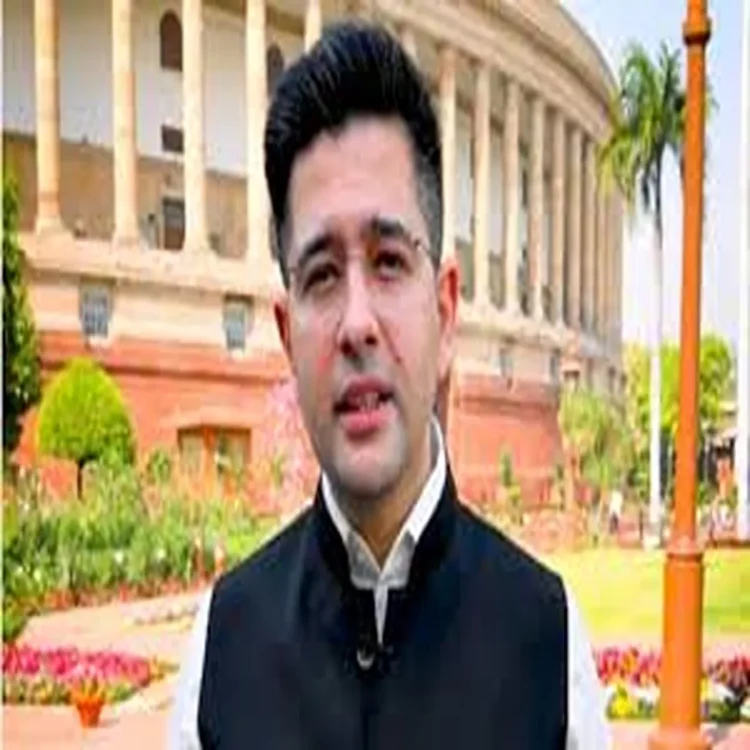
The disagreement surfaced on Friday when the party openly criticised Chadha, accusing him of avoiding key political debates in Parliament and focusing on issues that, according to them, lack urgency. The reaction followed Chadha’s own statement claiming that he had been prevented from fully participating in parliamentary proceedings, describing the situation as being “silenced, not defeated.”
Party leadership questions parliamentary conduct
Delhi AAP president Saurabh Bharadwaj voiced strong concerns, alleging that Chadha had not consistently aligned with the party’s stance during important moments in Parliament. He pointed out instances where opposition members staged walkouts, claiming that Chadha chose not to join them despite the significance of those protests.
Bharadwaj also criticised Chadha for not raising issues linked to Punjab, the state he represents in the Rajya Sabha. He further alleged that Chadha was not present in the country during a crucial period when senior party leader Arvind Kejriwal faced legal troubles.
In a message shared on social media, Bharadwaj stressed that party members are expected to prioritise larger national and political concerns rather than engage in what he described as superficial discussions.
Concerns raised over priorities in Parliament
AAP’s national media in-charge Anurag Dhanda echoed similar sentiments, questioning Chadha’s willingness to confront major national issues. He referred to concerns about democratic processes in West Bengal and said that when an important proposal related to the Chief Election Commissioner was introduced, Chadha did not support it.
Dhanda emphasised that members of Parliament are given limited time to speak, and that time should be used to address serious matters affecting the country. He suggested that raising relatively minor topics during such opportunities reflects misplaced priorities.
According to Dhanda, there has been a noticeable reluctance on Chadha’s part in recent years to engage with pressing political concerns, which has led to dissatisfaction within the party.
Chadha responds to allegations
Responding to the criticism, Raghav Chadha released a video message defending his record. He maintained that he has consistently used his time in Parliament to highlight issues affecting ordinary citizens, including those that might not receive widespread attention.
Chadha questioned whether discussing public concerns could be considered inappropriate, asking why his efforts to raise such issues were being challenged. He argued that his contributions were aimed at benefiting the common people and expressed confusion over why his participation was being restricted.
He also raised concerns about the party’s decision to remove him from the position of deputy leader in the Rajya Sabha, suggesting that the move was unjustified.
Leadership change adds to tensions
The controversy intensified after reports emerged that the party had formally written to the Rajya Sabha Secretariat seeking Chadha’s removal from his leadership role. Punjab MP Ashok Mittal has reportedly been proposed as his replacement.
This development has added a new dimension to the internal disagreement, indicating that the issue goes beyond public statements and reflects deeper organisational concerns within the party.
Broader implications for the party
The ongoing exchange highlights a rare instance of public disagreement within the Aam Aadmi Party, which has often projected a unified stance on political matters. The situation underscores the challenges political parties face in balancing individual expression with collective discipline.
While the leadership has emphasised adherence to party positions and focus on major national issues, Chadha’s response points to a differing perspective on how parliamentary responsibilities should be carried out.
As the situation unfolds, it remains to be seen how the party addresses the internal differences and whether a resolution can be reached without further escalation.