
Parliament – Opposition Raises Concerns Over Foreign Funding Amendment Bill
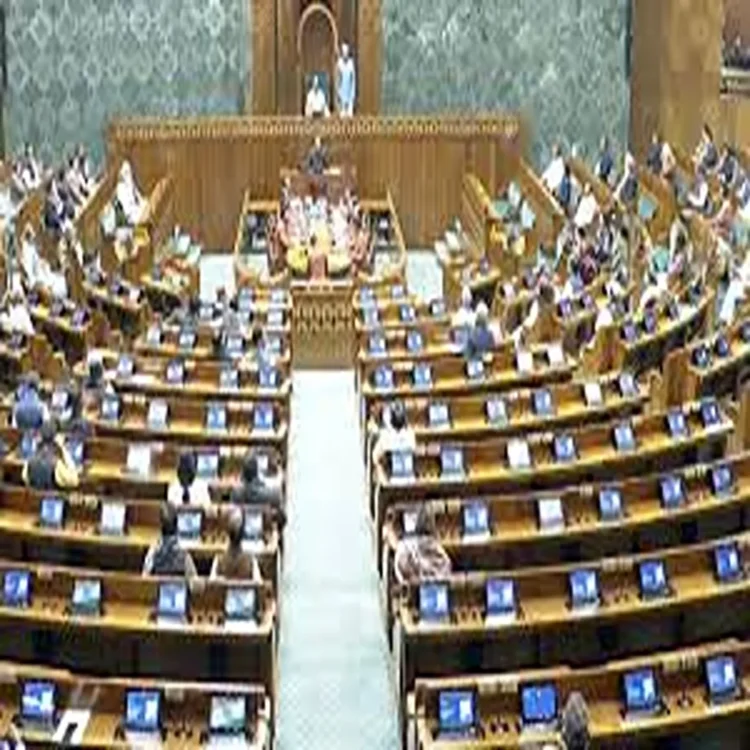
Parliament – The political atmosphere in Parliament turned tense on Wednesday as opposition leaders gathered near Makar Dwar to protest against the proposed Foreign Contribution (Regulation) Amendment Bill, 2026, urging the government to withdraw the legislation.
Opposition Voices Strong Objections
Several opposition Members of Parliament expressed serious reservations about the proposed amendments, arguing that the bill could have far-reaching consequences for civil society organisations. Congress leader Hibi Eden described the legislation as excessively restrictive, warning that it could adversely impact numerous non-governmental organisations as well as minority communities operating across the country.
Eden stated that the bill, if enacted, might limit the functioning of organisations that rely on foreign contributions for social and developmental work. He emphasized that the opposition would continue to oppose the proposal and push for its withdrawal.
Concerns Over Fairness and Inclusivity
Echoing similar concerns, Congress MP Dharamvir Gandhi underlined the need for balanced and inclusive policymaking. He argued that any law affecting public institutions and organisations should be impartial and designed to benefit all sections of society rather than targeting specific groups.
Revolutionary Socialist Party MP NK Premchandran also criticized the proposed amendments, suggesting that the issue extends beyond any single community. According to him, the bill reflects a broader political approach that could potentially restrict the rights and operational space of minority groups and civil society institutions.
Government Moves Bill for Discussion
Despite the protests, the Foreign Contribution (Regulation) Amendment Bill, 2026, is scheduled for consideration and passage in the Lok Sabha. Union Home Minister Amit Shah is expected to formally present the bill for discussion.
The proposed legislation, first introduced on March 25, seeks to amend the existing Foreign Contribution (Regulation) Act of 2010. The government has stated that the objective of these changes is to strengthen transparency and accountability in the management of foreign funds received by organisations in India.
Additional Financial Measures in Focus
Alongside the FCRA amendment, Finance Minister Nirmala Sitharaman is set to introduce a statutory resolution concerning a new excise duty measure. The proposal includes a Special Additional Excise Duty of Rs 50 per litre on Aviation Turbine Fuel (ATF).
This move comes amid rising global crude oil prices, which have increased operational costs for airlines. The government aims to address revenue concerns while balancing the financial pressures faced by the aviation sector.
Parliamentary Proceedings and Key Reports
The Lok Sabha is scheduled to commence proceedings at 11 AM, beginning with the Question Hour. This will be followed by the presentation of official documents by various ministers, including those from the Science and Technology and Railways ministries.
In addition, the House will review several important reports submitted by the Public Accounts Committee (PAC) for the financial year 2025–26. These reports are expected to cover a range of issues, including financial irregularities, railway safety concerns such as derailments, and matters related to service tax and GST collections from passengers.
Senior BJP MPs Jagdambika Pal and Jai Prakash are among those scheduled to present findings from multiple PAC reports, which aim to enhance accountability in public spending and administration.
Ongoing Debate Expected
With strong opposition resistance and the government moving ahead with legislative business, the debate around the FCRA Amendment Bill is expected to remain a central issue in Parliament. The outcome of the discussion could have significant implications for regulatory oversight and the functioning of organisations receiving foreign funding in India.