
Parliament – Opposition Blocks Women’s Reservation Amendment Bill in Lok Sabha
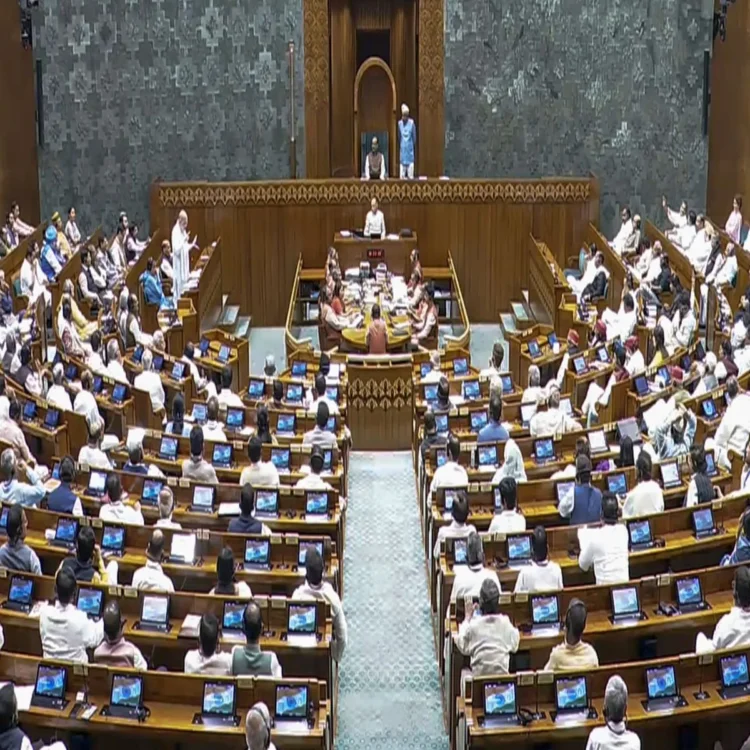
Parliament – The Lok Sabha witnessed a significant political moment on Friday as opposition parties collectively voted down a Constitution Amendment Bill linked to the implementation of women’s reservation. The outcome has sparked sharp reactions from leaders across the political spectrum, highlighting deep divisions over the issue.
Leaders Call Outcome a Defining Parliamentary Moment
Telangana Chief Minister Revanth Reddy described the development as a landmark day in India’s parliamentary history. In a public statement, he credited senior Congress leaders Rahul Gandhi and Mallikarjun Kharge for bringing together opposition parties and preventing what he termed a “serious national setback.”
According to Reddy, the coordinated effort among opposition leaders reflected a rare show of unity. He acknowledged the role of several regional and national figures who stood together during the vote, noting that their collective stance shaped the final outcome in the House.
Opposition Emphasizes Unity and Concerns Over Delimitation
Congress MP K. Suresh also underlined the importance of opposition unity in defeating the bill. He stated that the coalition’s position was not against women’s reservation itself, but rather against the proposed method of implementation.
Suresh argued that the women’s reservation framework passed in 2023 should be enforced within the current strength of the Lok Sabha. He expressed concerns that linking the provision to future delimitation exercises could create regional imbalances, particularly between northern and southern states.
He further said that opposition parties intend to raise awareness among the public regarding what they see as potential disparities arising from the proposed changes. The issue of delimitation, he added, remains central to their objections.
Government and BJP Criticize Opposition’s Stand
On the other side, Bharatiya Janata Party leaders strongly criticized the opposition’s move. BJP National President Nitin Nabin described the bill’s rejection as a missed opportunity to advance women’s representation in politics.
Addressing the media after the session, Nabin said the day could have marked a historic step toward empowering women across the country. He accused the opposition alliance of denying what he called a crucial right to half the population.
He also indicated that the party would take the issue beyond Parliament, suggesting that public campaigns and outreach efforts would follow. According to him, women across the country would respond to what he termed an “unjustified obstruction.”
Heated Exchanges Reflect Broader Political Divide
The debate around the bill also saw sharp exchanges between ruling party members and opposition leaders. BJP representatives criticized Rahul Gandhi’s conduct in Parliament, while opposition figures defended their position as being rooted in constitutional and federal concerns.
The episode reflects a broader political divide over how electoral reforms and representation policies should be implemented. While both sides have expressed support for women’s participation in politics, disagreements over timing and structure continue to fuel contention.
Voting Outcome and Legislative Context
The bill, which aimed to operationalize women’s reservation starting from the 2029 general elections, failed to secure sufficient support in the Lok Sabha. During the division, 298 members voted in favor, while 230 opposed it, leading to its defeat.
Despite this setback, the Women’s Reservation Act passed in 2023 remains legally valid. However, its implementation is still contingent upon the completion of a future census and subsequent delimitation process, leaving the timeline uncertain.
What Lies Ahead
The developments in Parliament indicate that the debate over women’s political representation is far from settled. With both the government and opposition standing firm on their positions, the issue is likely to remain a key point of political discussion in the coming months.
As parties prepare to take their arguments to the public, the focus will shift from parliamentary proceedings to broader political engagement, shaping the narrative ahead of future elections.