
Marking: Four Maoist Cadres Surrender in Sukma, Continued Decline of Insurgency
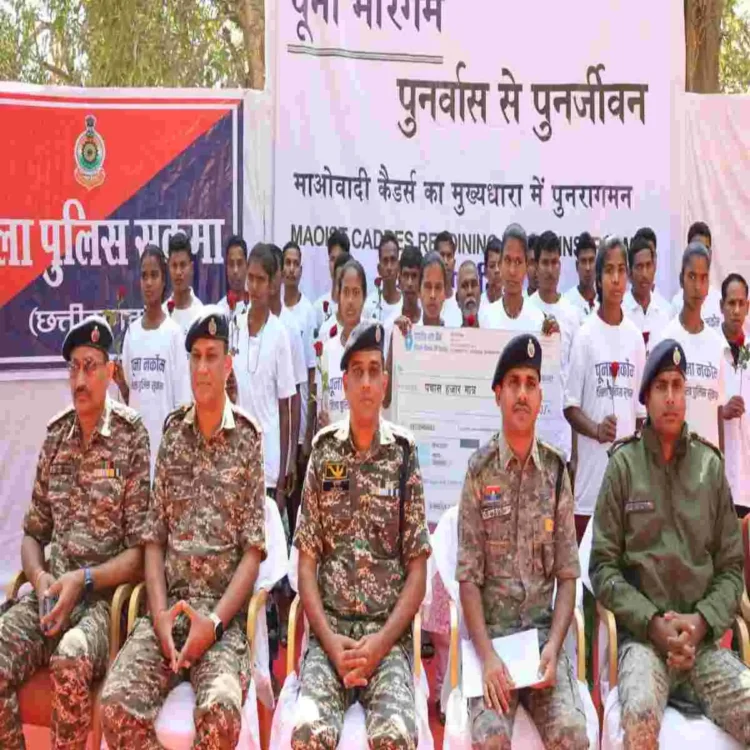
Marking: Four Maoist cadres, including two women, surrendered before security forces in Chhattisgarh’s Sukma district on Friday, handing over weapons and ammunition, officials confirmed. The group carried a combined reward of Rs 8 lakh and laid down arms under the state government’s rehabilitation-focused surrender policy, signaling ongoing pressure on left-wing extremist networks in the region.
Surrender Under State Rehabilitation Initiative
According to Bastar Range Inspector General of Police Sundarraj P, the surrender took place under the “Poona Margem” initiative, a state programme aimed at guiding former insurgents from armed conflict toward social reintegration. The surrendered individuals were associated with the Kistaram area committee of the South Bastar division, a zone that has historically witnessed Maoist activity.
Officials said the cadres voluntarily approached authorities after assessing the benefits of the surrender and rehabilitation framework offered by the Chhattisgarh government. The initiative emphasizes safety, financial support, and long-term reintegration into civilian life for those who abandon violence.
Details of the Surrendered Cadres
Among the four, Sodhi Joga, an area committee member, carried the highest individual reward of Rs 5 lakh. The remaining three — identified as Dabar Ganga, also known as Madkam Ganga, Sodhi Raje, and Madvi Budhari — each carried a bounty of Rs 1 lakh, police said.
All four individuals were active in Maoist operations in and around the Kistaram region before their surrender. Authorities noted that their decision reflects a growing trend of cadres reassessing their involvement amid sustained security operations and development efforts.
Weapons and Ammunition Handed Over
During the surrender, the group handed over multiple firearms, including one INSAS rifle, a Single Loading Rifle, a .303 rifle, and a .315 rifle, along with ammunition. Police officials stated that coordinated efforts by personnel from Sukma district and neighbouring Alluri Sitarama Raju district in Andhra Pradesh played a significant role in facilitating the surrender.
Security agencies have increasingly focused on inter-district and inter-state coordination to limit cross-border movement of Maoist cadres, which has contributed to such outcomes.
Impact of Security Camps and Infrastructure Development
Senior officials highlighted that newly established security camps in the Kistaram and Golapalli areas have been instrumental in weakening Maoist influence. Improved road connectivity and persistent area domination exercises have restricted the movement of armed groups and reduced their operational space.
“These camps have not only enhanced security presence but also reassured local communities,” an official said, adding that continuous anti-Naxal operations have disrupted supply lines and communication networks used by extremists.
Rehabilitation and Appeal to Remaining Cadres
The surrendered individuals will receive rehabilitation assistance, financial aid, and other benefits in line with government policy. Authorities reiterated that the programme is designed to ensure a dignified and secure future for those who choose to rejoin mainstream society.
Sukma Superintendent of Police Kiran Chavan appealed to remaining Maoist cadres active in the region to abandon violence and surrender. He assured them that the administration would provide security and support, emphasizing that peaceful alternatives remain open.
Broader Trends Across the State
With this latest development, more than 200 Maoists have surrendered across Chhattisgarh so far this year, officials said. Earlier, on January 15, a group of 52 cadres laid down arms in the neighbouring Bijapur district, reflecting a wider pattern across Bastar division.
State records indicate that over 1,500 former Maoists joined the mainstream in 2025, underscoring the cumulative impact of security measures combined with rehabilitation policies.
National Objective to End Left-Wing Extremism
At the national level, the Centre has reiterated its resolve to eliminate left-wing extremism from the country by March 31 this year. Officials believe that sustained security operations, development initiatives, and surrender policies are collectively accelerating progress toward that goal.