
MaharashtraEconomy – Maharashtra Targets Trillion-Dollar Economy Milestone Within Next Five Years
MaharashtraEconomy – Maharashtra has set an ambitious economic roadmap aimed at transforming the state into a trillion-dollar economy within the next few years. Chief Minister Devendra Fadnavis announced in the state Assembly on Wednesday that the government expects the state’s economy to reach the one trillion dollar mark by 2029, with a longer-term vision of expanding it to five trillion dollars by 2047.
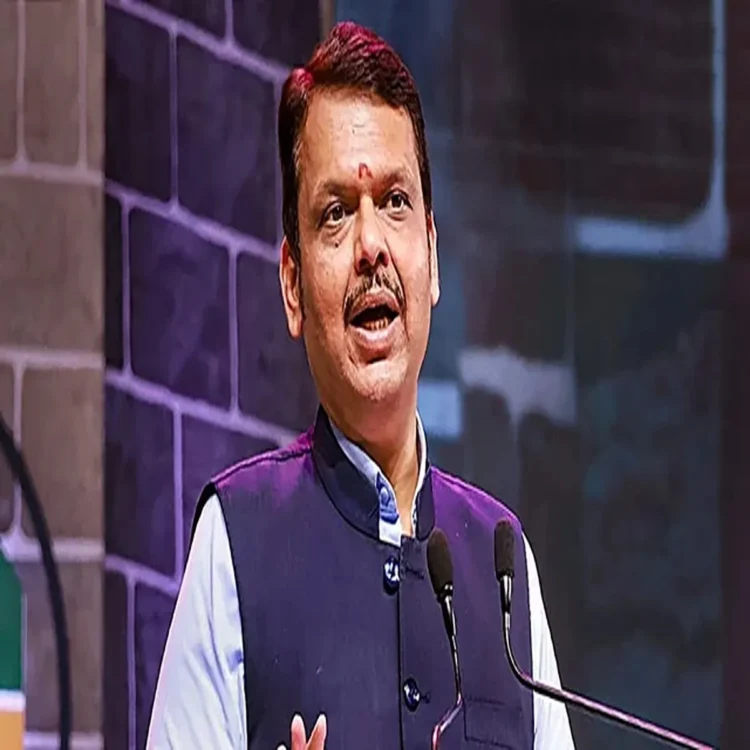
According to the chief minister, Maharashtra’s economic size is currently estimated at around 660 billion dollars for the financial year 2025–26. To achieve the trillion-dollar milestone, the state will need to expand its economic output by another 340 billion dollars over the coming years. Fadnavis said the state’s economic growth trajectory remains strong, noting that Maharashtra added approximately 55 billion dollars to its economy in just one year.
Economic growth targets and possible challenges
While presenting the government’s economic outlook during the debate on the 2026–27 state budget, the chief minister addressed concerns raised by opposition parties regarding the feasibility of reaching the trillion-dollar target. He acknowledged that external disruptions such as global conflicts or climatic events like El Niño could slow growth temporarily. However, he maintained that even with such uncertainties, the state is likely to achieve the target by 2029 or, at the latest, by 2030–31.
Fadnavis emphasized that the budget introduced for 2026–27 focuses on expansion and development but continues to follow strict fiscal discipline. He said the government has ensured that spending plans remain responsible while also supporting infrastructure development and economic activity.
Fiscal discipline and deficit indicators
Responding to criticism about rising state debt, the chief minister presented key financial indicators to demonstrate the state’s fiscal stability. He stated that Maharashtra’s fiscal deficit stands at 2.88 percent of the Gross State Domestic Product (GSDP), which is comfortably below the 3 percent ceiling set under the Fiscal Responsibility and Budgetary Management Act.
In addition, the revenue deficit is estimated to remain around 0.37 percent of GSDP. According to Fadnavis, maintaining the revenue deficit below 1 percent ensures that the government is not relying heavily on borrowing to meet routine expenses. Instead, the focus remains on investing in long-term assets and capital projects that support economic growth.
Debt levels compared with other states
The chief minister also highlighted that Maharashtra’s debt-to-GSDP ratio remains relatively moderate compared with several other large states. The ratio currently stands at 18.2 percent, which is significantly below the 25 percent threshold considered manageable for state finances.
He pointed out that several other major states have higher ratios, including Tamil Nadu at 25.6 percent, Andhra Pradesh at 33 percent, Madhya Pradesh at 30 percent, Telangana at 23.8 percent and Karnataka at 23 percent. Gujarat and Odisha were cited as states with comparatively lower ratios, at 15.3 percent and 13.1 percent respectively.
Fadnavis added that Maharashtra’s total outstanding debt is estimated to reach about Rs 9.32 lakh crore in the financial year 2025–26. However, he said the state’s strong and expanding GSDP provides sufficient capacity to manage borrowing responsibly.
Rising revenues and infrastructure spending
The chief minister also highlighted significant growth in government revenues and capital investment over the past decade. Revenue receipts are projected to reach approximately Rs 6,16,000 crore in 2025–26, a substantial increase compared with Rs 1,55,000 crore recorded in 2013–14.
Capital expenditure has also grown sharply during the same period. It is expected to reach nearly Rs 2 lakh crore, compared with just over Rs 25,000 crore more than a decade ago. According to the government, this increase reflects the state’s emphasis on infrastructure expansion and development-driven spending.
Maharashtra’s position in the national economy
Fadnavis said the state economy continues to outperform national averages in several areas. Maharashtra’s GSDP growth rate is projected at 7.9 percent for 2025–26, which he said is higher than the country’s overall GDP growth during the same period.
He also noted that the state leads the country in several economic indicators, including foreign direct investment inflows, startup activity, unicorn companies, forest cover expansion and GST collections.
While acknowledging that Maharashtra currently ranks fifth in per capita income among Indian states, he said the figure is steadily improving. Per capita income is expected to reach Rs 3,47,903 in 2025–26, up from Rs 3,17,000 in 2024–25.
Fadnavis further remarked that the size of Maharashtra’s economy already exceeds that of about 35 countries worldwide, including Austria, Thailand and the Philippines, underlining the state’s growing global economic significance.