
Rambhadracharya: Magh Mela Dispute Deepens After Defends Administration Actions
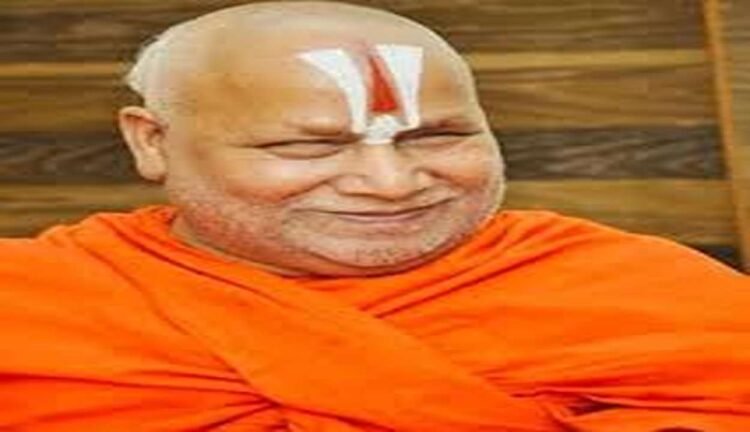
Rambhadracharya: The controversy surrounding the Magh Mela administration’s decision to stop Shankaracharya Swami Avimukteshwaranand from proceeding towards the Sangam Nose has intensified, with senior religious leader Jagadguru Rambhadracharya publicly stating that the seer himself violated established rules. According to Rambhadracharya, the administration acted strictly within guidelines, and no injustice was committed during the incident that occurred on the auspicious occasion of Mauni Amavasya.
Background of the Magh Mela Incident
The incident took place during Mauni Amavasya, one of the most sacred bathing days at the Magh Mela, when lakhs of devotees gather at the Sangam in Prayagraj. On Sunday, Swami Avimukteshwaranand, accompanied by his supporters, attempted to move towards the Sangam Nose in a chariot procession to take a holy dip in the River Ganga. The administration reportedly stopped the procession, citing security concerns and established movement restrictions for bathing days.
Allegations Raised by Swami Avimukteshwaranand
Following the intervention, Swami Avimukteshwaranand alleged that police personnel not only stopped his procession but also assaulted some of his disciples. He claimed that the authorities prevented him and his followers from performing the sacred ritual of taking a dip in the Ganga on Mauni Amavasya, an act he described as unjust and disrespectful to religious sentiments.
In protest, the seer began a sit-in outside his camp, refusing food and water. He demanded a formal apology from senior officials of the Magh Mela administration as well as the police, asserting that the treatment meted out to him violated religious freedom and tradition.
Rambhadracharya’s Response and Rule-Based Justification
Reacting sharply to the episode, Jagadguru Rambhadracharya told reporters that the administration followed the rulebook. He emphasized that traditional and administrative protocols clearly prohibit reaching the river on a chariot during peak bathing days due to safety risks. According to him, when police officials asked Swami Avimukteshwaranand to proceed on foot instead, the seer chose to defy the instructions.
Rambhadracharya further remarked that responsibility for the situation lay with the seer himself, stating that adherence to rules is mandatory for everyone, irrespective of religious status. His comments added a new dimension to the controversy, especially within spiritual circles.
Stand of the Magh Mela Administration
Mela Officer Rishiraj clarified that supporters of Swami Avimukteshwaranand had allegedly broken barricades on a pontoon bridge that was reserved exclusively for emergency services. He stated that the bridge could not be opened for general movement under any circumstances, particularly on a high-density bathing day like Mauni Amavasya.
The administration also pointed out that movement of vehicles, including chariots, is strictly prohibited on bathing days to prevent stampede-like situations. Officials maintained that stopping the procession was a preventive measure taken in the interest of public safety, as massive crowds had already gathered near the Sangam Nose.
Swami Avimukteshwaranand Rejects Administration Claims
Despite these explanations, Swami Avimukteshwaranand dismissed reports suggesting that prior information about his procession had not been shared with authorities. In an earlier interaction with the media, he questioned the very concept of seeking permission to take a holy dip in the Ganga, arguing that such rituals are a fundamental religious practice.
His remarks have resonated with some followers, while others believe the matter highlights the growing friction between religious traditions and modern crowd management systems at large spiritual gatherings.
Wider Implications of the Controversy
The episode has sparked a broader debate about balancing religious customs with administrative regulations during massive events like the Magh Mela. While authorities stress safety and order, religious leaders and devotees continue to demand greater sensitivity towards spiritual practices. As discussions continue, the incident underscores the challenges faced by administrations in managing faith-driven gatherings in an era of increasing crowds and heightened security concerns.