
Judiciary – High Court Orders Review of Minor’s Return and Citizenship Plea
Judiciary – The Jammu and Kashmir and Ladakh High Court has instructed the Ministry of Home Affairs to initiate appropriate measures to facilitate the return of a minor boy currently in Gujranwala, Pakistan. The direction follows a “leave India” notice issued on April 25, 2025, in the aftermath of the Pahalgam attack. The court also asked authorities to examine the child’s request for an extension of his long-term visa and his application for Indian citizenship.
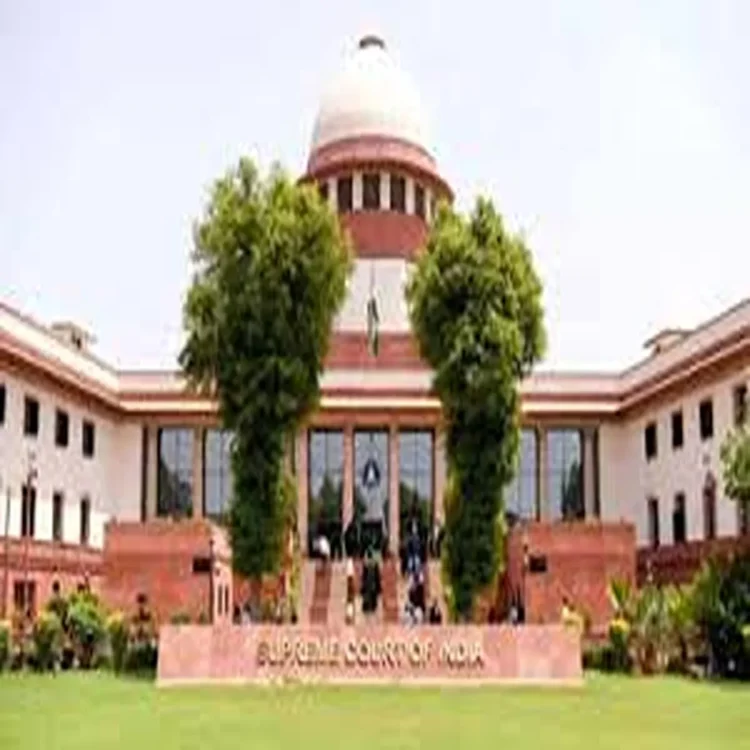
Court Examines Deportation and Family’s Plea
The order was issued while closing a petition filed by Sajjad Ahmed Rajouri, who sought the repatriation of his son, Aasim Sajjad. According to the petitioner, Aasim was born on October 26, 2006, and had been living in Jammu and Kashmir for several years under a long-term visa. Sajjad stated that he had married a Pakistani national in 2005 and returned to India with their child in October 2007.
The father alleged that despite the child’s prolonged stay and established ties in the region, Aasim was deported to Pakistan against his will. The High Court’s directive now places responsibility on the central authorities to reassess the case and take necessary steps in line with legal procedures. The court also emphasised that the child’s application for citizenship and visa extension should be evaluated carefully.
Rising Concerns Over Drug Abuse in the Region
In a separate development, official figures released by the Union Ministry of Social Justice and Empowerment reveal a significant scale of drug-related issues in Jammu and Kashmir. Over the past five years, law enforcement agencies in the Union Territory have seized more than 68,000 kilograms of narcotic substances.
The data also highlights a worrying trend in substance use, with more than 1.3 million adults reportedly consuming addictive drugs. Among these, opioids have emerged as the most commonly used substances, raising concerns about public health and social stability.
Strengthened Enforcement and Surveillance Measures
Authorities have responded by reinforcing the anti-narcotics framework across the region. Border Security Force units and other agencies have been granted expanded powers under the Narcotic Drugs and Psychotropic Substances Act to conduct searches, seizures, and arrests.
In addition to legal measures, the government has upgraded surveillance systems along sensitive routes. Advanced monitoring technologies, including artificial intelligence-based tools and night vision equipment, have been deployed to detect and prevent drug smuggling activities. Officials believe that these steps will improve enforcement efficiency and reduce illegal trafficking across borders.
Innovation in Traditional Heating Systems
Meanwhile, in the field of technological innovation, the National Institute of Technology (NIT), Srinagar, has secured a patent for a modernised indoor heating system. The invention aims to enhance the traditional ‘hamaam’, a widely used heating method in Kashmir during winter months.
The newly developed system integrates artificial intelligence and Internet of Things technologies to automate temperature control. According to the research team, the system uses sensors to monitor conditions and adjust underfloor heating in real time. An intelligent module calculates fuel requirements and activates the supply mechanism accordingly, ensuring efficient energy use.
Blending Tradition with Modern Technology
The innovation is expected to improve comfort while reducing fuel consumption, making it both cost-effective and environmentally sustainable. Researchers involved in the project noted that the upgraded system retains the essence of traditional practices while introducing precision and automation.
This development reflects a broader effort to combine local knowledge with modern engineering solutions, particularly in regions where extreme weather conditions demand reliable heating systems. The patented design could potentially be adapted for use in other cold climates as well.