
Education – Pradhan Criticises Stalin Over Three-Language Policy Remarks
Education – Union Education Minister Dharmendra Pradhan on Saturday took aim at Tamil Nadu Chief Minister M K Stalin over his recent comments on the three-language formula, dismissing the allegation of “imposition” as an outdated political argument. He suggested that such claims divert attention from governance issues and create unnecessary public concern.
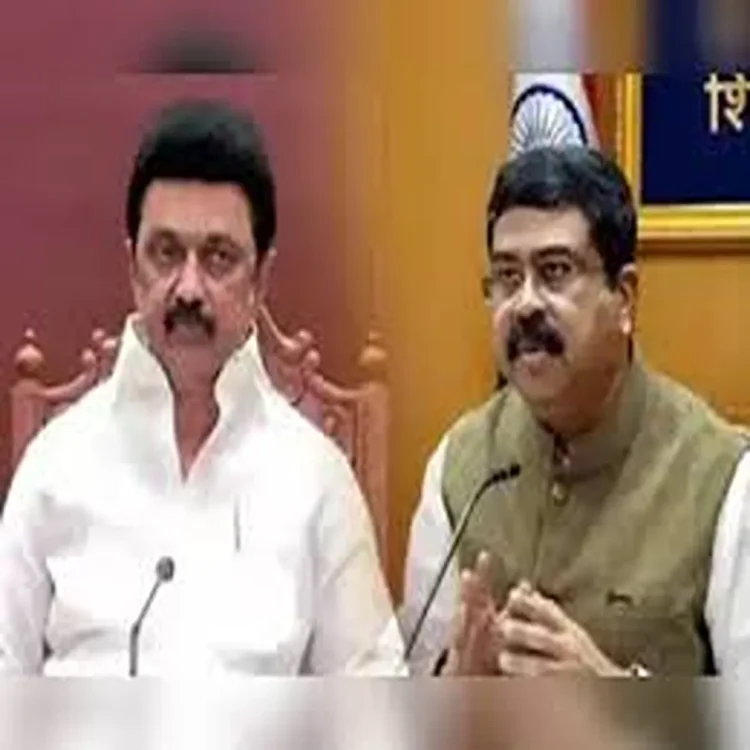
Dispute Over Language Policy Interpretation
Pradhan stated that labeling the three-language approach as a form of linguistic imposition misrepresents its intent. According to him, the policy is designed to be inclusive and forward-looking, aiming to equip students with broader language skills rather than enforce any particular language. He argued that presenting it otherwise risks spreading confusion among students and parents.
The remarks came after Stalin raised concerns that the policy could indirectly promote Hindi in states where it is not widely spoken. The Tamil Nadu Chief Minister had earlier described the framework linked to the National Education Policy (NEP) 2020 as a carefully planned move that could affect linguistic balance in non-Hindi-speaking regions.
Government’s Position on Multilingual Education
Responding to these concerns, Pradhan emphasized that the NEP 2020 prioritizes education in a child’s mother tongue, especially in the early years of schooling. He described this approach as a step toward empowering students by strengthening their foundational learning in their native language.
He further noted that the policy encourages students to learn multiple languages, which he believes can enhance their cognitive abilities and global competitiveness. Rather than weakening regional languages such as Tamil, Pradhan argued, multilingual education can help preserve and promote them alongside other languages.
Focus on Equal Promotion of Languages
Pradhan also highlighted that the policy framework does not favor any single language but instead promotes linguistic diversity across the country. He said the approach aligns with constitutional principles and seeks to improve upon the earlier two-language system by offering more flexibility and opportunities for students.
According to the minister, several initiatives have been introduced to support the implementation of the policy. These include programs under Samagra Shiksha, efforts to improve teacher training, and steps to strengthen educational institutions. He maintained that these measures are intended to ensure better learning outcomes and wider access to quality education.
Concerns Over Delayed Educational Initiatives
In addition to addressing the language debate, Pradhan criticized the Tamil Nadu government for delays in adopting certain central education initiatives. He pointed out that the state has not yet signed the required agreement for setting up PM-SHRI Schools, despite earlier indications of support.
He argued that this delay has affected students from economically weaker sections, who could benefit from improved infrastructure and enhanced educational facilities under the scheme. Pradhan described the situation as avoidable and called for quicker action to implement such programs.
Political Differences and Broader Implications
The minister accused the state leadership of allowing political considerations to take precedence over educational development. He described the resistance to the policy as intentional and urged the Tamil Nadu government to reconsider its stance in the interest of students.
Pradhan concluded by appealing for a more constructive approach to the issue. He encouraged state authorities to support initiatives that promote linguistic diversity while also strengthening the education system nationwide.
The exchange reflects a continuing debate between the central government and certain states over language policy and education reforms. As discussions evolve, the focus remains on balancing regional sensitivities with national educational goals.