
Court – Delhi High Court to Hear Appeal Over Sonam Wangchuk’s Hospital Transfer
Court – The Delhi High Court is set to examine an appeal challenging the continued treatment of activist Sonam Wangchuk at Safdarjung Hospital after his wife questioned the legality of the decision and sought his transfer to a medical facility of their choice.
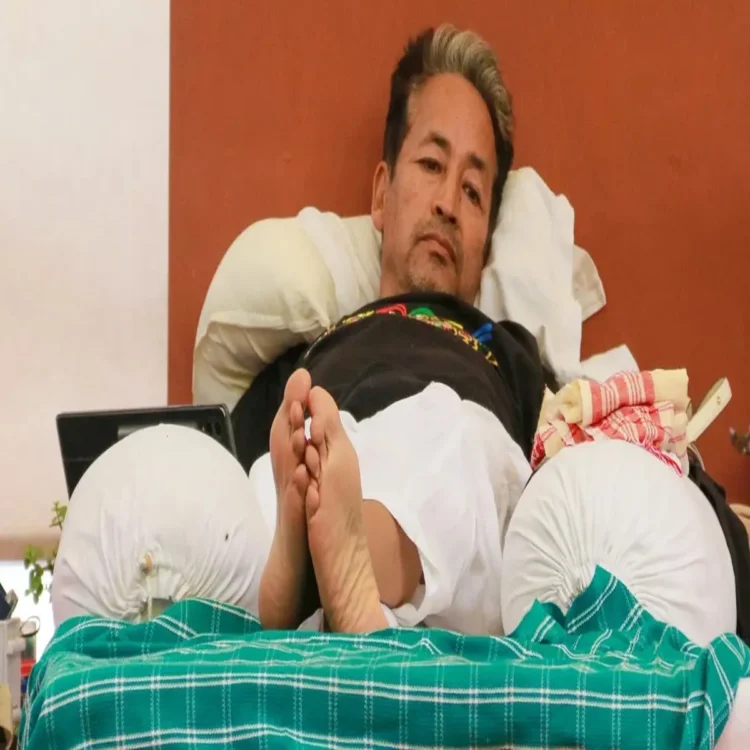
The Delhi High Court on Monday agreed to urgently hear an appeal filed by Gitanjali J Angmo, wife of activist Sonam Wangchuk, against a recent single-judge order that declined to intervene in his ongoing treatment at Safdarjung Hospital. The matter was mentioned before a bench headed by Chief Justice D. K. Upadhyaya along with Justice Tejas Karia, which agreed to list the case later in the day for further consideration.
Appeal Questions Interpretation of Earlier Court Order
Appearing for Angmo, Senior Advocate Akhil Sibal argued that the previous order had incorrectly interpreted the High Court’s July 16 direction, which required authorities to closely monitor Wangchuk’s health and provide medical intervention whenever necessary. According to Sibal, the earlier ruling failed to properly consider the issue of Wangchuk’s personal choice regarding his medical treatment after he was taken from the protest venue to a government hospital.
Sibal submitted before the court that Wangchuk had been removed from Jantar Mantar by police and admitted to Safdarjung Hospital against his wishes. He maintained that every individual has the right to decide where they receive medical care and that this personal autonomy should not be overridden without legal justification.
Authorities Seek More Time for Hearing
Representing the authorities, Solicitor General Tushar Mehta requested that the matter be heard later in the afternoon or on the following day. However, the division bench indicated that the appeal was likely to be taken up at around 2.30 pm, ensuring an early hearing in view of the urgency highlighted by the petitioner’s counsel.
Petition Raises Questions on Consent and Medical Choice
In the appeal, Angmo argued that the earlier order effectively allowed Wangchuk to remain confined to Safdarjung Hospital despite the absence of any formal arrest or detention order. The petition also claimed that the ruling left neither Wangchuk nor his wife with meaningful authority over decisions concerning his medical treatment.
The appeal further stated that the issue of informed consent had not been adequately addressed. It contended that patients have the right to accept or decline medical treatment and to choose the healthcare institution where they wish to receive care, subject to applicable legal provisions.
Earlier Single-Judge Order Declined Immediate Relief
During a special hearing held on Sunday, Justice Mini Pushkarna refused to issue an interim direction for Wangchuk’s transfer to a private hospital. The court observed that moving the fasting activist from the protest site to Safdarjung Hospital could not be considered arbitrary in light of concerns regarding his health.
The judge noted that doctors at Safdarjung Hospital were continuously monitoring Wangchuk’s condition and found no evidence to suggest that force was being used in a manner that violated his bodily integrity. The court also referred to the High Court’s earlier directions requiring authorities to monitor his health and intervene medically whenever needed.
Background of the Hunger Strike
The court observed that Wangchuk had not voluntarily admitted himself to any medical facility before the authorities shifted him to the government hospital. In these circumstances, it held that officials were within their authority to take necessary steps considering his medical condition. The order also made it clear that decisions regarding his treatment should remain with the attending medical team in accordance with established medical protocols.
Delhi Police shifted Wangchuk from Jantar Mantar to Safdarjung Hospital on Saturday, the 21st day of his hunger strike. He has been observing the fast since June 28 while protesting over alleged irregularities in competitive examinations and concerns arising from the cancellation of the NEET examination, which he linked to the deaths of several students.