
Artificial Intelligence – Army Leaders Must Adapt to AI-Driven Battlefield Decisions
Artificial Intelligence – The increasing use of artificial intelligence in modern warfare is pushing military leaders to develop stronger technical understanding, according to a senior Indian Army official who highlighted the growing role of AI-based systems in battlefield operations.
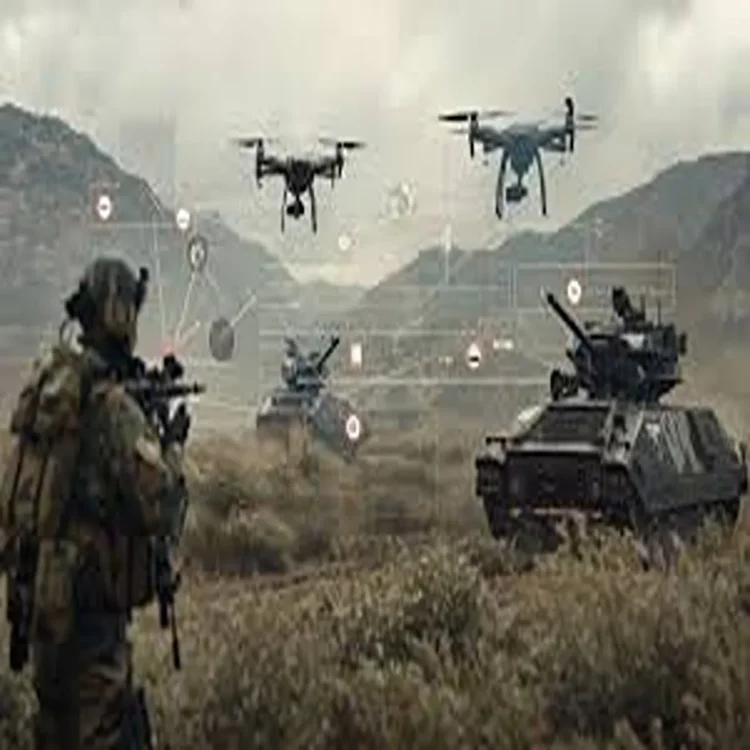
Deputy Chief of Army Staff Lt Gen Vipul Singhal said commanders in the future will need to function not only as traditional military strategists but also as technologists capable of evaluating how AI systems generate recommendations. Speaking at the Synergia Conclave held in New Delhi on Wednesday, he noted that the rapid integration of artificial intelligence into combat platforms is fundamentally changing how decisions are made during military operations.
Commanders must understand AI decision systems
Lt Gen Singhal explained that military leaders must become familiar with the technical foundations of AI tools, including the data they rely on and the algorithms that process that data. According to him, understanding how information is analyzed and presented by these systems is essential for commanders who are expected to make critical decisions in complex situations.
He said that commanders can no longer treat AI tools as black boxes. Instead, they must be able to question the logic behind machine-generated outputs and evaluate whether the recommendations align with the realities of the battlefield. As artificial intelligence becomes more deeply embedded in military platforms, the ability to interpret data and algorithmic analysis will become an essential leadership skill.
AI shrinking battlefield decision timelines
Another major change brought by artificial intelligence is the dramatic reduction in the time available to make operational decisions. Lt Gen Singhal pointed out that modern systems powered by AI can rapidly process information from multiple sources, including drones, satellites and ground-based sensors.
These systems can analyze incoming intelligence and suggest possible actions almost instantly. As a result, the interval between detecting a target and receiving a recommended response has become extremely short. This rapid cycle can help forces respond faster to threats, but it also places greater pressure on commanders who must decide whether to act on those recommendations.
The ability of AI platforms to analyze large volumes of real-time data allows them to identify patterns and generate options for military action much faster than traditional methods. However, the final decision still rests with human commanders.
Operational pressure in high-intensity environments
Lt Gen Singhal described how these developments create a difficult situation for leaders operating in fast-moving combat environments. When an AI system suggests a course of action, commanders must decide quickly whether to trust the recommendation.
If they choose not to follow the suggestion and the opportunity is lost, their decision may later be questioned. On the other hand, if they approve the recommended action and the outcome proves incorrect, commanders must still accept responsibility for the consequences.
This dynamic highlights the broader challenge of integrating artificial intelligence into military decision-making while maintaining human accountability. Even as AI tools become more advanced, ethical responsibility and operational judgment remain firmly in human hands.
Balancing technology with human responsibility
Military experts increasingly emphasize that artificial intelligence should function as a decision-support tool rather than a replacement for human leadership. Lt Gen Singhal noted that commanders must maintain control over the final decision while using AI insights to improve situational awareness.
He suggested that training programs for future military leaders will likely include stronger emphasis on data literacy, algorithmic understanding and the practical limits of automated systems. By developing these skills, commanders will be better prepared to assess both the strengths and weaknesses of AI-driven tools.
As militaries worldwide continue to adopt advanced technologies, the relationship between human judgment and machine analysis is expected to become a defining feature of modern warfare. Ensuring that commanders are equipped to navigate this balance will remain a critical priority for armed forces in the years ahead.