
Archaeology – Kharge Urges Centre To Expand Excavation At Karnataka Buddhist Monastery
Archaeology – Congress president and Leader of Opposition in the Rajya Sabha Mallikarjun Kharge on Thursday called on the Union government to carry out detailed archaeological excavation at the site of an ancient Buddhist monastery discovered in Karnataka’s Kalaburagi district. He said the location holds considerable historical importance and may provide valuable insight into the spread of Buddhism in southern India if properly explored and preserved.
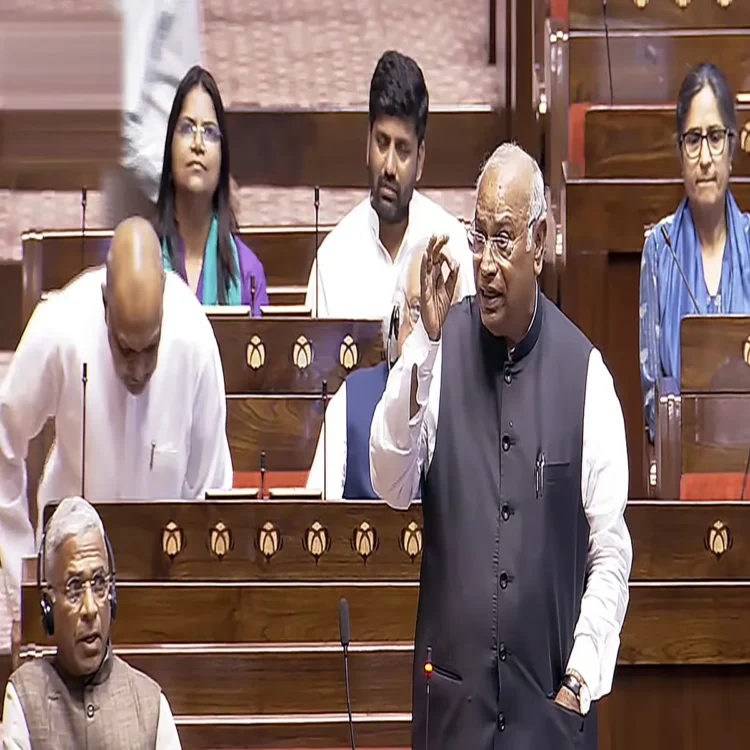
Demand Raised In Rajya Sabha
During Question Hour in the Rajya Sabha, Kharge informed the House that he had previously written to the central government requesting a scientific survey and extensive excavation at the monastery site in his parliamentary constituency. According to him, while an initial survey had been conducted, further excavation work has not yet been initiated despite repeated requests.
He noted that the remains discovered at the site are believed to date back to the era of the Satavahana dynasty, a period when Buddhism expanded across several parts of the Deccan region. Kharge urged authorities to prioritize the excavation process so that historians and archaeologists can study the findings in detail.
Historical Links To The Spread Of Buddhism
Kharge also referred to historical accounts suggesting that Buddhism spread from Amaravati toward other regions including Kalaburagi and Raichur during the Satavahana period. He said that this movement of Buddhist culture played a significant role in shaping the region’s historical and religious landscape.
According to the Congress leader, many historical remains connected with the Buddhist tradition remain unexplored in the region. He emphasized that these sites could reveal important information about early Buddhist institutions and their influence across southern India.
Importance Of Buddhist Heritage In The Region
While highlighting the cultural significance of the area, Kharge mentioned the contributions of the renowned Buddhist philosopher Nagarjuna, who played an important role in promoting Buddhist teachings and the monastic system. He said that several symbols associated with Buddhism, along with ancient temple structures, are located along the Bhima and Krishna rivers.
These locations, he said, reflect the deep historical roots of Buddhism in the region and require proper protection as well as scientific investigation. Kharge stressed that without systematic archaeological work, valuable historical evidence could remain undiscovered or deteriorate over time.
He urged the government to take concrete steps to preserve these heritage sites and ensure that further excavation is carried out in a structured and professional manner.
Government Response On Excavation Plans
Responding to Kharge’s request in the Upper House, Union Minister for Culture and Tourism Gajendra Singh Shekhawat assured members that excavation work would be taken forward.
He stated that the government is currently working to upgrade several archaeological sites across the country. According to him, 15 sites of archaeological significance are being developed with the aim of promoting tourism while preserving historical heritage.
Shekhawat explained that in the past, many excavation sites were closed after scientific studies were completed. However, the Union Budget this year has introduced a provision to transform important archaeological locations into visitor experience centres so that the public can learn more about the country’s heritage.
Broader Discussion On Archaeological Sites
The minister made these remarks while responding to a question raised by Biju Janata Dal member Sulata Deo regarding the restoration of monuments located in Odisha’s Diamond Triangle, a well-known Buddhist heritage cluster.
Shekhawat said the Diamond Triangle remains a historically significant region for Buddhist studies. He also informed the House that recent excavation work in Udayagiri had led to the discovery of a major relic associated with Lord Buddha.
According to the minister, state governments can submit proposals to the Centre to seek support for developing such archaeological sites under existing schemes. These initiatives, he said, aim to promote heritage tourism while ensuring the preservation of important historical remains.