
Taiwan – Military Activity Intensifies Around Island Amid Regional Tensions
Taiwan – The security situation around Taiwan remained tense on Friday morning after the island’s defence authorities reported fresh military movements by China near its airspace and surrounding waters. According to Taiwan’s Ministry of National Defence, eight aircraft belonging to China’s People’s Liberation Army were detected operating close to Taiwan, along with six naval vessels, as of 6 a.m. local time.
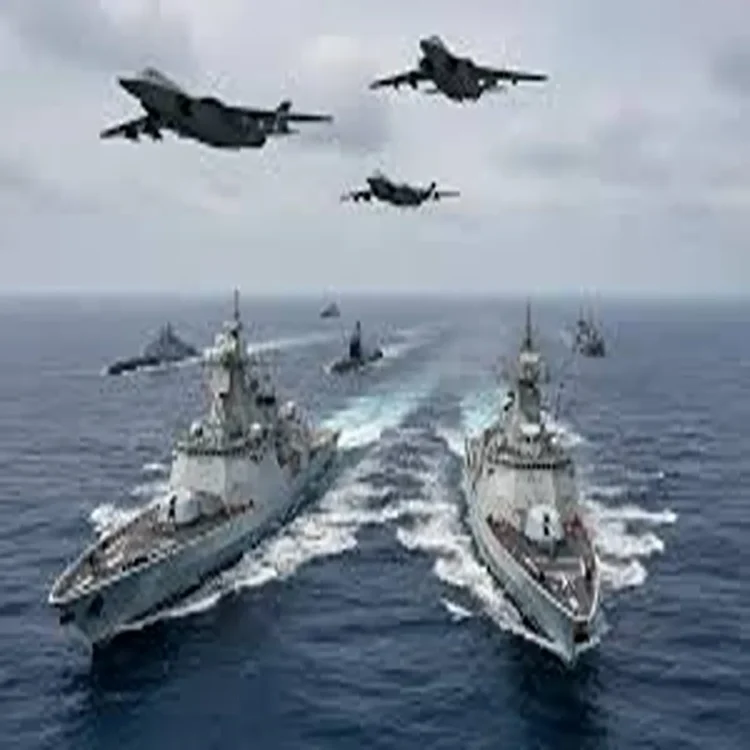
Six Aircraft Cross Median Line
Officials said that six of the eight aircraft crossed the median line of the Taiwan Strait, an unofficial boundary that has long served as a buffer between the two sides. These aircraft entered Taiwan’s central and southwestern Air Defense Identification Zone (ADIZ). The ministry added that Taiwan’s armed forces closely tracked the movements and initiated appropriate responses, though no further details were disclosed.
In a statement shared on social media platform X, the defence ministry confirmed that it had monitored the situation throughout the operation and remained vigilant.
Higher Sorties Recorded a Day Earlier
The latest activity followed a more extensive deployment recorded on Thursday. On that day, Taiwan reported spotting 30 Chinese military aircraft and six naval vessels in areas around the island by early morning.
Of those 30 aircraft, 22 crossed the median line and flew into Taiwan’s northern, central and southwestern ADIZ sectors. Defence officials said surveillance systems and patrol forces were activated to track the developments.
The ministry reiterated that it maintains a consistent monitoring mechanism to ensure regional security and safeguard its territorial integrity.
Joint Air-Sea Drills Detected Midweek
On Wednesday, Taiwan documented another wave of Chinese military operations. A total of 28 aircraft sorties were detected, including various platforms such as J-10 and J-16 fighter jets as well as KJ-500 airborne early warning aircraft.
According to the ministry, 22 of the 28 aircraft crossed the median line and entered Taiwan’s ADIZ zones across multiple regions. Authorities stated that these aircraft appeared to be conducting coordinated air-sea exercises alongside naval units.
Taiwan’s armed forces responded by deploying reconnaissance assets and maintaining readiness measures. Officials emphasized that they remain prepared to address any developments that could affect regional stability.
Regional Concerns Extend Beyond Taiwan
The heightened military activity around Taiwan comes at a time of broader tensions in East Asia. In a separate development, Japan has formally objected to China’s recent decision to limit exports of certain dual-use items to 20 Japanese companies. Chinese authorities have described the goods as having potential military applications.
Japan’s Deputy Chief Cabinet Secretary, Sato Kei, criticized the move during a press briefing, calling it unacceptable and stating that Tokyo had lodged a strong protest through diplomatic channels.
The dispute marks another chapter in the strained relationship between the two countries. Although Japan and China maintain economic ties, political friction has deepened in recent months.
Diplomatic Strain Following Security Remarks
Relations deteriorated further in November when Japanese Prime Minister Sanae Takaichi told lawmakers that a potential Chinese attack on Taiwan could pose a survival-threatening situation for Japan. She indicated that such a scenario might require a response under Japan’s security framework.
The remarks drew attention across the region and were seen as reflecting Tokyo’s growing concern over cross-strait stability.
Analysts note that Taiwan’s geographic location places it at the center of strategic interests in the Indo-Pacific. Increased military patrols and exercises around the island are being closely watched by neighboring countries, including Japan, given their implications for regional security and international trade routes.
As military movements continue to be reported almost daily, Taiwan’s defence authorities have maintained that they will continue to monitor developments carefully and act in accordance with established protocols. Meanwhile, diplomatic exchanges in the region suggest that tensions are likely to remain under scrutiny in the coming weeks.