
SpaceSecurity – US Warns of Rising Military Rivalry in Outer Space
SpaceSecurity – The United States has raised fresh concerns over the growing militarisation of outer space, warning that the domain is no longer purely scientific or commercial but increasingly shaped by geopolitical rivalry. During a recent Congressional hearing, lawmakers and experts outlined how rapid advancements by China and Russia are transforming space into a critical arena for strategic competition.
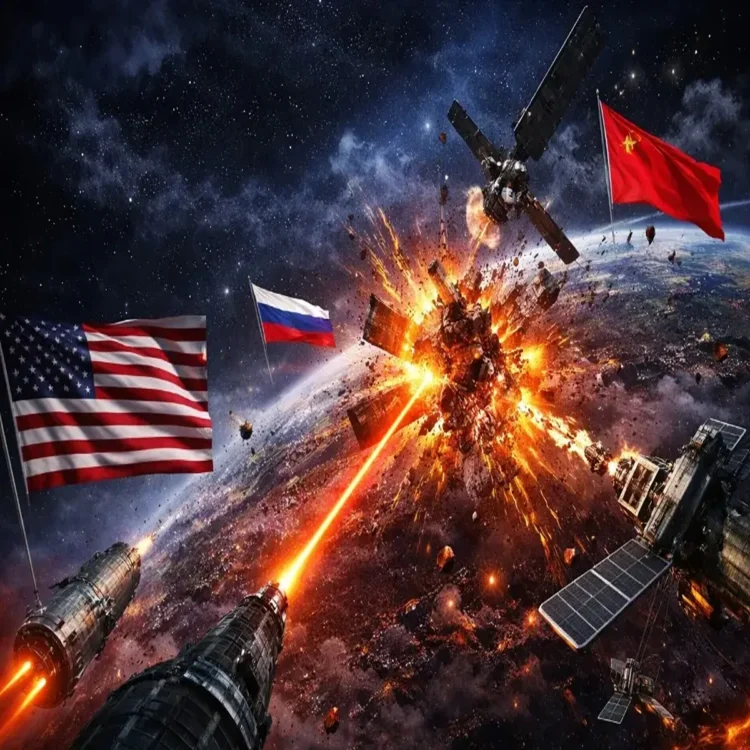
Shifting Nature of Space as a Strategic Domain
Officials described a significant shift from earlier decades, noting that space is now crowded with satellites and marked by increasing tensions. Congressman Keith Self, who led the session, highlighted that outer space today bears little resemblance to its state half a century ago. What was once considered a largely peaceful frontier has now evolved into an operational domain with direct military relevance.
Experts stressed that the growing reliance on space-based systems has made them central to both national security and global stability. Satellites now play a vital role in communications, surveillance, navigation, and weather forecasting, making them indispensable in both civilian and defence sectors.
China Identified as Primary Long-Term Competitor
Much of the discussion focused on China’s expanding presence in space. Analysts described Beijing as the most significant long-term challenger to US leadership, citing its rapid progress in satellite deployment, launch capabilities, and international collaborations.
China’s strategy extends beyond technology, with increasing efforts to build partnerships across developing nations. This approach, experts noted, allows it to influence global standards and strengthen its geopolitical reach through space cooperation.
Lawmakers also expressed concern over reports of assertive activities in orbit, including close-range satellite operations and manoeuvres that could pose risks to other spacecraft. Such developments, they warned, indicate a shift toward more aggressive behaviour in space operations.
Russia’s Capabilities Raise Additional Concerns
Russia was also highlighted as a key player, particularly for its advancements in anti-satellite technology. Officials warned that certain systems under development could potentially disrupt satellites in low Earth orbit, leading to widespread consequences for both military and civilian infrastructure.
Such disruptions could affect essential services worldwide, including communication networks, financial systems, and navigation tools, underscoring the broader risks tied to space-based conflict.
Increasing Dependence on Space in Modern Warfare
The hearing emphasised how modern military operations are deeply integrated with space technologies. From intelligence gathering to missile detection and battlefield coordination, satellites have become crucial assets.
Recent conflicts have demonstrated how even smaller or less-equipped nations can leverage space-based tools, such as satellite imagery and communication systems, to enhance their strategic capabilities.
Growing Complexity of the Space Environment
The number of active players in space continues to rise, with more than 100 countries now involved in space activities. Additionally, commercial entities account for a large majority of satellites currently in orbit, adding new layers of complexity to governance and security.
This expanding participation has made coordination more challenging while increasing the risk of misunderstandings or accidental conflicts. Experts warned that without clear norms, the likelihood of miscalculation could grow significantly.
Importance of Alliances and Global Cooperation
US officials stressed the need for stronger international partnerships to maintain stability in space. Initiatives such as multilateral agreements and collaborative missions were highlighted as key tools for promoting responsible behaviour and shared standards.
There were also calls for deeper engagement with allies in regions like the Indo-Pacific. Countries such as India, Japan, Australia, and South Korea were identified as important partners in shaping future space governance frameworks.
Concerns Over an Emerging Arms Race
Experts cautioned that the absence of clear regulations could lead to an unchecked arms race in space. The development of anti-satellite weapons and cyber capabilities targeting orbital systems was cited as a growing threat that could have long-term consequences for the space environment.
They warned that the stakes go beyond technological leadership. The outcome of this competition will likely determine how global communication networks function, how information is shared, and how nations interact in the space domain.