
Politics – Myanmar Parliament Elects Military Leader as New President
Politics – Myanmar’s parliament has formally chosen Senior General Min Aung Hlaing as the country’s new president, a development that signals a shift in structure but raises continued concerns about military dominance in national governance.
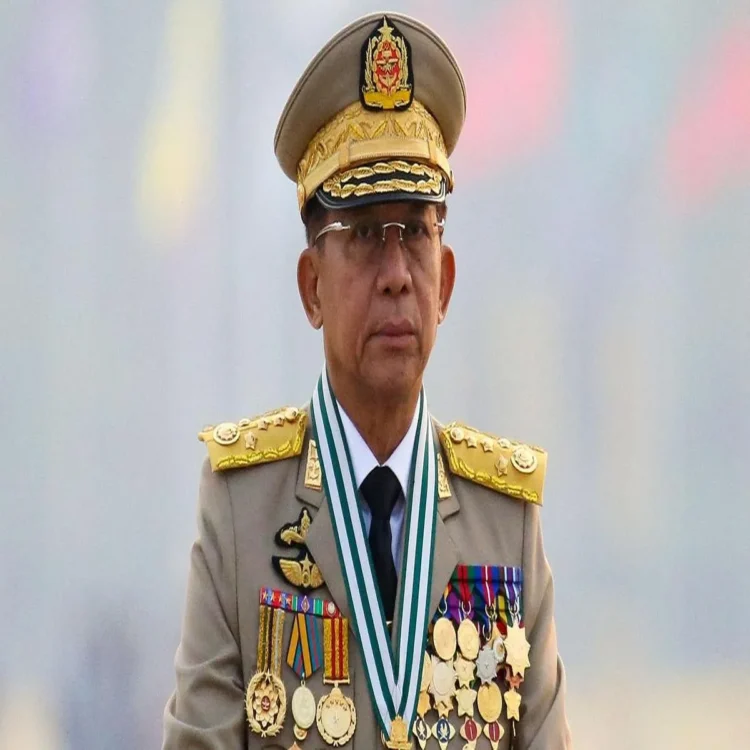
Military-Backed Majority Secures Presidential Victory
Myanmar’s legislature on Friday voted to elevate Min Aung Hlaing to the presidency, marking a significant political moment nearly five years after he led the military takeover that removed the civilian administration headed by Aung San Suu Kyi. Although the process reflects a return to a parliamentary vote, critics argue that the outcome was largely predetermined.
Out of 584 votes cast in the combined houses of parliament, Min Aung Hlaing secured 429, according to the official announcement made by parliamentary speaker Aung Lin Dwe. The two remaining candidates, who received far fewer votes, were subsequently appointed as vice presidents in line with constitutional provisions.
Election Process Faces Scrutiny
The elections that shaped the current parliament were held in stages during December and January. However, the credibility of the process has been widely questioned. Several major opposition groups, including the National League for Democracy, either boycotted the elections or were barred from participating.
Observers and critics have pointed out that the absence of key political players undermined the fairness of the vote. Many argue that the electoral framework, designed and overseen by military authorities, limited genuine political competition and ensured a favorable outcome for army-aligned candidates.
Continued Military Influence in Governance
Despite stepping into a civilian role, Min Aung Hlaing’s rise to the presidency is seen by many as an extension of military control rather than a departure from it. The constitution prevents the president from simultaneously holding the role of commander-in-chief, prompting him to relinquish his military post ahead of the vote.
His position as military chief, which he held since 2011, has now been handed over to a close associate, General Ye Win Oo. Analysts believe this transition ensures continuity within the armed forces while allowing Min Aung Hlaing to maintain influence over both civilian and military spheres.
Background of Political Transition
Min Aung Hlaing, now 69, has been a central figure in Myanmar’s political landscape for over a decade. Even before the 2021 coup, the military retained significant authority under a constitution that reserved key powers for the armed forces.
The removal of Aung San Suu Kyi’s government marked a turning point, leading to widespread unrest and international criticism. Suu Kyi, once the face of Myanmar’s democratic movement, remains imprisoned, further highlighting the limited role of opposition voices in the current system.
Questions Over Legitimacy and Future Direction
While the parliamentary vote introduces a formal leadership structure, questions remain about the legitimacy of the process and the direction of Myanmar’s governance. Critics argue that the consolidation of power within military-backed institutions limits prospects for meaningful democratic reform.
Supporters of the current administration, however, maintain that the transition represents a step toward political stability after years of conflict and uncertainty. They point to the establishment of a functioning parliament as evidence of institutional continuity.
As Myanmar moves forward under its new president, the balance between civilian authority and military influence is likely to remain a central issue. The international community continues to watch closely, assessing whether the changes will lead to broader political inclusion or reinforce existing power structures.