
NATO – Trump’s Ankara Visit to Focus on Defence Spending and Alliance Strategy
NATO – US President Donald Trump is set to travel to Ankara for a NATO summit expected to centre on defence budgets, responsibility-sharing among allies and expansion of military production. The White House said Trump will also hold separate talks with Turkish President Recep Tayyip Erdogan, Ukrainian President Volodymyr Zelensky and Syrian President Ahmed al-Sharaa during the visit.
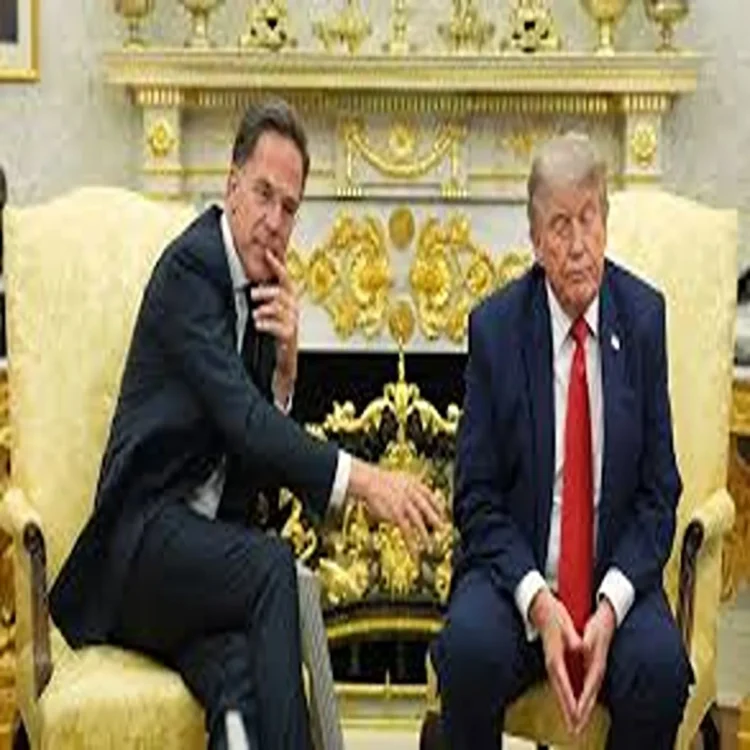
Arrival and summit programme
Trump is scheduled to leave the White House on Monday evening and reach Ankara on Tuesday afternoon. Erdogan will welcome him at an official arrival ceremony, followed by a review of the honour guard and a bilateral meeting, according to White House spokeswoman Anna Kelly.
Later on Tuesday, Trump will attend a social dinner for NATO leaders. The following day, he is expected to join the formal welcome ceremony and leaders’ photograph before taking part in the main working session of the summit. His itinerary also includes meetings with Zelensky and al-Sharaa, followed by a press conference before he returns to Washington on Wednesday evening.
Pressure to meet spending commitments
The gathering will assess whether NATO members are moving towards defence spending targets agreed at the alliance’s previous summit in The Hague. Under that commitment, member states agreed to work towards allocating five per cent of gross domestic product to defence.
US Ambassador to NATO Matthew G. Whitaker said Trump wants member countries to increase their contributions without delay. He said the administration expects allies not only to set long-term plans but also to make faster progress towards the five per cent benchmark as security risks grow.
Whitaker said NATO governments had pledged nearly $139 billion in additional defence expenditure since the earlier agreement. About half of that amount, he said, was linked to purchases of US-made military equipment, weapons and ammunition.
Uneven progress among NATO members
While describing the increased spending as a positive development, Whitaker said performance varied across the alliance. He pointed to Poland, the Nordic countries and the Baltic states as countries making strong advances, while Germany is expected to meet the target by 2029.
He said every member should show a clear and credible rise in defence spending. The aim, he added, is to create a more balanced alliance in which European nations and Canada carry a larger share of conventional defence responsibilities.
Defence production expected to feature prominently
Military manufacturing and procurement are also expected to receive significant attention in Ankara. Whitaker said NATO must strengthen industrial capacity on both sides of the Atlantic if it is to meet new capability targets.
Kelly said the administration sees the summit as part of a wider effort to reshape the alliance’s structure. She said the United States wants NATO to move away from a system heavily dependent on Washington and towards greater self-reliance among partner nations.
Officials said leaders would discuss procurement arrangements designed to increase defence capacity. They are also expected to examine ways for US defence companies to expand production, promote equipment and support allied requirements.
Ukraine talks and European troop review
Trump’s meeting with Zelensky is expected to include discussions on efforts to end the Russia-Ukraine war. Senior administration officials said fighting has remained largely static in recent months and that the President sees an urgent need to reduce further casualties.
Following his discussion with Zelensky, Trump is expected to speak again with Russian President Vladimir Putin, officials said. No timetable or further details of those possible contacts were announced.
The administration also expects several billion dollars in announcements linked to defence co-production, manufacturing projects and purchases of advanced US weapons systems. Officials said the United States sold about $50 billion in defence equipment to European and Canadian allies over the past year, while American defence companies hold roughly $300 billion in outstanding orders.
The Pentagon’s review of US troop deployments and military bases in Europe is continuing. The review is part of a broader approach intended to encourage European allies to take greater responsibility for regional security as NATO responds to the changing security situation following Russia’s invasion of Ukraine.