
Leadership – Iran’s Mojtaba Khamenei Chosen as Supreme Leader Amid Uncertain Political Future
Leadership – The appointment of Mojtaba Khamenei as Iran’s new Supreme Leader has drawn significant attention both within the country and internationally. The 56-year-old cleric, who is the second son of the late Ayatollah Ali Khamenei, was selected on Sunday by the Assembly of Experts, the powerful 88-member clerical council responsible for choosing the Rahbar, or supreme leader, of the Islamic Republic.
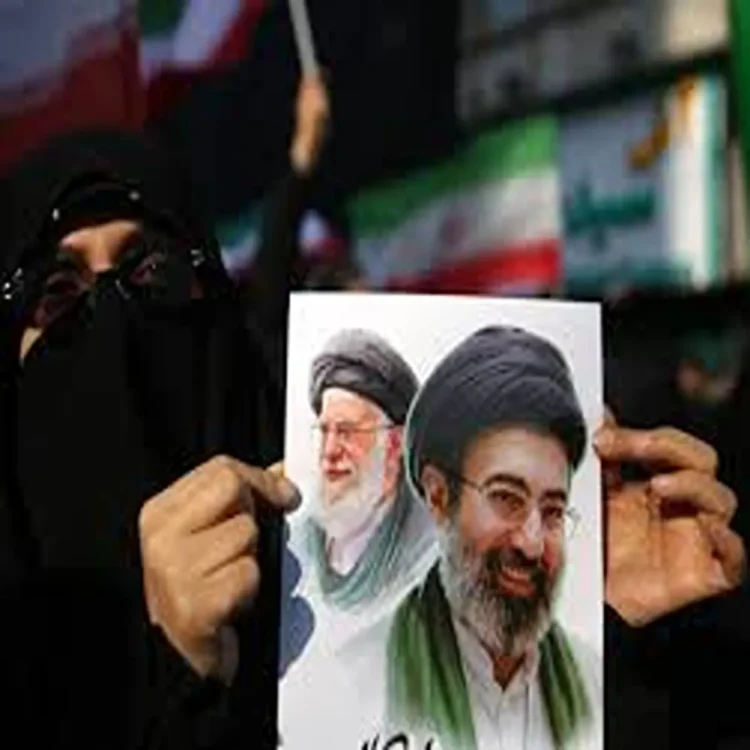
Despite belonging to one of Iran’s most influential political families, Mojtaba Khamenei has largely stayed out of the public spotlight throughout his life. His low public profile has meant that relatively little is widely known about him, making his elevation to the highest political and religious position in Iran particularly notable.
A Leader Who Operated Mostly Behind the Scenes
Observers say Mojtaba Khamenei has long maintained a discreet presence within Iran’s political establishment. According to Professor Kingshuk Chatterjee from the Department of History at the University of Calcutta, Mojtaba has remained largely invisible to the broader public.
Chatterjee explained that Mojtaba’s influence has mostly been recognized by insiders within Iran’s political system rather than by ordinary citizens. He is known primarily as a student of Islamic theology, but scholars note that his academic background does not indicate a specialized focus in fiqh, or Islamic jurisprudence.
Under Iran’s constitution, expertise in Islamic jurisprudence is traditionally considered an important qualification for the position of supreme leader. However, Chatterjee pointed out that precedent exists for leaders without deep specialization in fiqh.
Historical Precedent in Leadership Selection
Following the death of Ayatollah Ruhollah Khomeini in 1989, Iran faced a similar situation. Ali Khamenei, who eventually became the country’s supreme leader, was also not widely regarded as a leading authority in Islamic jurisprudence at the time of his appointment.
Instead, analysts have suggested that Ali Khamenei was selected largely because of his political experience and strategic understanding of the Iranian state. These political abilities, combined with support from key figures within the system, helped shape his rise to power.
Chatterjee noted that Mojtaba Khamenei may face a different challenge. While his father’s leadership was strengthened by his role during Iran’s revolutionary period, Mojtaba does not share the same revolutionary credentials. This difference may influence how authority is exercised under the new leadership.
Debate Over the Scope of Supreme Leader’s Powers
Over the decades, the authority of Iran’s supreme leader expanded considerably beyond the framework originally outlined in the country’s constitution. During Ali Khamenei’s tenure, the position evolved into the most powerful office in Iran’s political structure.
Political analysts now say it remains unclear whether Mojtaba Khamenei will wield similar influence. Some experts believe the structure of power could shift, potentially limiting the authority of the office or returning it closer to its earlier constitutional boundaries.
According to Chatterjee, the coming years may determine whether the institution of the supreme leader continues to operate with extensive political control or undergoes a gradual reduction in power.
Religious Doctrine Behind Iran’s Political System
Iran’s political system is deeply rooted in the doctrine developed by Ayatollah Khomeini after the 1979 Islamic Revolution. The concept, known as velayat-e faqih, or Guardianship of the Jurist, holds that a senior Islamic scholar should lead and guide the state.
Under this framework, the supreme leader serves as both a political authority and a religious guardian. The Assembly of Experts is tasked with selecting a cleric who is considered capable of fulfilling this role.
Given this doctrine, some observers have expressed surprise at Mojtaba Khamenei’s selection, particularly because his academic background does not prominently feature advanced scholarship in Islamic jurisprudence.
Regional Conflict Shapes Political Environment
The broader regional situation may also have influenced the timing and reception of the leadership transition. According to analysts, rising tensions involving the United States and Israel have reshaped the domestic political climate in Iran.
Chatterjee suggested that under different circumstances, Mojtaba Khamenei’s appointment might have triggered stronger public opposition. However, ongoing geopolitical conflict has shifted attention toward national security concerns.
He added that the current conflict environment is largely driven by Israel’s security priorities, which has in turn intensified regional tensions and influenced political dynamics within Iran.
As Mojtaba Khamenei begins his tenure, observers will be closely watching how his leadership style develops and whether he consolidates authority in the same way his father once did