
Iran – Trump Calls Iran “Nation of Terror,” Says Pressure Intensifying
Iran – United States President Donald Trump strongly criticised Iran during remarks at the White House, describing the country as a “nation of terror and hate” and claiming that Tehran was currently facing significant consequences for its actions. His comments came amid ongoing tensions between Washington and Tehran, an issue that continues to dominate discussions around American national security and foreign policy.
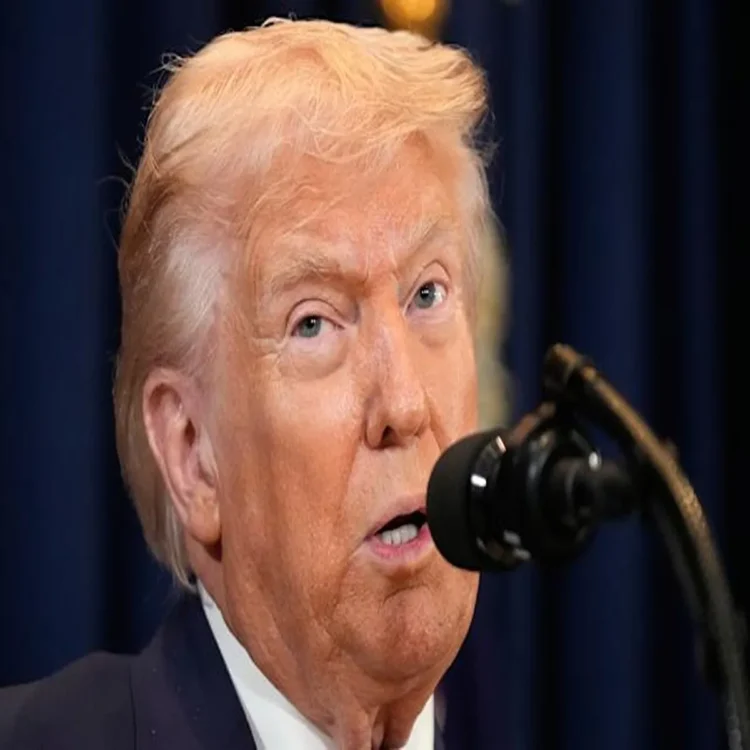
Speaking during an event held to mark Women’s History Month, Trump briefly shifted the focus of his speech to international affairs. Addressing a large audience gathered in the East Room, most of whom were women attending the commemorative event, the president emphasized what he described as the growing pressure on Iran and highlighted the strength of the United States military.
The remarks reflected the administration’s continuing hardline stance toward Tehran as geopolitical tensions in the region remain closely monitored by policymakers and international observers.
US President Highlights Military Strength
During his address, Trump praised the capabilities of the US armed forces, describing them as unmatched in strength and readiness. He suggested that the country’s military power plays a crucial role in shaping Washington’s approach to dealing with threats abroad.
“Our military is unsurpassed,” Trump told the audience, stressing that the United States maintains a level of military capability that, in his words, has never been equaled.
The president indicated that the actions currently being taken toward Iran were necessary and overdue. While he did not provide specific details about ongoing strategies or operations, he suggested that stronger measures could have been implemented earlier by previous administrations.
Trump remarked that decisive action had been needed for decades, referencing the long history of strained relations between the two countries.
Rapidly Evolving Situation With Tehran
Trump also suggested that developments related to Iran were progressing quickly. Without elaborating on the exact nature of the developments, he said the situation was advancing at a rapid pace and appeared to be moving in a direction he viewed positively.
“The situation with Iran is moving along very rapidly,” he said, adding that current efforts were producing results.
Despite the strong language used in his comments, the president avoided outlining operational details or describing specific steps the United States might be taking in response to Iran’s activities.
Foreign policy analysts have noted that such statements often reflect broader strategic messaging rather than specific policy announcements. As a result, the remarks did not immediately clarify whether new measures were being considered or implemented.
Longstanding Tensions Between Washington and Tehran
Relations between the United States and Iran have remained tense for decades, shaped by political, military, and economic disagreements. Since the Islamic Revolution in 1979, diplomatic ties between the two nations have been largely frozen, with both governments frequently clashing over regional influence and security issues.
Successive US administrations have imposed economic sanctions on Iran in an effort to limit its military expansion and nuclear development. Washington has also repeatedly raised concerns over Tehran’s support for armed groups across the Middle East, which US officials argue contributes to regional instability.
Iran, on the other hand, has consistently defended its policies, stating that its actions are aimed at protecting national sovereignty and regional interests.
The continuing dispute has remained one of the most complex challenges in global diplomacy, affecting energy markets, regional security alliances, and international negotiations over nuclear programs.
Domestic Event Briefly Turns to Global Security
Trump’s comments on Iran were delivered during a speech that was largely dedicated to domestic topics, including Women’s History Month, the role of working mothers, and the broader state of the US economy.
However, the brief shift toward foreign policy underscored how central the Iran issue remains within the administration’s national security agenda.
Even during events primarily focused on domestic matters, discussions about Iran continue to emerge as the geopolitical situation evolves and Washington monitors developments closely.
Observers say the latest remarks illustrate the ongoing significance of US–Iran relations in shaping international security discussions and diplomatic priorities.