
Iran – Mojtaba Khamenei Named Supreme Leader Amid Rising Regional Tensions
Iran – The political landscape in Iran entered a new phase after Ayatollah Mojtaba Khamenei was appointed as the country’s Supreme Leader, a decision that has drawn international attention and cautious reactions from world leaders. United States President Donald Trump responded briefly to the development, saying only that time would reveal how the situation unfolds.
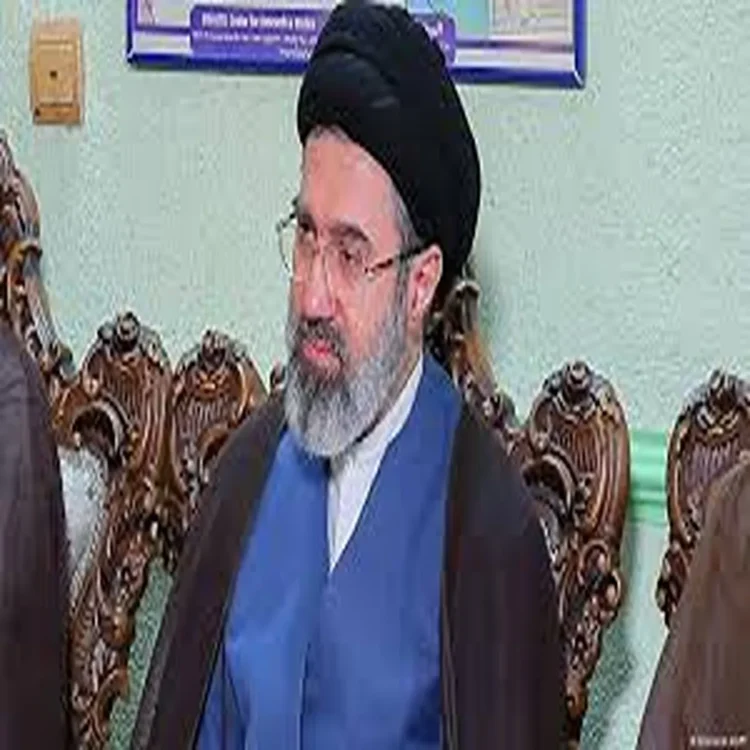
Appointment Confirmed by Assembly of Experts
The decision to elevate Mojtaba Khamenei, 56, to the highest authority in Iran was made by the country’s Assembly of Experts, an 88-member clerical body responsible for selecting the Supreme Leader. In an official statement, the council confirmed that he had been chosen as the third leader of the Islamic Republic through what it described as a decisive vote.
The appointment follows a turbulent period marked by the death of former Supreme Leader Ayatollah Ali Khamenei during a military conflict that heightened tensions across the Middle East. The leadership transition therefore comes at a time when regional stability remains fragile.
Trump Responds With Limited Comment
Asked about the appointment, US President Donald Trump declined to provide a detailed evaluation. Speaking to media outlets, he simply remarked, “We’ll see what happens,” offering little insight into Washington’s immediate stance toward Iran’s new leadership.
In earlier statements before the official decision, Trump had voiced strong criticism of Mojtaba Khamenei as a potential successor. He had previously described the cleric as an unsuitable candidate and suggested that any future Iranian leader would need international recognition to remain stable in power.
Iran’s Clerical Establishment Moves Quickly
Despite outside commentary and rising geopolitical tensions, Iran’s Assembly of Experts moved swiftly to confirm the succession. Officials stated that the council reached its decision without hesitation, even while accusing the United States and Israel of hostile actions against the country.
The rapid confirmation appears aimed at ensuring continuity in Iran’s leadership structure during a sensitive period for the government and its security institutions.
Military and Institutional Support
Shortly after the announcement, the Islamic Revolutionary Guard Corps (IRGC) publicly pledged loyalty to the newly appointed leader. In a statement, the powerful military organization declared its readiness to follow Mojtaba Khamenei’s directives and support the country’s leadership framework.
Such backing from the IRGC is considered significant because the force plays a major role in Iran’s military operations, national security policy, and political influence.
Influence Built Behind the Scenes
For years, Mojtaba Khamenei operated largely outside formal government positions. However, he was widely known for his influence within Iran’s political and security networks, often acting as a key intermediary within the leadership structure.
Observers have frequently described him as someone who managed access to his father, which allowed him to build connections across influential institutions. Critics inside Iran have previously questioned whether his rise reflects a form of dynastic succession, an issue that occasionally sparked debate within the country’s political circles.
Regional Reactions and Security Concerns
The appointment has also triggered strong reactions from regional rivals. Israeli officials issued warnings suggesting that Iran’s leadership remains a potential target amid the broader confrontation between the two nations.
Israel’s military reiterated that it would continue monitoring Iran’s leadership structure and warned those involved in the selection process that they could face consequences as tensions continue.
Iran Rejects Foreign Interference
Iranian officials have rejected any suggestion that outside powers should influence the country’s leadership decisions. Foreign Minister Abbas Araghchi stated that the appointment of the Supreme Leader is strictly an internal matter.
In an interview with NBC’s Meet the Press, Araghchi said Iran would not permit foreign governments to interfere in its domestic affairs, emphasizing that the country’s political system operates independently of external approval.
Background and International Sanctions
Mojtaba Khamenei’s background includes religious education in the city of Qom and participation in the Iran-Iraq war during his youth. Supporters view his experience and ideological alignment as factors that reinforce continuity within Iran’s ruling establishment.
However, his international profile has been shaped partly by sanctions imposed by the United States in 2019. Washington accused him of supporting policies tied to Iran’s regional influence and domestic political control, contributing to longstanding tensions between Tehran and Western governments.
As Iran moves forward under its new leadership, analysts say the coming months will reveal how Mojtaba Khamenei navigates both internal expectations and complex geopolitical pressures.