
Brain Surgery – Indian American Army Surgeon Advances Minimally Invasive Brain Tumor Treatment
Brain Surgery – An Indian American Army surgeon has been recognized for helping introduce an advanced surgical technique that allows doctors to remove certain brain tumors through the nasal passage instead of opening the skull. The procedure, developed through a collaboration between military medical specialists, offers eligible patients a less invasive treatment option and can significantly shorten recovery time. According to the Pentagon, the approach has already demonstrated promising results in complex skull base surgeries.
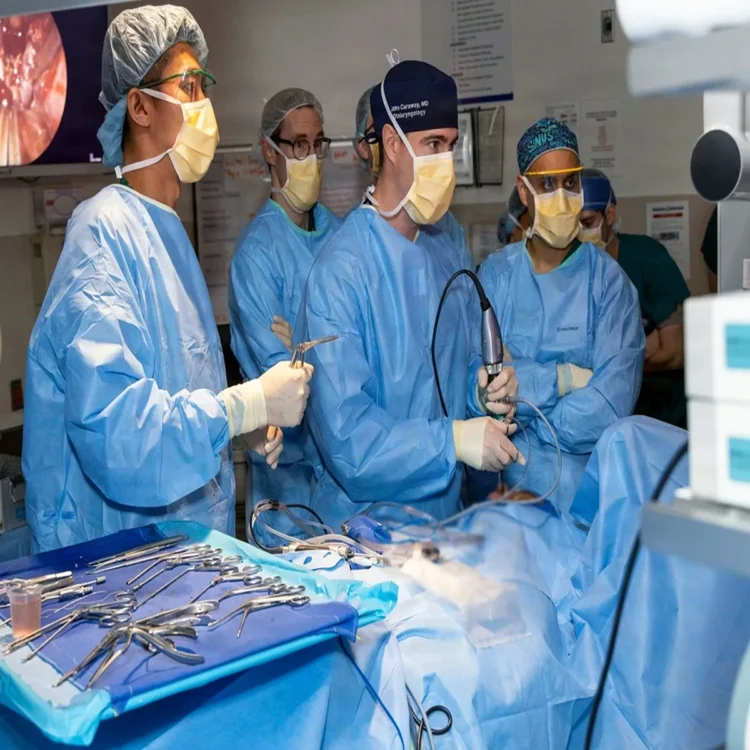
New Surgical Method Reduces the Need for Open Skull Operations
Major Jagatkumar Patel, working alongside Army neurosurgeon Lt. Col. Charles Miller, developed the technique to reach tumors located at the base of the skull using a carefully planned route through the nose. Traditionally, patients with tumors in this area often required open brain surgery, which involves greater surgical complexity and a longer healing process.
Patel explained that advances in medical technology have made it possible to avoid opening the skull in many cases, provided the tumor is of a suitable size and located in an accessible position. He noted that the nasal pathway offers surgeons a direct route, increasing the possibility of removing the tumor completely while reducing trauma to the patient.
Successful Treatment for Marine Staff Sergeant
The innovative procedure was recently performed on Marine Staff Sergeant Andy Archer, who had experienced severe headaches for nearly 15 years. After he began suffering from vision problems, doctors ordered an MRI scan that revealed a tumor measuring approximately 4.4 centimeters. The growth was positioned near the pituitary gland and was pressing against the optic nerve, making timely treatment essential.
Archer was referred to the Walter Reed Army National Military Medical Center in Bethesda, where Patel and Miller evaluated his condition and decided that the minimally invasive technique was the most appropriate option.
Precision Planning and Advanced Imaging
According to the Pentagon, Patel designed a detailed surgical pathway by carefully navigating the patient’s nasal anatomy to create safe access to the tumor. During the operation, he operated an endoscopic camera that delivered magnified, high-definition images to a surgical monitor.
The enhanced visualization enabled Miller to precisely separate and remove the tumor while protecting nearby critical structures. Patel said the camera could be positioned extremely close to delicate areas, allowing the operating surgeon to maintain a clear and accurate view throughout the procedure.
He emphasized that the success of the operation depended on close coordination between both specialists. While his expertise focused on creating the safest route to the tumor, Miller’s surgical experience was essential in completing the tumor removal. Patel described the operation as a genuine team effort that combined complementary skills.
Fast Recovery Highlights Benefits of the Technique
Just two days after the surgery, Archer showed encouraging signs of recovery. There were no obvious external indications that he had recently undergone a major brain operation, and he was already able to sit upright in the surgical intensive care unit. His vision also began improving shortly after the procedure.
Patel said the specialized partnership involved in these complex skull base surgeries is uncommon within the Defense Health Agency. However, he also pointed out that the minimally invasive approach is not suitable for every patient. The tumor must be located in a position that allows surgeons to safely access it through the nasal passages without increasing surgical risk.
Medical experts continue to evaluate such advanced techniques as they expand treatment options for carefully selected patients. By reducing the need for traditional open brain surgery in appropriate cases, minimally invasive procedures have the potential to improve patient outcomes while supporting quicker recovery and shorter hospital stays.