
Bahrain – Major Fire Prompts Safety Warning Amid Rising Gulf Tensions
Bahrain – Authorities in Bahrain issued an urgent public safety notice after a large fire broke out in the Muharraq Governorate, prompting residents in several nearby communities to remain indoors while emergency crews worked to control the situation.
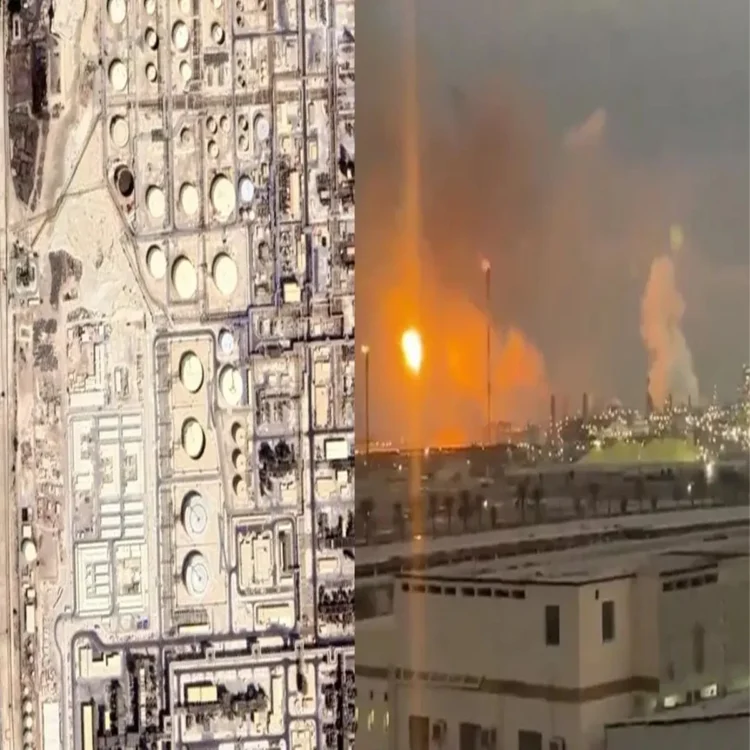
Officials from the Ministry of Interior asked people living in Hidd, Arad, Qalali and Samaheej to stay inside their homes and immediately shut all windows and ventilation openings. The advisory was issued as a precaution to reduce possible exposure to smoke spreading from the blaze.
Emergency Advisory Issued for Nearby Communities
According to the ministry, the fire generated heavy smoke, raising concerns about potential health risks for residents in surrounding areas. Civil defence teams and emergency responders were deployed to the affected location to contain the flames and prevent the situation from escalating further.
Authorities said the advisory was intended to protect residents while firefighters and response units handled the incident. Officials have not yet provided full details about the cause of the blaze but confirmed that monitoring efforts remain ongoing.
Reports Link Incident to Regional Security Escalation
The fire occurred during a period of heightened regional tension. Earlier reports indicated that Bahrain had been responding to an attack targeting fuel storage facilities within the Muharraq Governorate.
Regional media outlets reported that the incident followed a wave of missile and drone activity across several Gulf states, including Saudi Arabia, Kuwait, Qatar and the United Arab Emirates. Defence systems across the region were activated as countries attempted to intercept incoming threats.
Casualties Reported in Manama Residential Strike
Bahraini officials also confirmed that a separate strike earlier this week resulted in casualties in the capital, Manama. A 29-year-old woman lost her life after a residential building was hit, while eight other people were injured.
Authorities stated that emergency services rushed to the site and medical teams treated the wounded. Investigations into the circumstances surrounding the strike are continuing.
The incident followed another earlier drone attack on the island of Sitra that left two individuals injured, including children.
Air Defence Systems Intercept Missiles and Drones
Bahrain’s defence authorities reported that the country’s air defence systems intercepted a large number of incoming threats during the recent escalation.
The General Command of the Bahrain Defence Force said that 105 missiles and 176 drones launched toward the country were successfully neutralised. Officials described the attacks as serious security violations and confirmed that defence systems remain fully operational to respond to further threats.
Gulf Countries Activate Defence Measures
The wider Gulf region has also experienced heightened military activity. In the United Arab Emirates, emergency sirens sounded in Dubai while authorities responded to a fire at the Ruwais industrial complex in Abu Dhabi after a drone strike.
Saudi Arabia reported intercepting two drones over its eastern region, while Kuwait’s National Guard units confirmed that six drones were shot down before reaching their intended targets.
Qatar’s armed forces also intercepted a missile directed toward the country, according to officials.
Qatar Signals Diplomatic Approach but Warns Against Aggression
Qatar’s Foreign Ministry spokesperson Majed Al-Ansari stated that the country continues to support diplomatic solutions to regional disputes. However, he added that any direct attack would be addressed with an appropriate response.
The comments came as tensions across the Gulf intensified amid ongoing military exchanges.
Energy Infrastructure and Oil Markets Under Pressure
The situation has also raised concerns about global energy security, particularly due to the strategic importance of the Strait of Hormuz.
Disruptions to shipping routes in the area have affected the movement of oil and gas supplies. Qatar reported that transport limitations through the waterway forced a partial slowdown in production, while several missiles and drones were intercepted near the region.
Energy companies operating in the Gulf have also faced challenges. Bahrain’s national oil company, Bapco, declared force majeure following repeated strikes on its infrastructure.
Rising Oil Prices Reflect Market Uncertainty
The pressure on energy facilities across the Gulf has influenced global oil markets. Analysts reported that Brent crude prices surged to nearly 120 dollars per barrel earlier in the week before settling around 90 dollars.
The increase represents a significant rise since late February, when hostilities in the region began escalating.
International Responses and Statements
Amid the growing crisis, United States President Donald Trump commented that the conflict could remain limited in scope but warned that stronger military action could follow if shipping through the Strait of Hormuz were disrupted.
Iranian officials responded through state media, stating that their country would determine the timeline for the end of the conflict.
As the situation continues to evolve, authorities across the Gulf remain on heightened alert while diplomatic efforts and security measures continue.