
News – BJP Supports NCERT’s Emergency Chapter, Calls It a Vital Democratic Lesson
News – The Bharatiya Janata Party (BJP) has welcomed the National Council of Educational Research and Training (NCERT)’s decision to introduce a dedicated section on the 1975 Emergency in the newly developed Class 9 social science textbook. Describing the period as one of the most difficult phases in India’s democratic journey, the party said students should understand this chapter of history to appreciate the importance of constitutional values and democratic institutions.
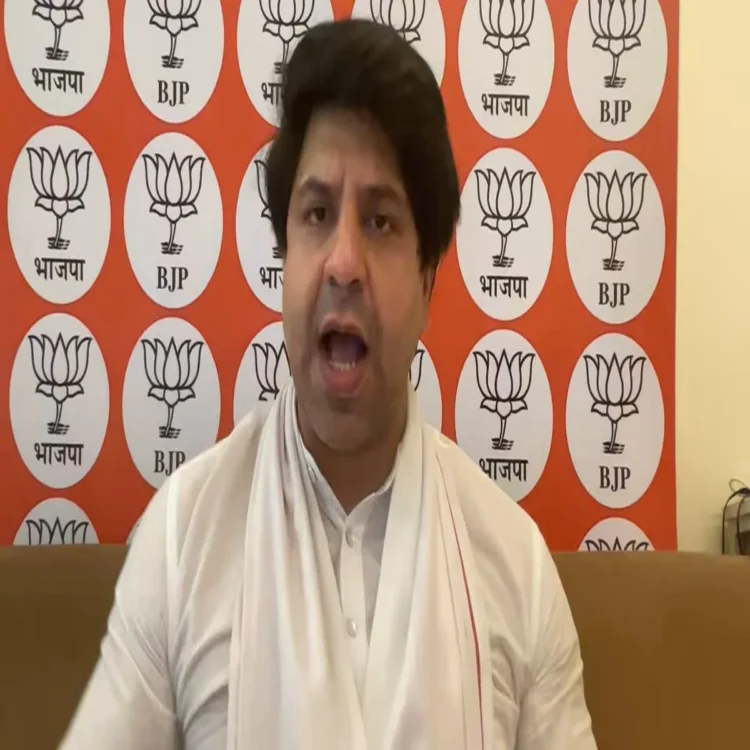
BJP Defends Inclusion of Emergency Chapter
The NCERT has, for the first time, added a detailed section on the Emergency in its new social science textbook titled “Understanding Society: India and Beyond.” The chapter explains that the Emergency represented one of the most significant challenges faced by Indian democracy, during which several fundamental rights were suspended and constitutional freedoms were significantly restricted.
Supporting the move, the BJP stated that teaching students about this period would help future generations understand the consequences of weakening democratic institutions. According to the party, studying historical events is essential to ensure that similar situations are never repeated.
Party Criticises Congress Over 1975 Decision
Reacting to criticism over the textbook revision, BJP spokesperson Shehzad Poonawalla accused the Congress of opposing an important historical lesson. He alleged that the Emergency, declared on June 25, 1975, reflected an abuse of political authority and had serious consequences for democratic governance.
Poonawalla said the Emergency remains one of the darkest periods in India’s constitutional history. He claimed that several democratic institutions, including Parliament, the judiciary and the media, faced restrictions during those years. According to him, the suspension of fundamental rights and limitations placed on judicial review weakened constitutional safeguards that protect citizens.
Emergency Period Highlighted in New Textbook
The Emergency remained in force from June 25, 1975, until March 21, 1977, under the leadership of then Prime Minister Indira Gandhi. The newly introduced NCERT chapter describes the period as a major challenge to democratic functioning and explains how civil liberties and constitutional rights were affected during that time.
The BJP argued that presenting these events in school textbooks would encourage students to examine India’s democratic history through documented facts and understand the importance of protecting constitutional values.
BJP Says Students Should Learn From History
Poonawalla maintained that the purpose of including the chapter is educational rather than political. He said that remembering difficult chapters from the country’s past helps strengthen democratic awareness and reinforces the need to safeguard constitutional institutions in the future.
He further questioned the Congress’s opposition to the inclusion of the topic, arguing that every generation should have access to historical events that shaped India’s political and constitutional development. According to him, acknowledging past mistakes is an important step toward preventing their repetition.
Reference to Leaders Who Opposed Emergency
During his remarks, the BJP spokesperson also referred to leaders such as Jayaprakash Narayan, Mulayam Singh Yadav and Lalu Prasad Yadav, noting that they had opposed the Emergency during that period. He added that it was noteworthy that several political parties associated with those leaders are now aligned with the Congress.
The inclusion of the Emergency chapter in the revised NCERT curriculum has generated political debate, with the BJP describing it as an important educational initiative while criticism continues from sections of the opposition. The discussion has once again brought attention to one of the most debated periods in India’s democratic history and the role of school education in presenting historical events to future generations.