
Welfare – PM Modi Highlights Twelve Years of Inclusive Development Initiatives
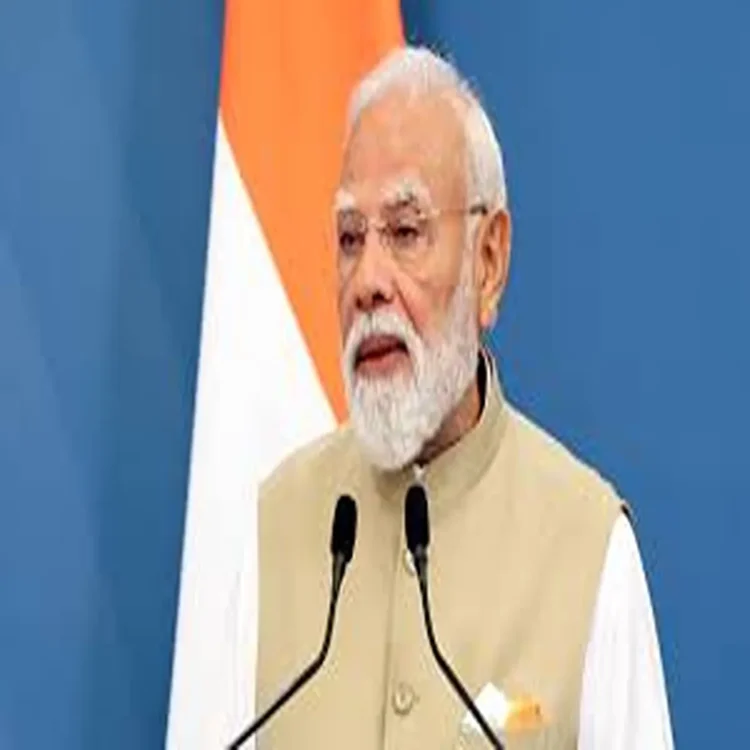
Welfare – Prime Minister Narendra Modi on Monday reflected on the major changes witnessed across India over the past twelve years, stating that the government’s development agenda has remained focused on improving the lives of economically weaker sections. He said the principle of Antyodaya, which emphasizes uplifting the last person in society, has guided policy decisions and welfare initiatives throughout this period.
Focus on Reaching the Most Vulnerable
In a post shared on social media platform X under the campaign theme “12 Years of Garib Kalyan,” the Prime Minister outlined how various welfare measures have been designed to ensure that development benefits reach communities that had long remained outside the mainstream. According to him, the objective has been to create opportunities and improve living standards for those who faced social and economic disadvantages for decades.
He emphasized that government efforts have consistently aimed at expanding access to essential services while promoting dignity and self-reliance among citizens. The Prime Minister noted that development should be measured not only by economic growth but also by its ability to improve everyday life for ordinary people.
Key Welfare Schemes Cited by the Prime Minister
Highlighting major initiatives introduced during his tenure, PM Modi referred to several flagship programs that have played a significant role in expanding financial inclusion, housing access, healthcare coverage, sanitation facilities, and drinking water connectivity.
Among the schemes mentioned were Jan Dhan Yojana, Direct Benefit Transfer (DBT), Swachh Bharat Mission, Pradhan Mantri Awas Yojana, Jal Jeevan Mission, and Ayushman Bharat. He stated that these programs were launched with the aim of creating better opportunities while ensuring that citizens receive essential services with greater efficiency and transparency.
According to the Prime Minister, these initiatives have helped strengthen the social welfare framework and provided support to millions of families across different regions of the country.
Technology Strengthening Governance
PM Modi also underlined the growing role of digital technology in public administration and welfare delivery. He said technological advancements have enabled government support to reach beneficiaries directly, reducing intermediaries and improving transparency.
The Direct Benefit Transfer system and various digital platforms, he noted, have contributed to minimizing leakages while ensuring faster delivery of financial assistance and welfare benefits. He added that the use of technology has enhanced trust in governance by making public services more accountable and accessible.
The Prime Minister described this approach as an important step toward empowering citizens and advancing the broader vision of building a developed India in the coming years.
Set to Become Longest-Serving Elected Prime Minister
Meanwhile, PM Modi is on the verge of achieving a notable political milestone. On June 10, he is expected to become India’s longest-serving elected Prime Minister in terms of continuous tenure.
Having taken office on May 26, 2014, Modi has completed three consecutive terms following victories in the 2014, 2019, and 2024 Lok Sabha elections. With 4,399 uninterrupted days in office, he will move ahead of India’s first Prime Minister, Jawaharlal Nehru, whose elected tenure lasted 4,398 days.
Historical Comparison with Nehru’s Record
Jawaharlal Nehru served as Prime Minister after India’s Independence in 1947 and continued in office until his death in 1964. However, the period considered for the elected tenure record began after the country’s first general elections, when he formally assumed office as an elected Prime Minister on May 13, 1952.
By surpassing that benchmark, PM Modi will enter a new chapter in India’s political history, marking a significant achievement during his ongoing leadership of the country.