
ClimateChange – Global Heat Forecast Signals Rising Temperatures Through 2030
ClimateChange – Global temperatures are projected to remain dangerously high over the next several years, with scientists warning that the planet could continue hovering near record-breaking heat levels until the end of the decade. A new assessment released by the World Meteorological Organization has highlighted growing concerns about accelerating warming patterns, particularly in the Arctic region, where temperatures are rising faster than the global average.
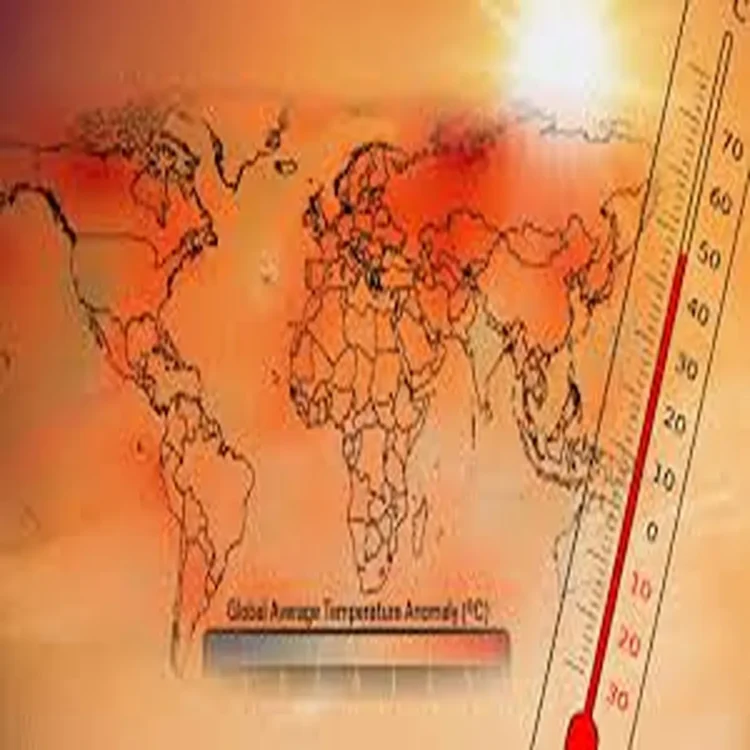
Warming Trend Expected to Continue
The latest climate outlook, prepared with support from the United Kingdom’s Met Office, reviewed weather and climate data from recent years while also estimating future temperature and rainfall patterns. According to the report, average global surface temperatures between 2026 and 2030 are likely to stay between 1.3 degrees Celsius and 1.9 degrees Celsius above pre-industrial levels recorded during 1850-1900.
Researchers involved in the study said there is a strong possibility that at least one year during this period could become the hottest ever recorded, surpassing the previous global heat record set in 2024. Scientists believe ongoing greenhouse gas emissions and warming ocean conditions are continuing to push temperatures higher across several regions of the world.
Risk of Crossing Key Climate Threshold
The report also warned that there is a very high probability that global temperatures will temporarily move beyond the critical 1.5 degrees Celsius threshold above pre-industrial levels. Experts estimate there is a 91 percent likelihood that this limit will be breached for at least one year between 2026 and 2030.
Climate scientists have long considered the 1.5-degree mark an important benchmark because crossing it for extended periods could increase the severity of heatwaves, droughts, rising sea levels, and extreme storms. The threshold was briefly exceeded in 2024, when global temperatures reached approximately 1.55 degrees Celsius above historical averages.
Despite the concerning projections, researchers noted that the chances of annual temperatures crossing 2 degrees Celsius in the next five years remain extremely low. The report estimated the probability of that happening at less than one percent.
Arctic Region Remains a Major Concern
One of the most alarming findings in the report involves the Arctic, where warming continues at a much faster pace than the rest of the planet. Scientists observed that temperature anomalies in the polar region are expected to remain significantly above the global average throughout the forecast period.
Experts say rapid warming in the Arctic can influence weather systems worldwide by affecting ocean circulation, melting sea ice, and altering atmospheric patterns. These changes may contribute to more frequent climate extremes in different parts of the world, including stronger rainfall events and prolonged dry spells.
El Niño Conditions Could Influence Future Records
The climate assessment also identified increasing signs of El Niño conditions developing in the tropical Pacific Ocean over the coming years. Forecast models suggest that these conditions could become more noticeable around 2027 and 2028.
Dr. Leon Hermanson, who led the report, said a potential El Niño event expected toward the end of 2026 may increase the likelihood of another exceptionally warm year in 2027. El Niño events typically raise global temperatures by releasing additional heat from the Pacific Ocean into the atmosphere.
Scientists often monitor the Niño 3.4 region in the central Pacific because temperature changes there can influence weather systems globally, including rainfall patterns, drought conditions, and tropical storm activity.
International Climate Centres Contributed Data
The climate update was produced through collaboration between multiple international research institutions working under the coordination of the World Meteorological Organization. Thirteen scientific centres contributed to the forecast, including climate modelling agencies from Europe and North America.
Researchers stated that confidence in long-term global temperature predictions remains high because earlier forecasting methods have shown strong accuracy when compared with real-world climate observations. The findings are expected to assist governments and policymakers in preparing for future climate-related challenges and improving adaptation strategies.