
Municipal Elections – Congress Reclaims Urban Stronghold in Telangana
Municipal Elections – The outcome of the latest urban local body elections across Telangana has significantly reshaped the political landscape, with the Congress emerging as the dominant force in cities and towns. The ruling party’s performance mirrors the sweeping victories once achieved by the then Telangana Rashtra Samithi, now known as the Bharat Rashtra Samithi, nearly a decade ago.
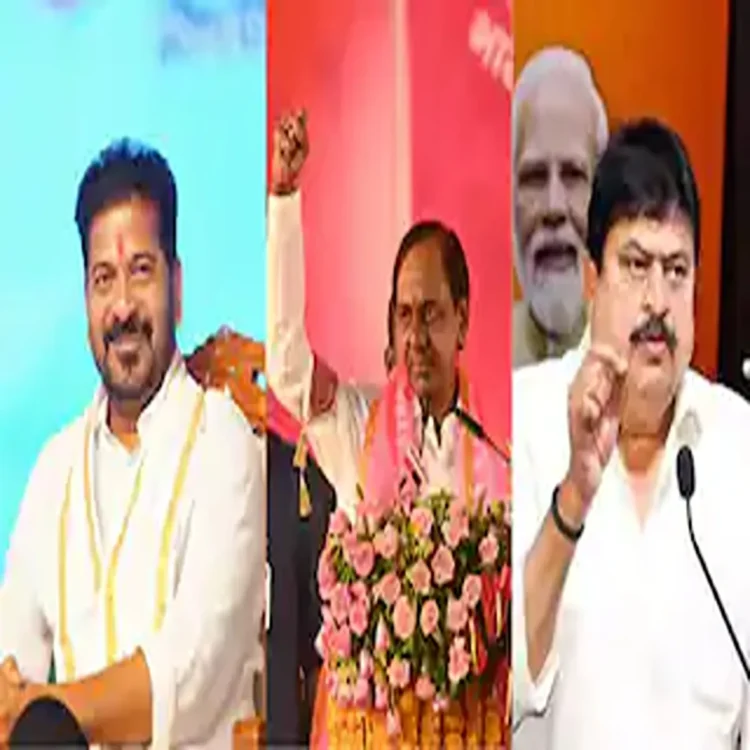
Congress Secures Broad Urban Mandate
The Congress secured control of a clear majority of urban local bodies, reinforcing its standing particularly in southern districts of the state. Out of 116 municipalities and seven municipal corporations, the party won outright majorities in more than 90 municipalities and four corporations. It also recorded a vote share exceeding 45 percent in most urban segments.
Party leaders described the results as a sign of public confidence in the administration led by Chief Minister A Revanth Reddy. Senior figures within the party, including ministers, Members of Parliament, Members of the Legislative Assembly, and leaders of the Telangana Pradesh Congress Committee, have shifted their focus to ensuring control of mayoral and chairperson posts, especially in councils where no single party has an overwhelming majority.
The Congress surge was particularly evident in districts such as Mahbubnagar, Rangareddy, Nalgonda, and parts of Medak in southern Telangana. However, the political picture in northern districts appeared more competitive, with rival parties maintaining pockets of influence.
BRS Retains Limited Foothold
For the Bharat Rashtra Samithi, the elections delivered mixed results. While the party managed to emerge as the single largest formation in around 10 to 12 municipalities, it lost control of nearly 90 percent of the urban bodies it had governed over the past ten years.
In the seven municipal corporations, the BRS largely slipped to third position in several areas. The party found some relief in Sircilla municipality and select urban bodies in the erstwhile Medak district, constituencies represented in the Assembly by senior leaders such as K Chandrasekhar Rao and T Harish Rao. Despite vigorous campaigning by figures including K T Rama Rao and T Harish Rao, the broader trend suggested that the BRS is gradually losing its urban base.
Political analysts noted that while the party preserved a degree of relevance, it now faces the challenge of rebuilding grassroots support in towns and cities where it once held firm control.
BJP Expands Presence in Key Cities
The Bharatiya Janata Party recorded incremental gains, though it did not achieve the sweeping breakthrough some of its leaders had anticipated. The party emerged as the single largest formation in Nizamabad and Karimnagar corporations, and secured notable victories in municipalities such as Narayanapet, Raikal, and Adilabad.
Overall, the BJP won around 70 corporator seats across corporations and between 350 and 360 councillor posts in municipalities. Party representatives stated that the improved vote share reflects growing acceptance among urban voters. At the same time, they acknowledged that organisational weaknesses at the booth level and limited ground-level manpower constrained further expansion.
AIMIM and Other Parties Make Limited Impact
The All India Majlis-e-Ittehadul Muslimeen maintained a visible, though reduced, presence. It won divisions in corporations including Nizamabad, Karimnagar, Mahbubnagar, and Nalgonda, along with 47 wards across various municipalities. Party sources admitted that the overall tally was lower compared to the previous election cycle.
An exception to the dominant trends emerged in Kothagudem corporation, where the Communist Party of India secured 26 of the 60 seats, surpassing the Congress, which won 22. The result underscored the Left party’s localized strength despite its alliance with the Congress during Assembly and parliamentary elections.
In Vaddepalli municipality of Gadwal district, the All India Forward Bloc captured eight out of ten wards. The contest drew attention after reports suggested that supporters of K Kavitha, former Member of Legislative Council and president of Telangana Jagruthi, contested on AIFB tickets. However, party leaders denied any formal association. Observers believe such developments may have marginally influenced vote shares in certain pockets.
The urban local body elections have therefore signaled a significant shift in Telangana’s political dynamics, with the Congress consolidating its position in urban centers while its rivals assess strategies for recovery and expansion.