
Cauvery – River Restoration Plan Faces Pre-Election Delay in Tamil Nadu
Cauvery – The ambitious Nadanthaai Vaazhi Cauvery River restoration initiative, valued at Rs 14,000 crore, is unlikely to take off before the upcoming Assembly elections due to procedural clearances and funding approvals still pending.-
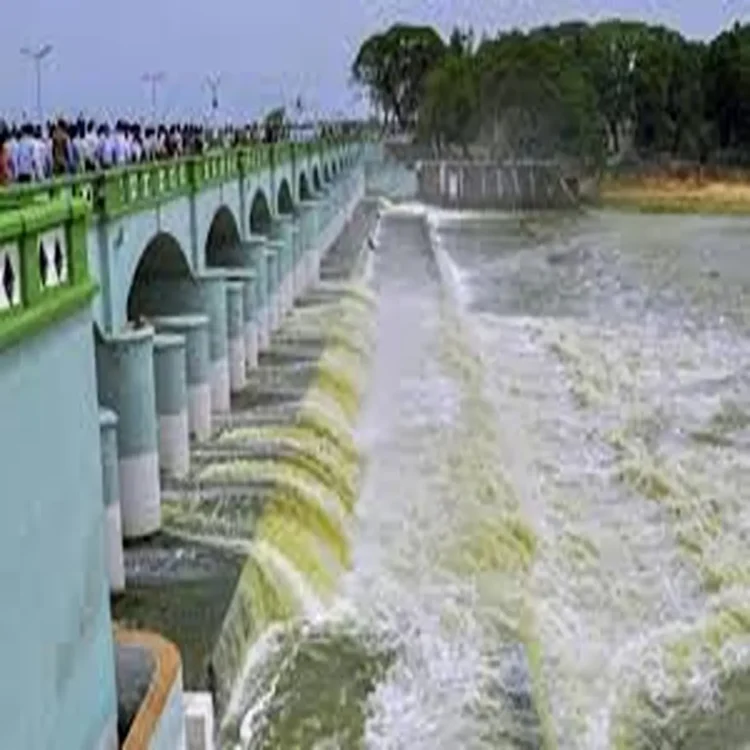
The large-scale river rejuvenation programme, envisioned as a critical boost for irrigation and environmental protection in Tamil Nadu, has encountered administrative roadblocks that may push its launch beyond the election schedule.
Political Debate Surrounds the Project
The delay has sparked political criticism, with Edappadi K. Palaniswami, General Secretary of the AIADMK, alleging that the ruling DMK government has intentionally slowed the project’s rollout. He raised the issue during an NDA campaign event addressed by Prime Minister Narendra Modi in Maduranthakam.
Palaniswami stated that the Union government had already granted its approval and suggested that the State administration had failed to move the process forward. However, officials from the Water Resources Department rejected the claim, maintaining that technical and financial procedures, rather than political considerations, were responsible for the hold-up.
Approvals and Coordination Challenges
According to senior officials, the finance department has yet to grant final clearance. In addition, the project requires collaboration among nearly a dozen departments, including the Water Resources Department, the State water supply and drainage board, the electricity utility, and the revenue department.
Given the size and complexity of the scheme, officials indicated that initiating groundwork before the elections would be impractical. “Multiple layers of approval and inter-department coordination are essential. These processes take time,” a senior official explained.
Funding Structure and Phased Implementation
The first phase of the project has received approval from the National River Conservation Directorate, which has sanctioned Rs 934 crore. The financial structure follows a 60:40 sharing model between the Centre and the State. Under this arrangement, the Union government will provide Rs 560 crore, while Tamil Nadu will contribute Rs 374 crore.
Phase one aims to restore the Cauvery river stretch between Mettur and Tiruchy, along with significant tributaries such as the Thirumanimuthar, Sarabanga, Bhavani, Amaravathi and Noyyal rivers. This phase will cover approximately 1,092 kilometres. The remaining 214-kilometre stretch from Tiruchy to the Bay of Bengal is planned under phase two.
Environmental and Agricultural Concerns
Farmers in the Cauvery delta region say the restoration plan is long overdue. Years of industrial expansion and rapid urban growth have affected both water quality and river flow, impacting agriculture and fisheries.
M. Ramasamy, a 52-year-old farmer from Tiruvarur district, said pollution and declining water availability have altered livelihoods. He noted that fish populations have dropped and irrigation water quality has deteriorated over time. Past environmental assessments have also flagged certain stretches of the Cauvery basin for significant contamination.
The proposed measures under the scheme include construction of sewage treatment plants, establishment of common effluent treatment facilities for textile industries, and improvements along the riverfront to prevent further degradation.
Hope for Delta Districts
Farmers’ associations believe the initiative could revive agricultural productivity in tail-end districts such as Tiruvarur, Nagapattinam and Mayiladuthurai. K.V. Elankeeran, president of the Federation of Cauvery Delta Farmers Association, said farmers in these areas often manage only one crop cycle each year due to inconsistent water supply.
He expressed hope that systematic river restoration would improve water flow and enable multiple cropping seasons, strengthening rural incomes and food production.
For now, however, the comprehensive river restoration effort remains in the preparatory stage. With financial approvals pending and administrative processes still underway, officials suggest that substantial progress is likely only after the electoral process concludes.