
SC: To apply a creamy layer in SC/ST reservations sends a message to PIL
SC: In a public interest lawsuit (PIL) seeking the use of the “creamy layer” concept in reserving for Scheduled Castes (SCs) and Scheduled Tribes (STs), the Supreme Court on Monday sent notice to the federal government and all state governments.
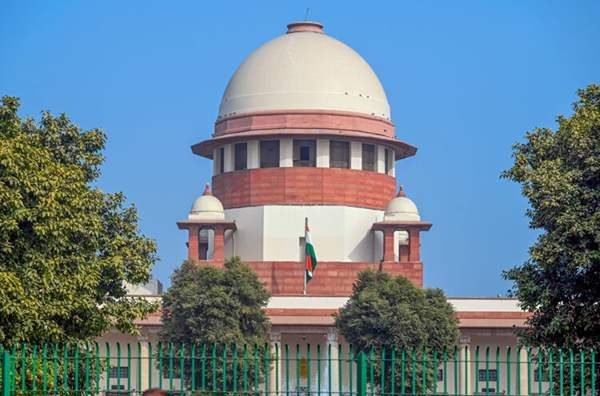
Advocate Ashwini Kumar Upadhyay filed a writ suit under Article 32 of the Constitution, and a bench comprising Chief Justice of India (CJI) Surya Kant and Joymalya Bagchi requested replies from the Union government and the state governments.
In an appearance before the highest court, Upadhyay argued that offspring of members of SC/ST families should not be eligible for reservation benefits if they had already achieved a constitutional or senior government job.
He said that the fundamental purpose of affirmative action is defeated when socially and economically advanced families within SC/ST categories continue to get reservations.
According to the petition, reservations were implemented as a temporary and remedial measure to help people who were suffering from long-standing social, educational, and economic backwardness. However, over time, an elite class that has already attained social mobility and economic stability has emerged within the SC/ST communities.
It claimed that in spite of these developments, certain parts still deny reservation benefits to successive generations, leaving out the most vulnerable elements of the society.
The argument made that reserve was never meant to become an inherited or homogenous right, citing the Constituent Assembly Debates. In support of its claim that affirmative action was intended to function dynamically and be subject to ongoing review, it cited the opinions of Dr. B.R. Ambedkar and other framers.
The petition further asserted that failure to exclude the creamy layer has serious national, social, and economic repercussions, including elite benefit capture, reduced administrative effectiveness, and a breach of the equality, justice, and fraternity ideals outlined in the constitution.
It further emphasized how the Constitution Bench’s decision in State of Punjab v. Davinder Singh acknowledged that Scheduled Castes are not a single class and that the “weakest of the weak” must benefit from reservations.
A seven-judge Constitution Bench led by then Chief Justice D.Y. Chandrachud recommended in a landmark ruling on August 1, 2024, that SCs and STs be granted quota benefits by applying the “creamy layer” principle. However, the ruling included a disclaimer that stated that although sub-classification was allowed, the government could not reserve all of the seats for one sub-class at the expense of others.
“When the 9-Judge Bench in Indra Sawhney held that the applicability of such a test (creamy layer test) insofar as Other Backward Classes are concerned would advance equality as enshrined in the Constitution, then why should such a test not also be made applicable to the Scheduled Castes and Scheduled Tribes?” was the question Justice B.R. Gavai had posed in his opinion.
“Is it possible to compare a child of an IAS/IPS or Civil Service officer to a child of a Scheduled Caste member who is enrolled in a Gram Panchayat or Zilla Parishad school in a village?” Gavai, the judge, had noted.
The government must develop a program for identifying the creamy layer inside SCs and STs in order to deny them the advantage of affirmative action, according to Justices Vikram Nath, Pankaj Mithal, and Satish Chandra Sharma, who backed his position. However, the Union Cabinet, led by Prime Minister Narendra Modi, debated the ruling a few days later and insisted that the Constitution does not allow for a creamy layer under SC and ST categories.
Ashwini Vaishnaw, the Union Minister of Information and Broadcasting, had said that the NDA administration was dedicated to the Constitution and that “there is no provision for a creamy layer in the SC-ST reservation according to the Constitution given by B.R. Ambedkar.”The “