
Rajasthan: Rising Communal Unrest in Chomu Sparks Security Concerns in Rajasthan
Rajasthan: Communal tensions surfaced sharply in the town of Chomu, located in the Jaipur district of Rajasthan, after a dispute related to a religious site led to violent clashes between two groups. What began as a disagreement over the removal of a stone from a place of worship soon escalated into a serious law-and-order situation, raising concerns about public safety and communal harmony in the region.
Background of the Incident
Chomu, a historically significant town near Jaipur, has generally maintained peaceful relations among its diverse communities. However, the recent incident exposed underlying sensitivities linked to religious spaces. According to preliminary information, a disagreement arose when a stone was allegedly removed from a religious site, an act that was perceived differently by members of two communities. The issue quickly became emotionally charged, drawing a crowd and intensifying tensions on the ground.
Escalation into Violence
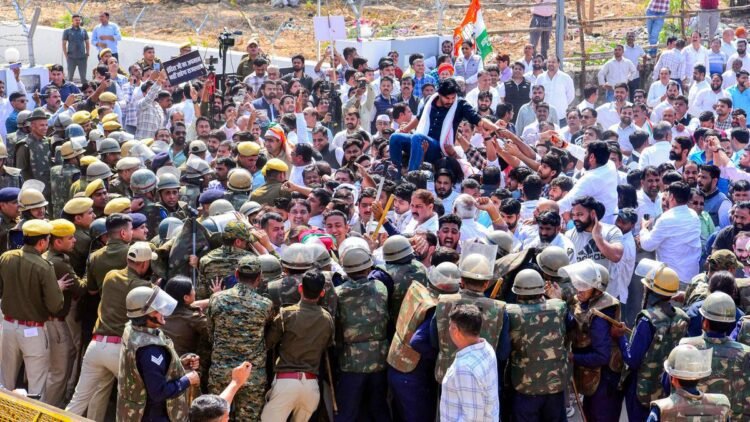
As discussions turned heated, the situation spiraled out of control. Verbal arguments soon transformed into physical confrontation, with members of both sides gathering in large numbers. The atmosphere became volatile, and the risk of wider unrest increased rapidly. Witnesses reported shouting, panic, and confusion as attempts to de-escalate the matter failed. The narrow streets of Chomu further complicated crowd control, making it difficult to contain the spread of violence.
Police Response and Challenges
Local police teams reached the area soon after receiving information about the dispute. Officers attempted to pacify the crowd and restore order through dialogue and standard crowd-control measures. However, instead of calming down, the situation worsened. Sections of the crowd allegedly began pelting stones at the police personnel. Several officers sustained injuries during the confrontation, highlighting the dangers faced by law enforcement during sudden communal flare-ups.
Impact on Law and Order
The violence disrupted normal life in Chomu, with shops closing and residents staying indoors out of fear. Traffic movement in nearby areas was affected, and additional security forces were reportedly placed on alert to prevent further escalation. Such incidents not only strain police resources but also leave lasting impacts on community trust and local stability. The injuries to police personnel underscored the seriousness of the unrest and the urgent need for effective conflict resolution mechanisms.
Administrative Measures and Community Appeal
Following the incident, local authorities intensified patrolling and appealed to residents to maintain peace. Community leaders were encouraged to step forward and help calm tensions through dialogue and cooperation. Administrative officials emphasized that disputes related to religious sites are highly sensitive and must be handled through legal and peaceful means rather than confrontation. Investigations were initiated to identify those responsible for instigating violence and damaging public order.
Broader Implications for Communal Harmony
Incidents like the one in Chomu serve as reminders of how quickly local disputes can turn into communal conflicts if not addressed promptly. They highlight the importance of mutual respect, clear communication, and timely intervention by authorities. In a diverse state like Rajasthan, maintaining communal harmony is crucial for social stability and development. Strengthening trust between communities and law enforcement remains a key priority to prevent similar episodes in the future.
The Way Forward
Restoring normalcy in Chomu will require sustained efforts from both the administration and local residents. Transparent investigation, fair legal action, and community-level (dialogue) can help heal tensions. Long-term solutions may include awareness programs, conflict-resolution forums, and stricter monitoring of sensitive sites. Ensuring peace in towns like Chomu is essential not only for local residents but also for preserving the broader image of Rajasthan as a state known for coexistence and cultural diversity.